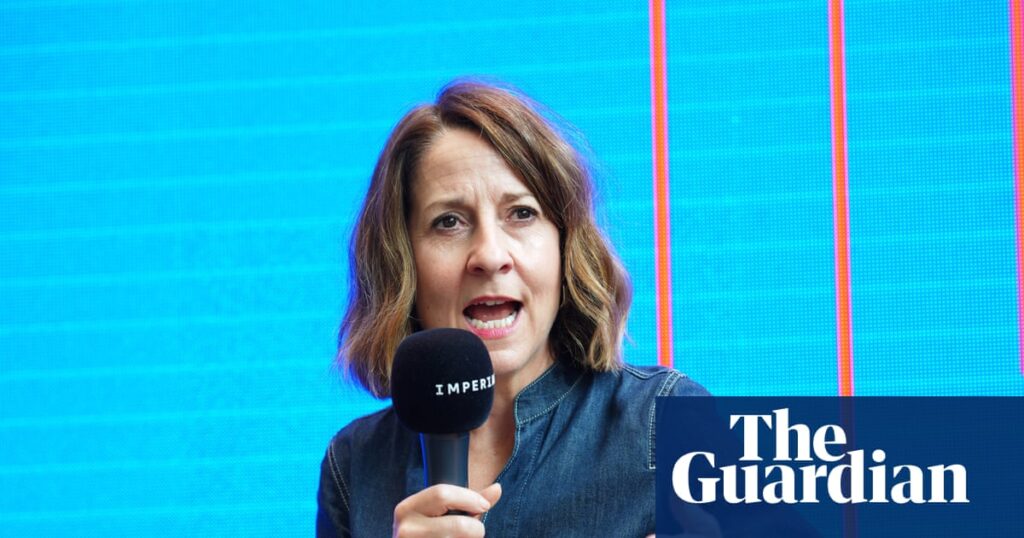

A senior ministerial aide said AI companies would never have to compensate creatives for using their content to train their systems, in a statement that has alarmed campaigners demanding Labour deliver a fairer deal for musicians, artists and writers from the tech industry.
Kirsty Innes, recently appointed as a special adviser to Liz Kendall, the secretary of state for science, innovation and technology, said “whether or not you philosophically believe the big AI firms should compensate content creators, they in practice will never legally have to”.
The government is consulting on how creatives should be compensated by AI firms and only last week leading British artists including Mick Jagger, Kate Bush and Paul McCartney urged Keir Starmer to stand up for creators’ human rights and protect their work.
Innes, who previously worked at the Tony Blair Institute (TBI) thinktank, has deleted the statement, which she posted to X in February, seven months before she became a ministerial adviser. In the deleted posts, seen by the Guardian, she said: “A lot of this has already happened and it can continue to happen outside the UK, whatever our laws say.”
She added: “This might be a bitter pill to swallow for some.”
TBI has received donations from the Oracle tech billionaire Larry Ellison, which reached $270m (£210m) last year. Oracle is a backer of the $600bn Stargate project to build AI infrastructure across the US with OpenAI and the Japanese investment firm SoftBank.
Labour has been at loggerheads with the UK’s creative community since launching a consultation on reforming copyright law, with the preferred option of letting AI companies use copyright-protected work without seeking the owner’s permission – unless they signal a desire to opt out of the process.
Some content creators including the Guardian and the Financial Times have signed deals with OpenAI, the creator of ChatGPT, to licence and monetise their content for use in the San Francisco startup’s technology.
The government has said requiring creatives to opt out is no longer its preferred option and it has convened working groups – drawn from the creative and AI sectors – to come up with solutions to the issue.
Ed Newton-Rex, the founder of Fairly Trained, a non-profit that certifies generative AI companies that respect creators’ rights and a leading campaigner for creatives’ rights, said: “It is alarming that Liz Kendall will be getting advice from someone who seems so bought into big tech’s dreams of upending the UK’s copyright law.
“I hope she will balance this out with advisers whose views more closely align with those of the general public – who are rightly anxious about the impacts of AI and the power of big tech.”
Source link
Disclaimer
We strive to uphold the highest ethical standards in all of our reporting and coverage. We blogs.grocliq.com want to be transparent with our readers about any potential conflicts of interest that may arise in our work. It’s possible that some of the investors we feature may have connections to other businesses, including competitors or companies we write about. However, we want to assure our readers that this will not have any impact on the integrity or impartiality of our reporting. We are committed to delivering accurate, unbiased news and information to our audience, and we will continue to uphold our ethics and principles in all of our work. Thank you for your trust and support.
Website Upgradation is going on for any glitch kindly connect at [email protected]