
MediaNama’s take: Through these draft rules, the Department of Telecommunications (DoT) has introduced stringent regulations for user verification before obtaining telecom services. The severity of these new requirements becomes evident when examining specific restrictions: for a user (let’s call them A) to transfer their SIM connection to another person (let’s call them B), the regulations mandate that A and B must be blood relatives.
This emphasis on only allowing SIM transfers between blood relatives ignores how telecom users currently informally share their SIM cards. For instance, in a previous MediaNama event, a speaker had pointed out that there are situations where a single family member purchases a SIM card that others in the family are using. This transfer requirement, along with a restriction on leasing your telecom connection to another user, could potentially restrict such usage.
What’s the news:
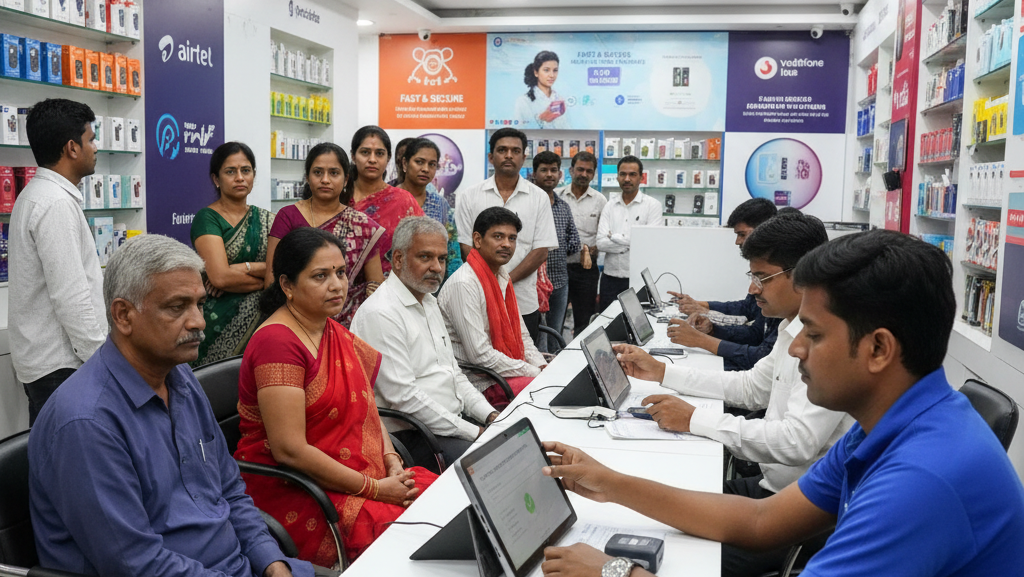
We missed this earlier: The Department of Telecommunications (DoT) has proposed a new biometric identity verification system (BIVS) for the verification of telecom users. This comes as part of the draft rules for telecom user identification the DoT released on September 19. Under these rules, authorised telecom service providers must operate a BIVS either individually or collectively. This system will provide biometric-based identification of users using live photographs or any other biological attributes that the government specifies. The news was first reported by The Tech Trace.
Whenever a user enrols in a telecom service or updates the services they have subscribed to, they will be assigned a unique user ID. This unique ID will be used for identification purposes. and updating the number of connections under the user’s name. The government can direct authorised service providers to assign user IDs in the BIVS in a form and manner it may prescribe later. Besides enrolling new subscribers using the BIVS, the government can also ask authorised service providers to assign the new unique user IDs (under the BIVS) to all their existing customers. Companies will have to comply with these directions within the government-specified timeline.
Key compliances for BIVS operations:
Authorised telecom service providers have to:
- Store and maintain user information such as a user’s name, gender, date of birth, live photograph, unique user ID and any other information in a government-specified format.
- Maintain and update a record of the number of connections a user has for each type of authorised telecom service. Whenever a service provider updates the number of connections in a user’s name, they will update the user of these new connections through the user’s existing telecom identifiers.
- Encrypt the information they store within the BIVS and implement access controls. Authorised service providers must restrict access to this information to the entities that established the BIVS.
- Maintain…
Source link
Disclaimer
We strive to uphold the highest ethical standards in all of our reporting and coverage. We blogs.grocliq.com want to be transparent with our readers about any potential conflicts of interest that may arise in our work. It’s possible that some of the investors we feature may have connections to other businesses, including competitors or companies we write about. However, we want to assure our readers that this will not have any impact on the integrity or impartiality of our reporting. We are committed to delivering accurate, unbiased news and information to our audience, and we will continue to uphold our ethics and principles in all of our work. Thank you for your trust and support.
Website Upgradation is going on for any glitch kindly connect at [email protected]