

The Problem: Legacy SOCs and Endless Alert Noise
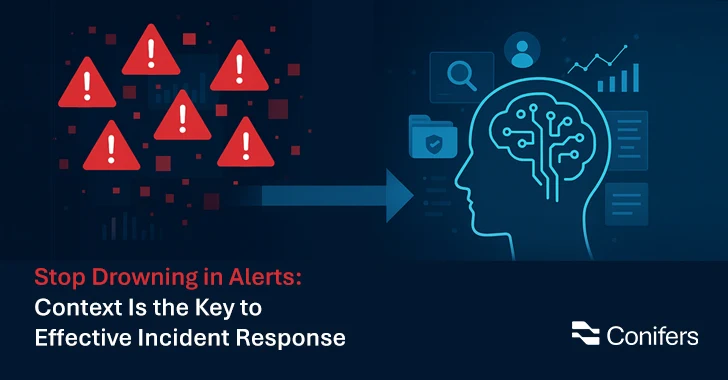
Every SOC leader knows the feeling: hundreds of alerts pouring in, dashboards lighting up like a slot machine, analysts scrambling to keep pace. The harder they try to scale people or buy new tools, the faster the chaos multiplies. The problem is not just volume; it is the model itself. Traditional SOCs start with rules, wait for alerts to fire, and then dump raw signals on analysts. By the time someone pieces together what is really happening, the attacker has already moved on, or moved in. It is a broken loop of noise chasing noise.
Flipping the Model: Context Over Chaos
Instead of drowning in raw events, treat every incoming signal as a potential opening move in a bigger story. Logs from identity systems, endpoints, cloud workloads, and SIEMs do not just land in separate dashboards; they are normalized, connected, and enriched to form a coherent investigation. A brute-force login attempt on its own is easy to dismiss. But when enhanced with user history, IP reputation, and signs of lateral movement, it is no longer background noise. It becomes the first chapter of an unfolding breach.
Context is the difference between ignoring another failed login and stopping an attack in motion.
Enabling Analysts with Story-Driven Workflows
The goal is not to hand analysts a bigger stack of alerts, it is to give them a story that already has shape and meaning. When analysts open a case, they see how the activity fits together, what actors are involved, and what paths the threat has already taken. Instead of starting from scratch with scattered evidence, they begin with a clear picture that guides their judgment. That shift changes the nature of the job itself.
Human-Centric AI That Enhances, Not Replaces
This is not about replacing humans with AI. It is about giving humans the space to actually do security. When technology handles the grind of collecting, correlating, and enriching signals, analysts can focus on what they do best: interpreting meaning, thinking creatively, and applying institutional knowledge.
- Junior analysts can develop investigative reasoning by studying complete cases instead of clicking through endless queues,
- Mid-level analysts gain time to hunt and test new hypotheses
- Senior analysts focus on attacker behavior and strategy, shaping how defenses evolve.
The work stops feeling like endless triage and starts feeling like security again.
Measurable Results: Faster MTTR, Fewer False Positives
The results are measurable and dramatic. False positives drop sharply. Mean time to resolution shrinks from hours to minutes. Quality and accuracy shoot up. Teams finally have the capacity to investigate the subtle, low-level signals where attackers often make their first moves.
That is what happens when SOC teams stop chasing alerts and start building context.
Defining the Cognitive SOC
A SOC that thrives is not the…
Source link
Disclaimer
We strive to uphold the highest ethical standards in all of our reporting and coverage. We blogs.grocliq.com want to be transparent with our readers about any potential conflicts of interest that may arise in our work. It’s possible that some of the investors we feature may have connections to other businesses, including competitors or companies we write about. However, we want to assure our readers that this will not have any impact on the integrity or impartiality of our reporting. We are committed to delivering accurate, unbiased news and information to our audience, and we will continue to uphold our ethics and principles in all of our work. Thank you for your trust and support.
Website Upgradation is going on for any glitch kindly connect at [email protected]