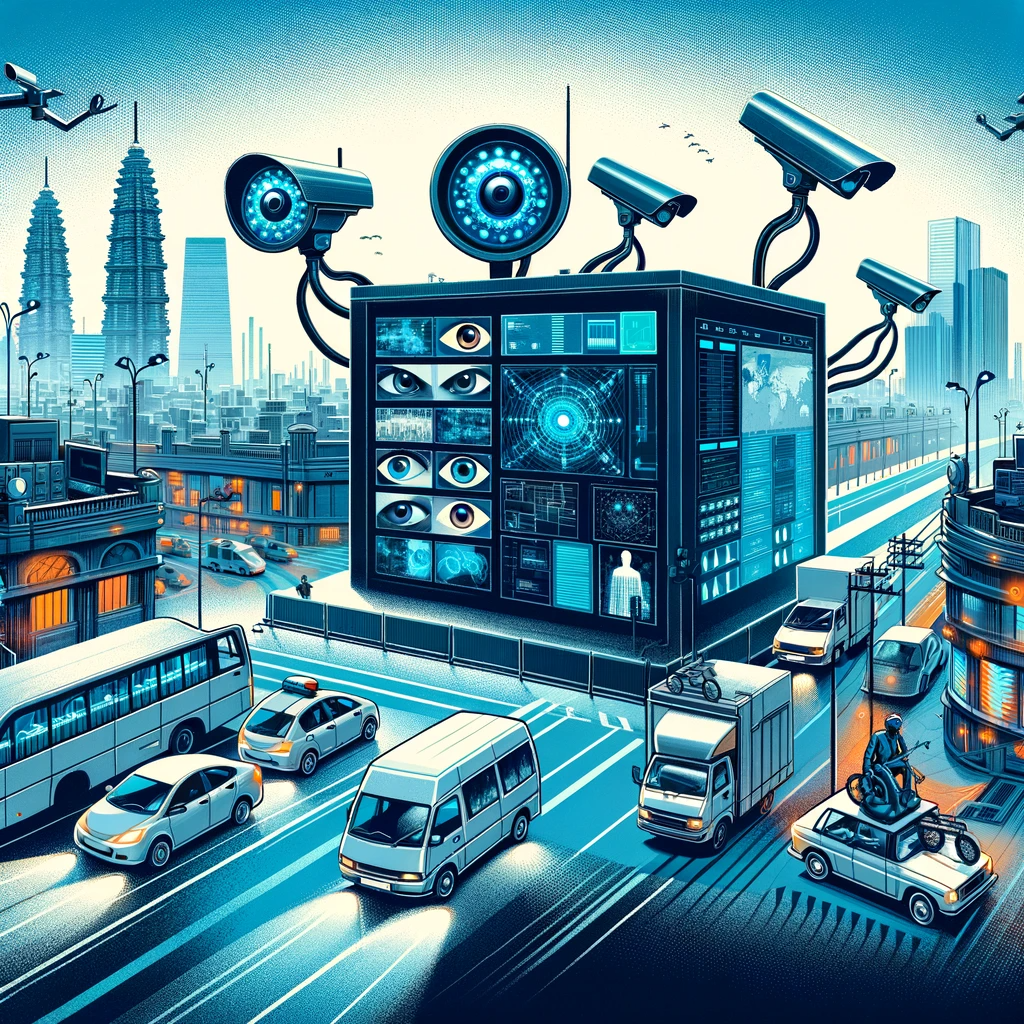

Hyderabad Police is planning to use artificial intelligence (AI) in its investigations, Police Commissioner V.C. Sajjanar said, according to a report by Live Mint. Speaking to PTI, the commissioner noted that many organisations today are adopting AI and that the police will also begin working on adopting the technology, alongside drones, for policing purposes. Discussing the use of drones, he said that other police forces are already using drones and that Hyderabad Police will study their effectiveness and tie up with manufacturers to see how it can utilise them as well.
Telangana has been at the forefront of technology use in surveillance. In 2020, Hyderabad Police deployed AI tools across 2,000 CCTV cameras in its network to detect whether people in the Greater Hyderabad region were complying with the COVID-19 mask mandate. Through these efforts, the police identified around 10,000 cases of mask violations. However, some had critiqued the move for criminalising actions simply based on CCTV footage. Speaking to MediaNama in 2021, Social activist SQ Masood had argued that such a move prevented people from presenting their case to the police. Many had also raised questions about the impact of such moves on privacy and the security of the data that the police were collecting through these means.
Hyderabad would not be the first region in the country to consider AI use in policing. Earlier this year, Maharashtra Finance Minister Ajit Pawar announced that the state would set up an AI-powered command and control centre to keep crimes in check in Mumbai. Like Sajjanar, Pawar did not divulge details on how the state would use AI in policing or the specific crimes it would address.
Concerns with AI use in policing:
AI-based policing raises significant concerns. One of the biggest is that it could potentially be used to target minority groups. If the police have historically been overactive in patrolling areas where minority groups live, then their records would naturally contain more crime reports from these areas, according to a paper by the European Crime Prevention Network. This would mean that the data used to train AI models is biased against minority groups and the regions they reside in.
There is also the issue of accountability when an AI system makes a wrong decision. Given that many stakeholders are involved in developing and deploying AI models, it becomes difficult to determine who should be held responsible, the developer who failed to anticipate misuse, or the end user (in this case, the police) who did not adequately use the model.
Regulating AI use in policing:
It is perhaps because of the many concerns with the use of AI systems in policing that the EU AI Act prohibits the use of AI models for assessing the risk of someone committing a criminal offence. The prohibition, however, does not apply to AI systems that merely support human assessment of a person’s involvement in a criminal activity. The act also…
Source link
Disclaimer
We strive to uphold the highest ethical standards in all of our reporting and coverage. We blogs.grocliq.com want to be transparent with our readers about any potential conflicts of interest that may arise in our work. It’s possible that some of the investors we feature may have connections to other businesses, including competitors or companies we write about. However, we want to assure our readers that this will not have any impact on the integrity or impartiality of our reporting. We are committed to delivering accurate, unbiased news and information to our audience, and we will continue to uphold our ethics and principles in all of our work. Thank you for your trust and support.
Website Upgradation is going on for any glitch kindly connect at [email protected]