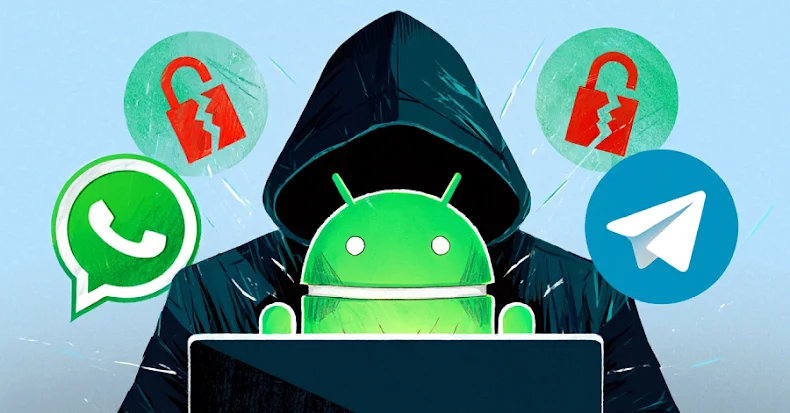


Cybersecurity researchers have disclosed details of a new Android banking trojan called Sturnus that enables credential theft and full device takeover to conduct financial fraud.
“A key differentiator is its ability to bypass encrypted messaging,” ThreatFabric said in a report shared with The Hacker News. “By capturing content directly from the device screen after decryption, Sturnus can monitor communications via WhatsApp, Telegram, and Signal.”
Another notable feature is its ability to stage overlay attacks by serving fake login screens atop banking apps to capture victims’ credentials. According to the Dutch mobile security company, Sturnus is privately operated and is currently assessed to be in the evaluation stage. Artifacts distributing the banking malware are listed below –
- Google Chrome (“com.klivkfbky.izaybebnx”)
- Preemix Box (“com.uvxuthoq.noscjahae”)

The malware has been designed to specifically single out financial institutions across Southern and Central Europe with region-specific overlays.
The name Sturnus is a nod to its use of a mixed communication pattern blending plaintext, AES, and RSA, with ThreatFabric likening it to the European starling (binomial name: Sturnus vulgaris), which incorporates a variety of whistles and is known to be a vocal mimic.
The trojan, once launched, contacts a remote server over WebSocket and HTTP channels to register the device and receive encrypted payloads in return. It also establishes a WebSocket channel to allow the threat actors to interact with the compromised Android device during Virtual Network Computing (VNC) sessions.
Besides serving fake overlays for banking apps, Sturnus is also capable of abusing Android’s accessibility services to capture keystrokes and record user interface (UI) interactions. As soon as an overlay for a bank is served to the victim and the credentials are harvested, the overlay for that specific target is disabled so as not to arouse the user’s suspicion.

Furthermore, it can display a full-screen overlay that blocks all visual feedback and mimics the Android operating system update screen to give the impression to the user that software updates are in progress, when, in reality, it allows malicious actions to be carried out in the background.
Some of the malware’s other features include support for monitoring device activity, as well as leveraging accessibility services to gather chat contents from Signal, Telegram, and WhatsApp, as well as send details about every visible interface element on the screen.
This allows the attackers to reconstruct the layout at their end and remotely issue actions related to clicks, text input, scrolling, app launches, permission confirmations, and even enable a black screen overlay. An alternate remote control mechanism packed into Sturnus uses the system’s display-capture framework to mirror the device screen in real-time.
“Whenever the user navigates to settings…
Source link
Disclaimer
We strive to uphold the highest ethical standards in all of our reporting and coverage. We blogs.grocliq.com want to be transparent with our readers about any potential conflicts of interest that may arise in our work. It’s possible that some of the investors we feature may have connections to other businesses, including competitors or companies we write about. However, we want to assure our readers that this will not have any impact on the integrity or impartiality of our reporting. We are committed to delivering accurate, unbiased news and information to our audience, and we will continue to uphold our ethics and principles in all of our work. Thank you for your trust and support.
Website Upgradation is going on for any glitch kindly connect at [email protected]