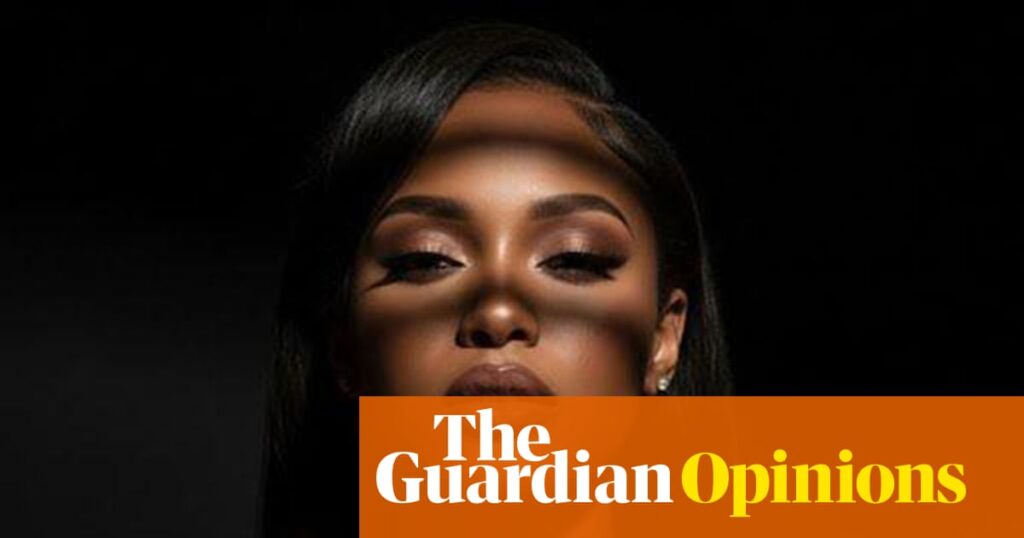

Xania Monet is the latest digital nightmare to emerge from a hellscape of AI content production. No wonder she’s popular … but how long will it last?
The music iteration of AI “actor” Tilly Norwood, Xania is a composite product manufactured of digital tools: in this case, a photorealistic avatar accompanied by a sound that computers have generated to resemble that of a human voice singing words.
Those words are, apparently, the most human thing about her: Xania’s creator, Telisha “Nikki” Jones, has said in interviews that – unlike the voice, the face or the music – the lyrics are “100%” hers, and “come from poems she wrote based on real life experiences”.
Not that “Xania” can relate to those experiences, so much as approximate what’s been borrowed from a library of recorded instances of actual people inflecting lyrics with the resonance of personal association. Some notes may sound like Christina Aguilera, some sound like Beyoncé, but – unlike any of her influences – Xania “herself” is never going to mourn, fear, risk anything for the cause of justice, make a difficult second album, explore her sexuality, confront the reality of ageing, wank, eat a cupcake or die.
She’s just a clearly branded audio-visual delivery vehicle for a familiar vibe and, when Jones herself is dead and gone, her “poems” can be fed into the AI’s infinite reproduction machine to be regenerated and resung for ever and ever and ever …
… depending on the terms in the commercial music contract which Jones just signed, on behalf of her creation, for $3m – after Xania’s songs hit 17 million streams in two months, started charting on Billboard and resulted in a bidding war.
With the rapid adoption of AI into the process of culture-making, the sudden commercial viability of Xania and products like her are restarting conversations about the intersection of capitalism, creativity and opportunity that are as awkward as they are ancient.
Awkward because, for all the romanticisation of human artistry, AI creatures don’t exist because a secretive cabal of aspirational robot overlords have forced them into lives. Xania exists because Telisha “Nikki” Jones is a creative entrepreneur who saw a market opportunity and 17 million freakin’ people turned up to download it.
“Is this the future of music?” asked Forbes magazine of the Jones deal – but, more pertinently, it’s the present and the past. The “familiar vibe” of recorded music loops and samples were used by commercial producers long before Apple started making them available on home computer desktop apps more than 20 years ago. One wonders what Beethoven would have made of the tech, given he borrowed ideas from Mozart … who borrowed from Bach … who adapted themes from Vivaldi.
If you’re concerned the face fronting the tune is not the person who wrote the song, I’ve got some terrible news for you about Whitney Houston, Céline Dion, Britney Spears, Elvis…
Source link
Disclaimer
We strive to uphold the highest ethical standards in all of our reporting and coverage. We blogs.grocliq.com want to be transparent with our readers about any potential conflicts of interest that may arise in our work. It’s possible that some of the investors we feature may have connections to other businesses, including competitors or companies we write about. However, we want to assure our readers that this will not have any impact on the integrity or impartiality of our reporting. We are committed to delivering accurate, unbiased news and information to our audience, and we will continue to uphold our ethics and principles in all of our work. Thank you for your trust and support.
Website Upgradation is going on for any glitch kindly connect at [email protected]