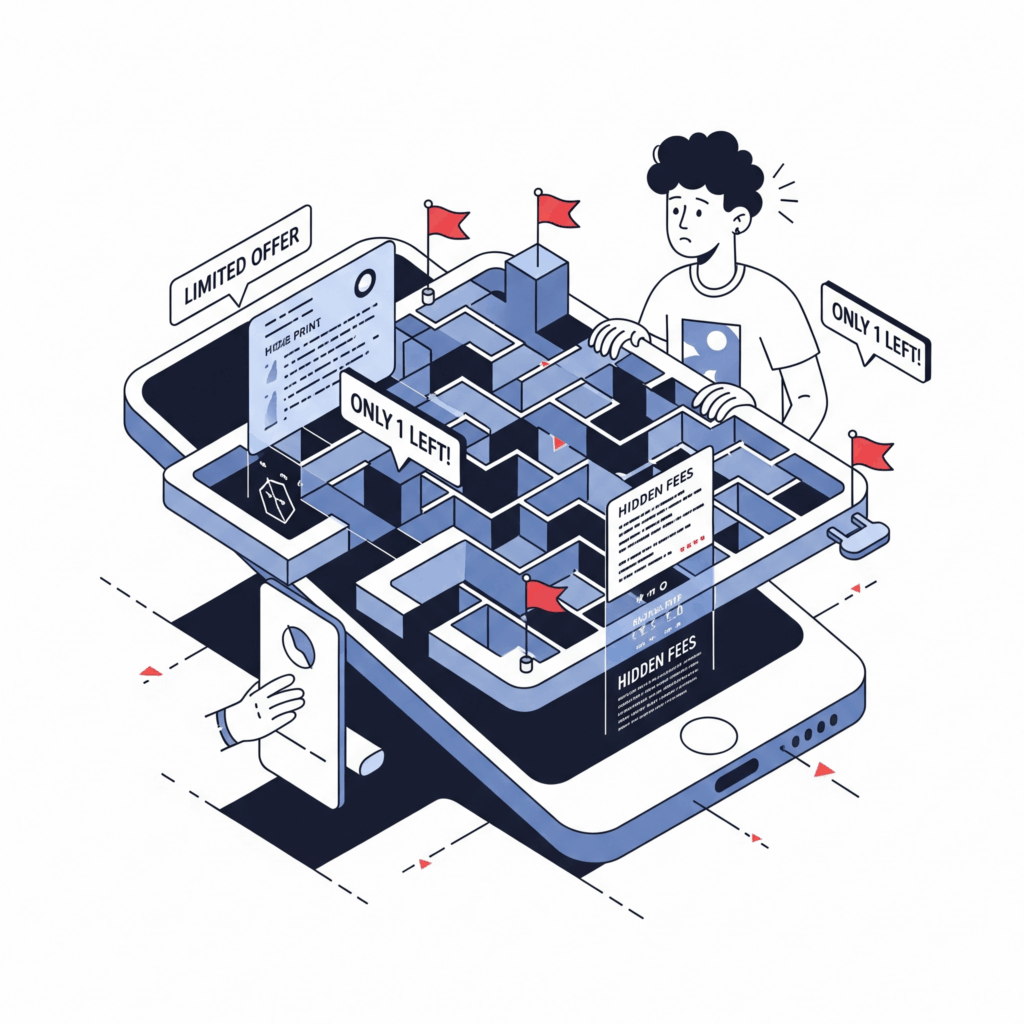

Online pharmacies Tata 1mg and Pharmeasy have reported that they have completed self-audits on dark patterns as required by the Central Consumer Protection Authority (CCPA). Both companies have not reported any dark patterns in their operations and have expressed their commitment to consumer protection and compliance with regulatory authorities towards this goal.
This comes after the CCPA issued an advisory in June this year, directing a range of digital platforms to conduct internal audits to detect dark patterns within three months. Following this, MediaNama filed an RTI with the CCPA seeking copies of these reports. The authority responded that it had instructed platforms to publicly release their self-audit reports on their own websites. While it did share the names of 25 companies that submitted reports, it did not provide details of what the reports contained. Since the RTI, the CCPA has released copies of 18 self-audit reports.
What are dark patterns?
Dark patterns are user interface designs that trick consumers into making choices that go against their interests. This could involve buying a more expensive product or paying more than the platform initially disclosed. As per the Department of Consumer Affairs (DoCA) guidelines, the following activities constitute dark patterns:
- False urgency: Creating a false sense of urgency or scarcity—such as implying a product is highly popular or available only for a limited time or in limited quantity.
- Basket sneaking: Including additional items in a user’s cart or payments to a charity without their consent. Examples of this could be adding travel insurance to a shopping cart when a user books a flight ticket.
- Confirm shaming: Using fear, shame, or guilt to pressure customers into buying something (e.g., using phrases like “I will stay unsecured” if a user opts out of insurance).
- Forced action: Forcing a user to buy an additional unrelated product/service. This includes situations where a seller forces a user to buy an additional product to be able to use the product you originally purchased.
- Subscription trap: Making cancellations difficult or confusing for users.
- Interface interference: Includes the use of design elements to hide relevant information from the customer. For example, making cancellation symbols less visible.
- Bait and switch: The practice of advertising a particular outcome and then providing another. Includes situations where a company offers you a quality product for a lower price, but then says that it isn’t available anymore right as you are about to make a purchase, offering a higher-priced product instead.
- Drip pricing: The act of not revealing the total price of a product upfront and revealing various elements during the various stages of a purchase.
- Disguised advertisement: Masking advertisements as user-generated content.
- Nagging: Bombarding the user with multiple requests/excessive information.
- Trick question:…
Source link
Disclaimer
We strive to uphold the highest ethical standards in all of our reporting and coverage. We blogs.grocliq.com want to be transparent with our readers about any potential conflicts of interest that may arise in our work. It’s possible that some of the investors we feature may have connections to other businesses, including competitors or companies we write about. However, we want to assure our readers that this will not have any impact on the integrity or impartiality of our reporting. We are committed to delivering accurate, unbiased news and information to our audience, and we will continue to uphold our ethics and principles in all of our work. Thank you for your trust and support.
Website Upgradation is going on for any glitch kindly connect at [email protected]