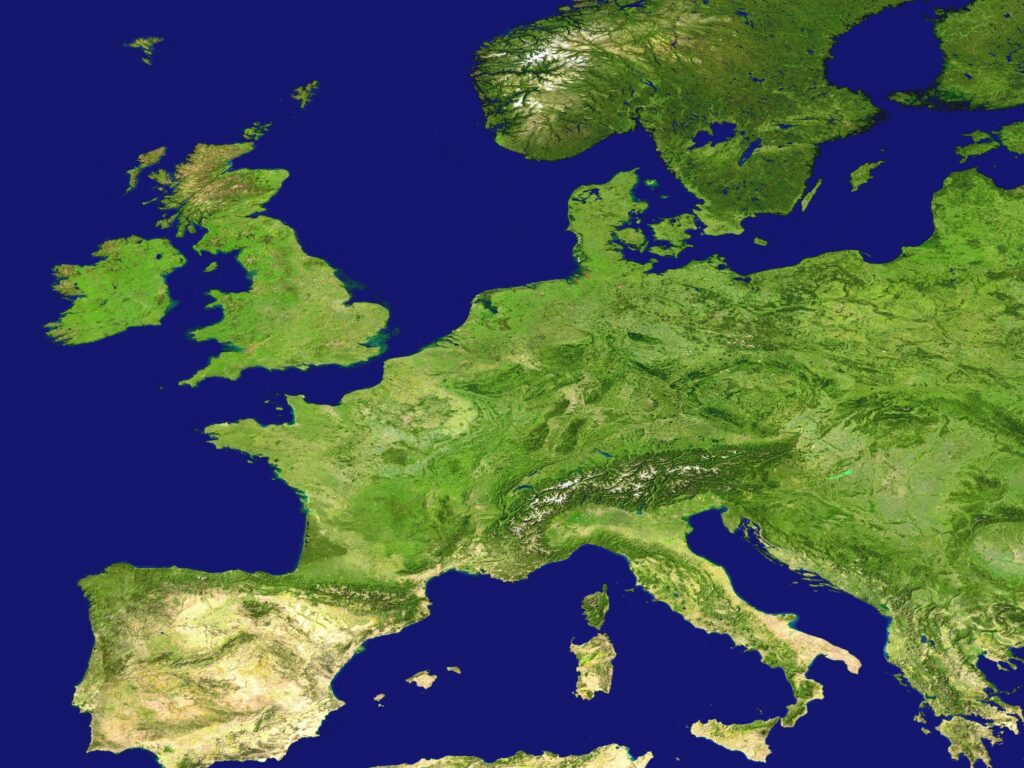

A €1.2 trillion AI prize sits on the table for Europe’s economy, and the region has the talent and raw ingredients to claim it.
While the global narrative often focuses on competition with the US and China, the view from the ground in Europe is a region of untapped potential, world-class talent, and deep infrastructure investment.
Debbie Weinstein, President of Google EMEA, sees a “new generation of visionary founders” ready to drive the region’s future. The opportunity is built on a foundation of scientific excellence and a workforce that is “as bright as anywhere else in the world.”
The task now is to leverage Europe’s strengths to close the AI adoption gap and accelerate growth.
A foundation of innovation
Europe is already a powerhouse of scientific breakthrough. The Google DeepMind team – which includes Nobel prize winners – drives discovery from London, while nearly one million researchers across EMEA use AlphaFold to solve biological problems. Europe isn’t starting from scratch; it is a hub of high-level R&D.
That intellectual capital is being matched by hard investment. Just last week, Google announced a €5.5 billion investment in Germany to support connectivity and infrastructure.
The choice to base ‘Security Operations Centres’ in Munich, Dublin, and Malaga also highlights Europe’s specific strength: a deep, culturally ingrained commitment to privacy and security. For businesses, this signals that Europe offers a stable and secure environment for building long-term digital strategies.
The potential of AI in Europe
Currently, only 14 percent of European businesses use AI. While some see this as a lag, optimists see it as massive headroom for growth. The businesses that do adopt these tools are seeing powerful results.
Weinstein points to Spanish startup Idoven as a prime example of Europe’s potential. They are using AI to help doctors detect heart disease earlier, proving that when European founders get access to the right tools, they build world-changing solutions.
The operational gains are equally tangible in traditional sectors. In automotive, upgrading from basic voice assistants to AI co-pilots can prevent accidents by detecting driver fatigue. In cybersecurity, modern tools allow teams to stay ahead of sophisticated threats. The technology acts as a force multiplier, giving businesses the “most powerful toolbox they’ve ever had.”
To fully realise this €1.2 trillion potential, Europe’s businesses need access to the same high-performance AI models as their global peers. The latest models are 300 times more powerful than those from two years ago, offering a massive productivity boost to those who can deploy them.
There is positive momentum on the regulatory front. Weinstein notes that the release of the Commission’s Digital Omnibus is a “step in the right direction” to help businesses compete globally.
The goal now is harmonisation; creating a clearer and simpler regime that allows companies to…
Source link
Disclaimer
We strive to uphold the highest ethical standards in all of our reporting and coverage. We blogs.grocliq.com want to be transparent with our readers about any potential conflicts of interest that may arise in our work. It’s possible that some of the investors we feature may have connections to other businesses, including competitors or companies we write about. However, we want to assure our readers that this will not have any impact on the integrity or impartiality of our reporting. We are committed to delivering accurate, unbiased news and information to our audience, and we will continue to uphold our ethics and principles in all of our work. Thank you for your trust and support.
Website Upgradation is going on for any glitch kindly connect at [email protected]