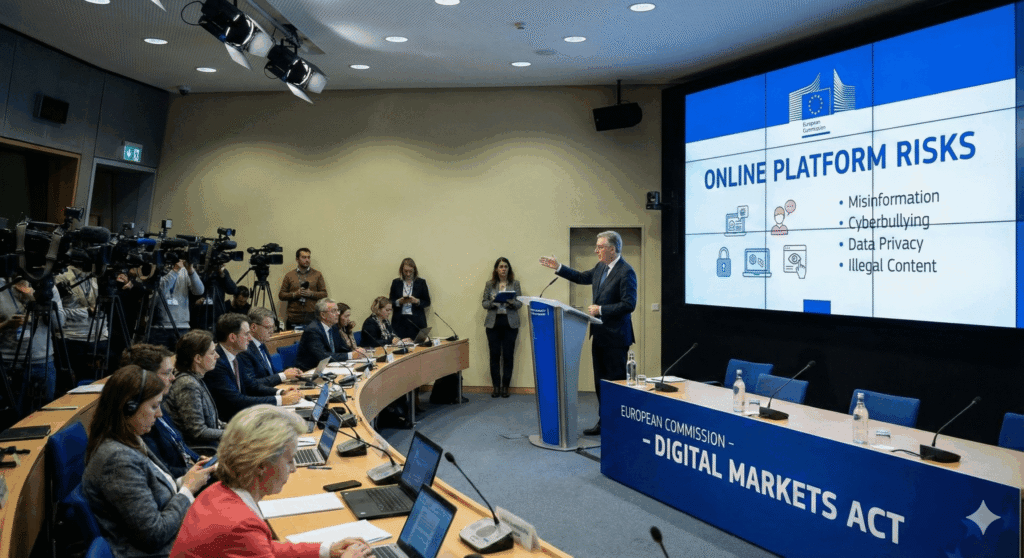

Dissemination of illegal products and services emerges as one of the key systemic risks across all service providers, the European Commission said in its report on the systemic risks present in Very Large Online Platforms and Very Large Online Search Engines (VLOPs and VLOSEs, respectively). The report contains details of the two-yearly risk assessments that the VLOPs and VLOSEs carried out since the European Union assigned them to these categories under the Digital Services Act (DSA). It also contains a range of other information sources, including studies by research institutions and civil society organisations.
For context, the VLOP and VLOSE categories under the DSA include platforms such as Alibaba AliExpress, Amazon Store, Apple App Store, Google Play, Google and Bing. The report suggests that all VLOPs and VLOSEs, particularly marketplaces and app stores, face these risks from dangerous/counterfeit products and apps containing malware, respectively. “Some providers presented systemic risks from products that may be compliant with the law but not with their terms and conditions, together with systemic risks from illegal products, services and activities,” the report emphasises. Besides the platforms themselves, civil society organisations raised concerns about the presence of medical and healthcare products, such as prescription-only medications, unauthorised psychoactive substances and counterfeit pharmaceuticals, as a systemic risk.
Other key points from the EU report on online platforms:
Risk of exposure to illegal activities (prostitution, violent content, etc.):
Both service providers and civil society mentioned the systemic risks posed by illegal services and activities like prostitution, the recruitment into criminal networks, offers to abduct, and hiring to kill. Some platforms also mentioned that bad actors could use their platforms for selling/exchanging high amounts of currency or illegal drugs or to offer cyberattack services. Violent content, as well as content related to harassment, doxing, grooming, and threats to life, are also key systemic risks that fall within this category.
Besides this, platforms and civil society argue that there is a risk of child sexual abuse material (CSAM), terrorist content and hate speech dissemination online. Civil society groups suggest that the design of platform interfaces and recommender systems, which stimulate engagement, can also end up prompting illegal content and can also recommend to users the illegal content they currently consume. Similar risks also exist with platform advertising because of targeted advertising techniques.
Content detection evasion:
“Across the board, techniques to evade detection, such as coded language and links to off-platform interactions and transactions, have been referenced by VLOP and VLOSE providers and CSOs [civil society organisations],” the report states. Civil society groups emphasised that platforms need to…
Source link
Disclaimer
We strive to uphold the highest ethical standards in all of our reporting and coverage. We blogs.grocliq.com want to be transparent with our readers about any potential conflicts of interest that may arise in our work. It’s possible that some of the investors we feature may have connections to other businesses, including competitors or companies we write about. However, we want to assure our readers that this will not have any impact on the integrity or impartiality of our reporting. We are committed to delivering accurate, unbiased news and information to our audience, and we will continue to uphold our ethics and principles in all of our work. Thank you for your trust and support.
Website Upgradation is going on for any glitch kindly connect at [email protected]