
This felt like the year that AI really arrived. It is on our phones and laptops; it is creeping into digital and corporate infrastructure; it is changing the way we learn, work and create; and the global economy rests on the stratospheric valuations of the corporate giants vying to control it.
But the unchecked rush to go faster and further could extinguish humanity, according to the surprisingly readable and chillingly plausible If Anyone Builds It, Everyone Dies (Bodley Head), by computer scientists Eliezer Yudkowsky and Nate Soares, which argues against creating superintelligent AI able to cognitively outpace Homo sapiens in all departments. “Even an AI that cares about understanding the universe is likely to annihilate humans as a side-effect,” they write, “because humans are not the most efficient method for producing truths … out of all possible ways to arrange matter.” Not exactly cheery Christmas reading but, as the machines literally calculate our demise, you’ll finally grasp all that tech bro lingo about tokens, weights and maximising preferences.
Human extinction is not a new idea, muses historian Sadiah Qureshi in Vanished: An Unnatural History of Extinction (Allen Lane), shortlisted for this year’s Royal Society Trivedi science book prize. Colonial expansion and the persecution of Indigenous peoples implicitly relied on Darwinian theories about some species being fated to outcompete others. Extinction, she points out, is a concept entwined with politics and social justice, whether in the 19th-century erasure of the Beothuk people in Newfoundland or current plans to “de-extinct” woolly mammoths so they can roam the land once more. Whose land, she rightly asks.
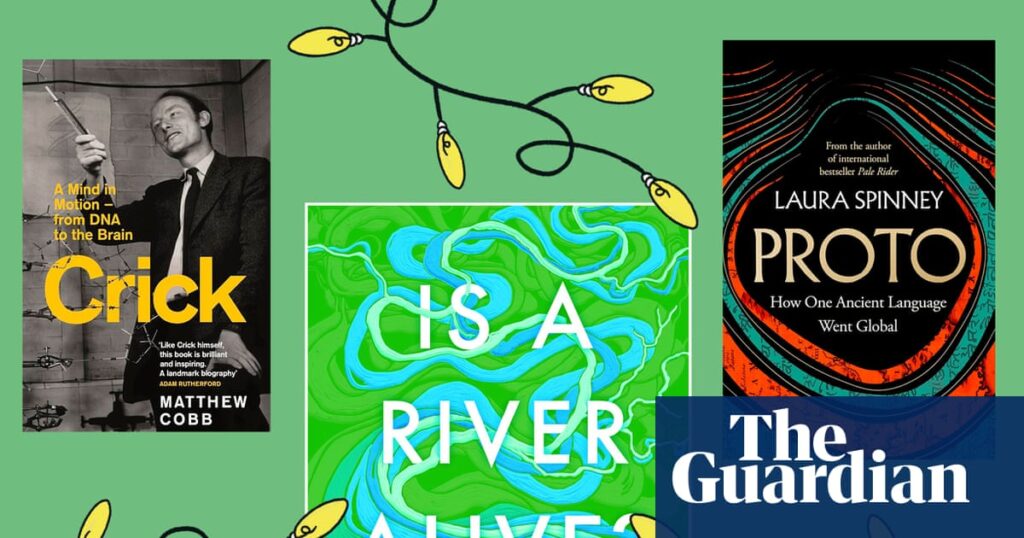
The idea of the landscape, as well as people, having rights, is explored by Robert Macfarlane in the immersive and important Is a River Alive? (Hamish Hamilton). By telling the stories of three rivers under threat in different parts of the world, he floats a thesis that is both ancient and radical: that rivers deserve recognition as fellow living beings, along with the legal protections that accompany it. The book, shortlisted for the Wainwright prize for conservation writing, “was written with the rivers who flow through its pages”, he declares, using pronouns that wash away any doubt as to his passion for the cause.
That awe at the natural world is shared by biologist Neil Shubin, who has led expeditions to the Arctic and Antarctica and takes the reader to the Ends of the Earth (Oneworld), also shortlisted for the Royal Society science book prize. “Ice has come and gone for billions of years … has sculpted our world and paved the way for the origin of our species,” Shubin says. But those geographical extremes are increasingly vulnerable, as climate change intensifies and treaties come under strain. This is polar exploration, but without the frostbite.
Source link
Disclaimer
We strive to uphold the highest ethical standards in all of our reporting and coverage. We blogs.grocliq.com want to be transparent with our readers about any potential conflicts of interest that may arise in our work. It’s possible that some of the investors we feature may have connections to other businesses, including competitors or companies we write about. However, we want to assure our readers that this will not have any impact on the integrity or impartiality of our reporting. We are committed to delivering accurate, unbiased news and information to our audience, and we will continue to uphold our ethics and principles in all of our work. Thank you for your trust and support.
Website Upgradation is going on for any glitch kindly connect at [email protected]