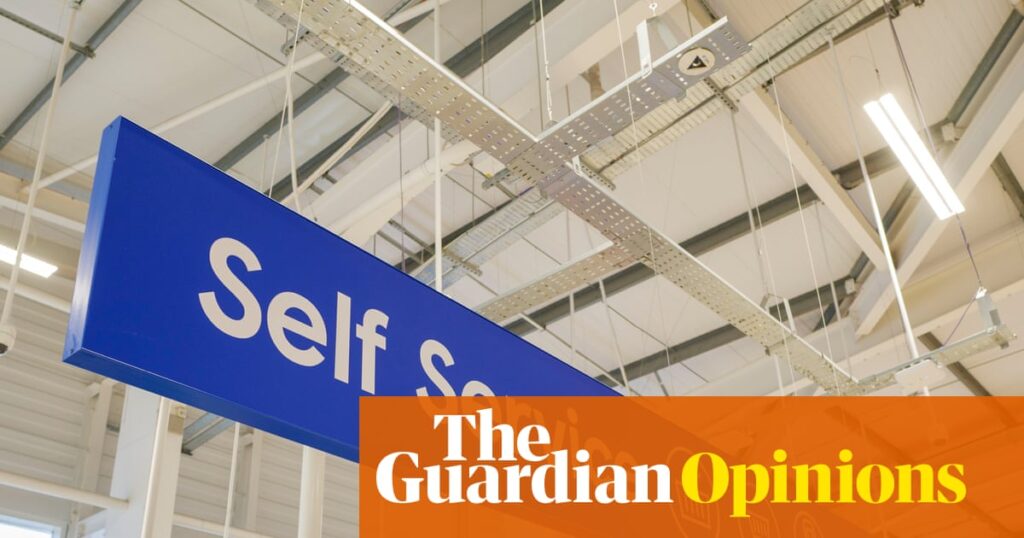

Walk through a supermarket and the technology is everywhere. Self-service checkouts, electronic shelf labels, handheld barcode scanners, and the video screens showing you – caught by AI facial recognition cameras – leaving the shop.
In an economy struggling for growth, the encroachment of these machines in our everyday lives could be an early sign of a new dawn – a tech-driven renaissance in activity, after years of flatlining growth in productivity and stalled business investment. No bad thing.
On the other hand, it could be the glimpse of a dystopian future that is already beginning to take shape. Of retailers utilising tech with low running costs – over low-paid, but relatively more expensive, humans. A productivity boom. But who for?
In the past year unemployment in Britain has risen to the highest rate in a decade, excluding the height of the Covid pandemic. Meanwhile economic output has maintained a reasonable, if pedestrian, pace of growth. Put those two things together and rising levels of productivity – output per hour of work – is the mechanical consequence.
Much of the gains are down to tumbling employment in low-paying sectors – retail in particular, where jobs are being shed and hiring frozen in the face of rising labour costs.
Bosses have blamed the government. This year’s £25bn hike in employer national insurance contributions (NICs) and living wage increases are among reasons the British Retail Consortium (BRC) gives for a 10% jump in the cost of employing people in full-time entry-level retail roles. It also complains about Labour’s employment rights bill and packaging costs hitting jobs.
At this time of year, retailers typically take on hordes of staff for the festive season. However, this year has not matched the usual pattern.
Figures from the jobs website Adzuna show retail vacancies fell by almost 6% in November, typically the key month for hiring. Openings are at the lowest point in a decade, excluding the Covid pandemic.
Much of this is down to feeble consumer demand and the boom in online retail. However, the rise of the machines is also playing a role. Industry surveys show investment in automation ranked second as the most common response to Labour’s business tax changes, after raising prices.
Taken together, it is hardly surprising retail employment has collapsed by more than 350,000 in the past decade. Young people applying for lower-skilled, entry-level positions – which also happen to be easier to automate – have borne the brunt.
Within Labour circles, there is an unspoken logic to driving up the cost of employment. For too long, firms have relied on paying poverty wages to turn a profit. UK firms have lagged the G7 investment league tables for decades. Economists reckon some of that is down to a lower relative cost of employing labour versus capital – especially in volatile economic times.
Recently, however, the balance has shifted. Employment costs are up; access to migrant labour is down, and
Source link
Disclaimer
We strive to uphold the highest ethical standards in all of our reporting and coverage. We blogs.grocliq.com want to be transparent with our readers about any potential conflicts of interest that may arise in our work. It’s possible that some of the investors we feature may have connections to other businesses, including competitors or companies we write about. However, we want to assure our readers that this will not have any impact on the integrity or impartiality of our reporting. We are committed to delivering accurate, unbiased news and information to our audience, and we will continue to uphold our ethics and principles in all of our work. Thank you for your trust and support.
Website Upgradation is going on for any glitch kindly connect at [email protected]