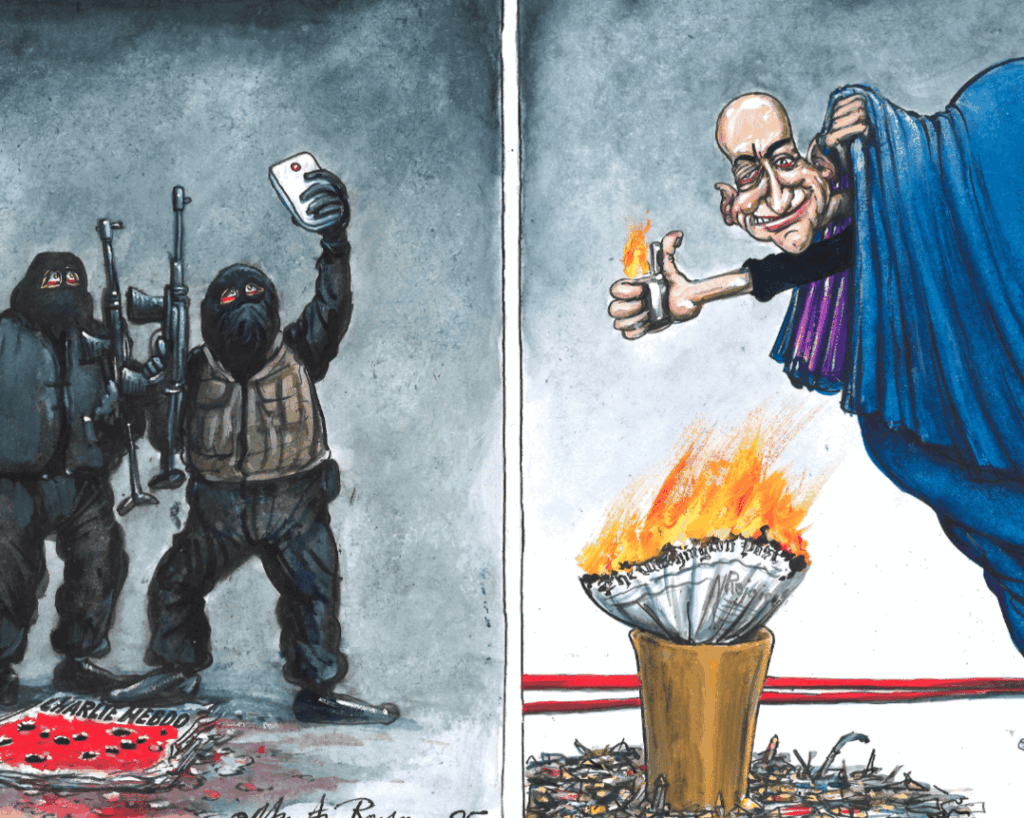

Good morning. It’s been one of those years where the news cycle felt almost too surreal to caricature. From Jeff Bezos commandeering Venice for his lavish wedding at a time of a growing backlash over inequality, to the spectacle of Donald Trump returning to office for a second term, the material was endless for cartoonists, though often difficult to navigate.
The less surreal included violence against Palestinians in Gaza by Israel, the entrenchment of the Russia-Ukraine war, the threat AI posed to human creativity and the return of the far right across Europe and the US.
Political cartoonists have the unenviable job of trying to capture the absurdity, brutality and resonance of these moments. They also have to make sense of the news cycle: prioritising the most outstanding moment of each day, and choosing how to portray it.
So for today’s newsletter, we spoke to award-winning cartoonist and illustrator Ben Jennings, asking him to choose some of his favourite cartoons of the past year. We also discussed the challenge of drawing a world already bordering on the absurd. That’s after the headlines.
In depth: A gift and a curse
Cartoons have long been a staple of satire for British newspapers and the Guardian is no exception. This tradition of eviscerating leaders – from kings to prime ministers – goes back to the 18th-century caricaturist James Gillray, who exposed the grotesque underbelly of the Enlightenment. Veteran cartoonist Martin Rowson’s exploration of that history is essential reading.
Centuries later, Ben Jennings tells us that the appetite, and the necessity, for such satire remains just as strong.
“We had the return of Donald Trump 2.0h-no to keep cartoonists busy in 2025,” Jennings says. “Despite being somewhat of a gift to cartoonists, it’s a double-edged sword insofar that his presidency has been so utterly farcical that it can be a challenge to satirise. In a way, it feels like his existence is in and of itself a satire of America and the turbulent times of late-stage capitalism.”
We’ve compiled a list of the year’s 12 most powerful cartoons. The selection includes Ben Jennings’s seven personal favourites, along with his commentary on the inspiration behind his sketches. We chose the remaining cartoons for the list.
Starting with Rowson’s January 2025 illustration was apt, because it encapsulated a decade of attacks on free speech: from the 2015 terrorist attack at the satirical newspaper Charlie Hebdo to the unsettling acquisition of the Washington Post by the technology mogul Jeff Bezos.
1 January: Martin Rowson on a brief 10-year history of cartooning
2 February: Ella Baron on the third anniversary of Russia’s invasion of Ukraine
Source link
Disclaimer
We strive to uphold the highest ethical standards in all of our reporting and coverage. We blogs.grocliq.com want to be transparent with our readers about any potential conflicts of interest that may arise in our work. It’s possible that some of the investors we feature may have connections to other businesses, including competitors or companies we write about. However, we want to assure our readers that this will not have any impact on the integrity or impartiality of our reporting. We are committed to delivering accurate, unbiased news and information to our audience, and we will continue to uphold our ethics and principles in all of our work. Thank you for your trust and support.
Website Upgradation is going on for any glitch kindly connect at [email protected]