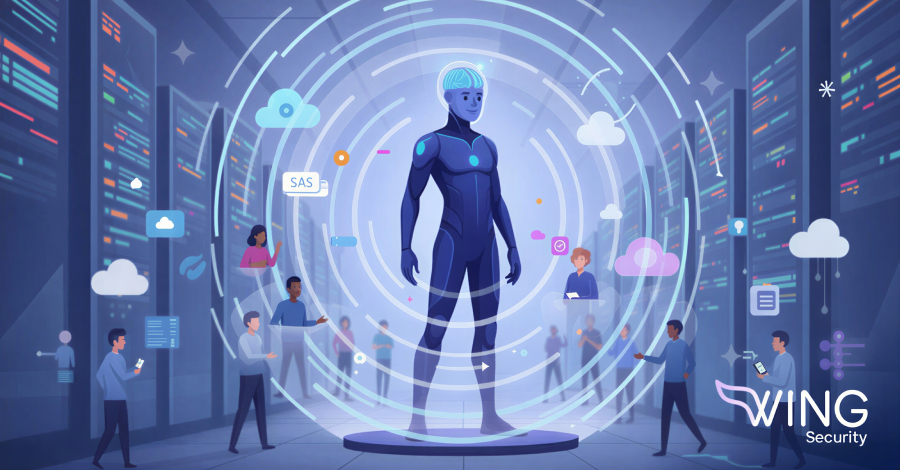


AI agents are accelerating how work gets done. They schedule meetings, access data, trigger workflows, write code, and take action in real time, pushing productivity beyond human speed across the enterprise.
Then comes the moment every security team eventually hits:
“Wait… who approved this?”
Unlike users or applications, AI agents are often deployed quickly, shared broadly, and granted wide access permissions, making ownership, approval, and accountability difficult to trace. What was once a straightforward question is now surprisingly hard to answer.
AI Agents Break Traditional Access Models
AI agents are not just another type of user. They fundamentally differ from both humans and traditional service accounts, and those differences are what break existing access and approval models.
Human access is built around clear intent. Permissions are tied to a role, reviewed periodically, and constrained by time and context. Service accounts, while non-human, are typically purpose-built, narrowly scoped, and tied to a specific application or function.
AI agents are different. They operate with delegated authority and can act on behalf of multiple users or teams without requiring ongoing human involvement. Once authorized, they are autonomous, persistent, and often act across systems, moving between various systems and data sources to complete tasks end-to-end.
In this model, delegated access doesn’t just automate user actions, it expands them. Human users are constrained by the permissions they are explicitly granted, but AI agents are often given broader, more powerful access to operate effectively. As a result, the agent can perform actions that the user themselves was never authorized to take. Once that access exists, the agent can act – even if the user never meant to perform the action, or wasn’t aware it was possible, the agent can still execute it. As a result, the agent can create exposure – sometimes accidentally, sometimes implicitly, but always legitimately from a technical standpoint.
This is how access drift occurs. Agents quietly accumulate permissions as their scope expands. Integrations are added, roles change, teams come and go, but the agent’s access remains. They become a powerful intermediary with broad, long-lived permissions and often with no clear owner.
It’s no wonder existing IAM assumptions break down. IAM assumes a clear identity, a defined owner, static roles, and periodic reviews that map to human behavior. AI agents don’t follow those patterns. They don’t fit neatly into user or service account categories, they operate continuously, and their effective access is defined by how they are used, not how they were originally approved. Without rethinking these assumptions, IAM becomes blind to the real risk AI agents introduce.
The Three Types of AI Agents in the Enterprise
Not all AI agents carry the same risk in enterprise environments. Risk varies based on who owns the agent, how broadly it’s used,…
Source link
Disclaimer
We strive to uphold the highest ethical standards in all of our reporting and coverage. We blogs.grocliq.com want to be transparent with our readers about any potential conflicts of interest that may arise in our work. It’s possible that some of the investors we feature may have connections to other businesses, including competitors or companies we write about. However, we want to assure our readers that this will not have any impact on the integrity or impartiality of our reporting. We are committed to delivering accurate, unbiased news and information to our audience, and we will continue to uphold our ethics and principles in all of our work. Thank you for your trust and support.
Website Upgradation is going on for any glitch kindly connect at [email protected]