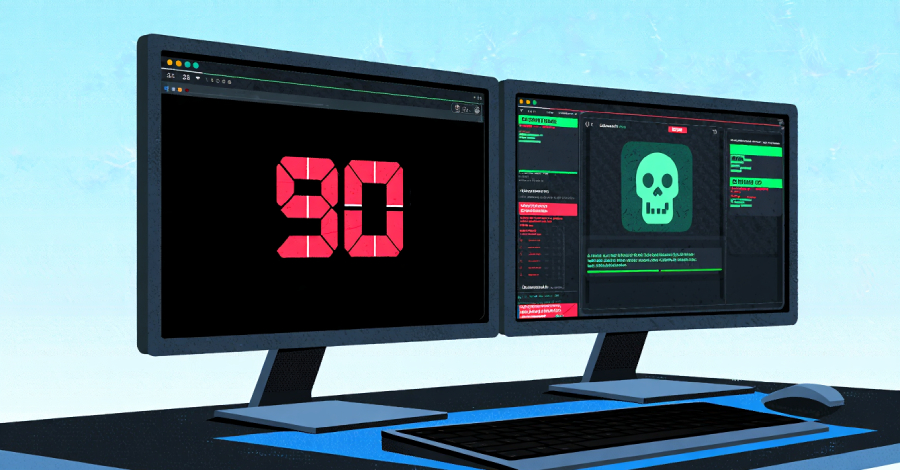


Many incident response failures do not come from a lack of tools, intelligence, or technical skills. They come from what happens immediately after detection, when pressure is high, and information is incomplete.
I have seen IR teams recover from sophisticated intrusions with limited telemetry. I have also seen teams lose control of investigations they should have been able to handle. The difference usually appears early. Not hours later, when timelines are built, or reports are written, but in the first moments after a responder realizes something is wrong.
Those early moments are often described as the first 90 seconds. However, taken too literally, that framing misses the point. This is not about reacting faster than an attacker or rushing to action. It is about establishing direction before assumptions harden and options disappear.
Responders make quiet decisions right away, like what to look at first, what to preserve, and whether to treat the issue as a single system problem or the beginning of a larger pattern. Once those early decisions are made, they shape everything that follows. Understanding why those choices matter (and getting them right) requires rethinking what the “first 90 seconds” of a real investigation represents.
The First 90 Seconds Are a Pattern, Not a Moment
One of the most common mistakes I see is treating the opening phase of an investigation as a single, dramatic event. The alert fires, the clock starts, and responders either handle it well or they do not. That is not how real incidents unfold.
The “first 90 seconds” happens every time the scope of an intrusion changes.
You are notified about a system believed to be involved in an intrusion. You access it. You decide what matters, what to preserve, and what this system might reveal about the rest of the environment. That same decision window opens again when you identify a second system, then a third. Each one resets the clock.
This is where teams often feel overwhelmed. They look at the size of their environment and assume they are facing hundreds or thousands of machines at once. In reality, they are facing a much smaller set of systems at a time. Scope grows incrementally. One machine leads to another, then another, until a pattern starts to emerge.
Strong responders do not reinvent their approach each time that happens. They apply the same early discipline every time they touch a new system. What was executed here? When did it execute? What happened around it? Who or what interacted with it? That consistency is what allows scope to grow without control being lost.
This is also why early decisions matter so much. If responders treat the first affected system as an isolated problem and rush to “fix” it, they close a ticket instead of investigating an intrusion. If they fail to preserve the right artifacts early, they spend the rest of the investigation guessing. Those mistakes can compound as the scope expands.
How Investigations are Hindered
When…
Source link
Disclaimer
We strive to uphold the highest ethical standards in all of our reporting and coverage. We blogs.grocliq.com want to be transparent with our readers about any potential conflicts of interest that may arise in our work. It’s possible that some of the investors we feature may have connections to other businesses, including competitors or companies we write about. However, we want to assure our readers that this will not have any impact on the integrity or impartiality of our reporting. We are committed to delivering accurate, unbiased news and information to our audience, and we will continue to uphold our ethics and principles in all of our work. Thank you for your trust and support.
Website Upgradation is going on for any glitch kindly connect at [email protected]