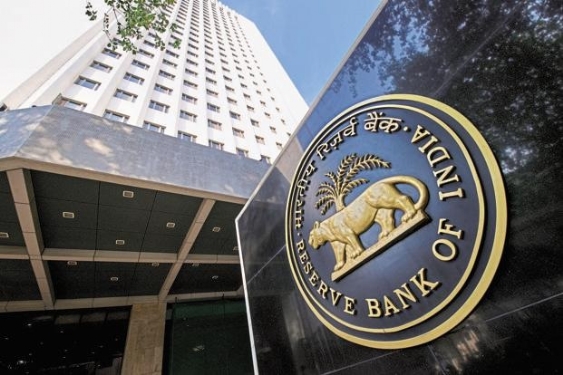

The Reserve Bank of India (RBI) has tightened rules for bank loans taken by stockbrokers and other market intermediaries, mandating that all credit facilities to such entities will be provided on a “fully secured basis”. This implies that stockbrokers will now be required to provide 100% collateral against loans for proprietary trading.
The collateral, the central bank said in a notification on February 13, can be in the form of cash, eligible securities or other financial assets, immovable properties, receivables, bank guarantees, and standby letters of credit. However, commercial paper and non-convertible debentures of original or initial maturity of up to one year are not acceptable.
Previously, it was not necessary that the entire loan amount be backed by collateral of the same value.
These guidelines, which will come into effect on April 1, 2026, are part of the Reserve Bank of India (Commercial Banks – Credit Facilities) Amendment Directions, 2026.
1. Which Credit Facilities are Permissible?
India’s central bank said that banks can lend to stockbrokers and other market intermediaries to fund their day-to-day operations, including financing for margin trading and market making for equity as well as debt securities.
“In respect of financing to brokers for margin trading facility (MTF) provided by them to their clients in terms of SEBI Regulations, the facility shall be fully secured by collateral of cash, cash equivalents and government securities, out of which a minimum of 50% shall be cash,” the RBI’s guidelines read.
Banks can also issue guarantees on behalf of brokers or professional clearing members and in favour of exchanges or clearing houses in lieu of:
- a) security deposit to the extent it is acceptable in the form of a bank guarantee as laid down by stock exchanges.
- b) margin requirements as per exchange regulations.
Any such guarantees must have a minimum collateral of 50%, out of which 25% must be cash, the RBI said.
2. What has the RBI banned?
The new framework prohibits bank funding for the acquisition of securities on a broker’s own account, except for certain market-making operations, and mandates that most exposures be backed by 100% collateral, out of which a minimum of 50% must be in the form of cash.
“Banks shall not provide finance to a CMI for acquisition of securities on its own account, including for proprietary trading or investments,” the RBI circular reads.
The following loans by a bank have also been banned:
- a) loans against partly paid shares
- b) loans against securities which are under any lock-in requirements
- c) loans against collateral of Indian Depository Receipts
- d) loans against securities of such entities to which banks are now allowed to grant loans and advances
- e) loans to companies for buyback of shares or securities
- f) loans against commercial papers and non-convertible debentures of original or initial maturity…
Source link
Disclaimer
We strive to uphold the highest ethical standards in all of our reporting and coverage. We blogs.grocliq.com want to be transparent with our readers about any potential conflicts of interest that may arise in our work. It’s possible that some of the investors we feature may have connections to other businesses, including competitors or companies we write about. However, we want to assure our readers that this will not have any impact on the integrity or impartiality of our reporting. We are committed to delivering accurate, unbiased news and information to our audience, and we will continue to uphold our ethics and principles in all of our work. Thank you for your trust and support.
Website Upgradation is going on for any glitch kindly connect at [email protected]