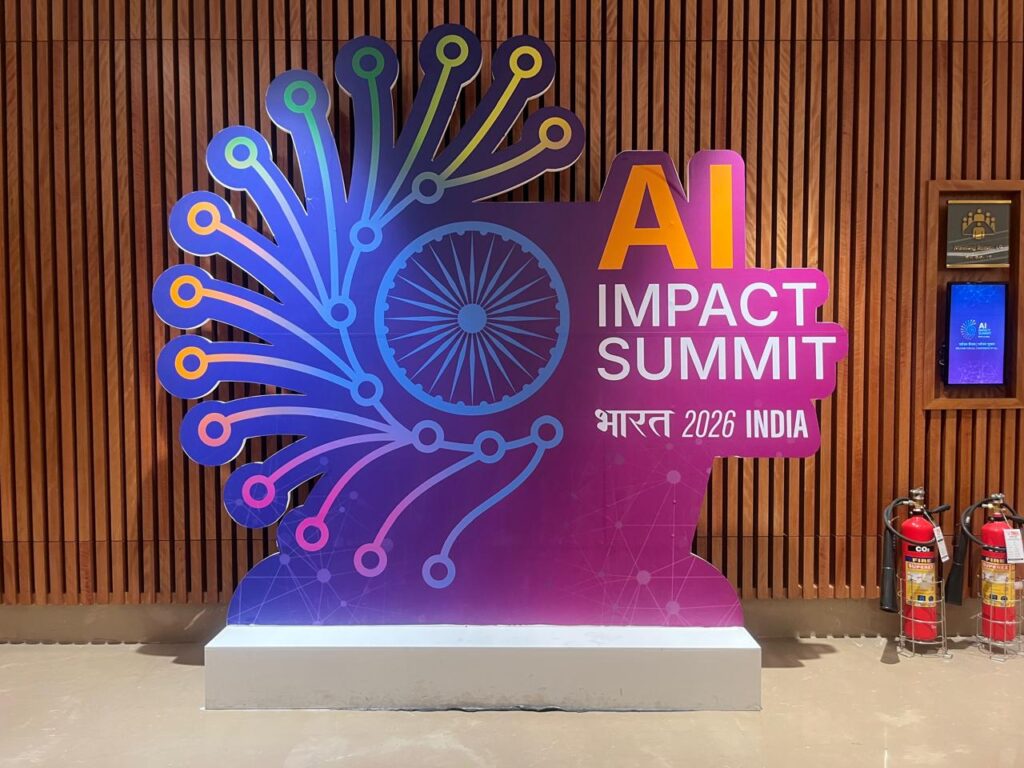

The Digital India BHASHINI Division (DIBD) under the Ministry of Electronics and Information Technology (MeitY) launched an open-source end-to-end voice AI stack called VoicERA at the India AI Impact Summit 2026 on February 18.
The DIBD developed the stack with EkStep Foundation, in collaboration with the International Institute of Information Technology (IIIT) Bengaluru, AI4Bharat, and the Centre for Open Societal Systems (COSS).
Deployed on the BHASHINI national language infrastructure, VoicERA provides an execution layer for multilingual voice systems, including real-time speech processing, conversational AI, and multilingual telephony abilities.
The stack is open, pluggable, interoperable, cloud deployable, and on-premise ready according to the official press release. And the government says that departments can use it to build voice-enabled services across sectors such as agriculture advisories, education support, grievance redressal, and scheme discovery.
At the launch, BHASHINI Chief Executive Officer (CEO) Amitabh Nag said the framework enables “secure, scalable multilingual systems” and allows citizens to “speak to the State and be understood”. Alongside the launch, BHASHINI also released a policy report titled ‘Building an Open and Responsible Voice Technology Ecosystem’, which sets out recommendations for using voice technologies to make digital public infrastructure (DPI) more accessible.
What are the policy recommendations?
Treating Foundational Datasets As Public Goods
The report argues that large, reusable speech datasets must function as digital public goods to prevent linguistic exclusion. However, it identifies persistent barriers. India’s linguistic diversity, including oral and low-resource languages, complicates transcription and annotation. Workforce shortages, fragmented metadata practices, inconsistent labelling standards and the absence of Indian-language evaluation frameworks further weaken dataset quality.
In parallel, copyright layers, unclear licensing in crowdsourced datasets, risks associated with scraped content, and ambiguities under the Digital Personal Data Protection Act (DPDP Act) create legal uncertainty, particularly regarding consent, research exemptions, and publicly available data.
To address these issues, the report recommends clarifying copyright and data protection exemptions, including assessing the Department for Promotion of Industry and Internal Trade’s (DPIIT) proposed hybrid copyright licensing model and issuing guidance on research exemptions and publicly disclosed personal data.
It also suggests examining whether a distinct lawful ground for AI processing is necessary under data protection law. Furthermore, it calls for incentivising consent intermediaries and consent managers to ensure informed, local-language participation.
Furthermore, the report urges sustained public funding for representative datasets, prioritising…
Source link
Disclaimer
We strive to uphold the highest ethical standards in all of our reporting and coverage. We blogs.grocliq.com want to be transparent with our readers about any potential conflicts of interest that may arise in our work. It’s possible that some of the investors we feature may have connections to other businesses, including competitors or companies we write about. However, we want to assure our readers that this will not have any impact on the integrity or impartiality of our reporting. We are committed to delivering accurate, unbiased news and information to our audience, and we will continue to uphold our ethics and principles in all of our work. Thank you for your trust and support.
Website Upgradation is going on for any glitch kindly connect at [email protected]