

Meta on Thursday said it’s taking legal action to tackle scams on its platforms by filing lawsuits against what it calls deceptive advertisers based in Brazil, China, and Vietnam.
As part of the effort, the advertisers’ methods of payment have been suspended, related accounts have been disabled, and the website domain names used to pull off the scams have been blocked.
Concurrently, the social media giant said it has also issued cease and desist letters to eight marketing consultants who advertised the ability to bypass its ad policy enforcement systems. This included fake “un-ban” or account restoration services and renting access to trusted accounts so as to help clients bypass its controls.
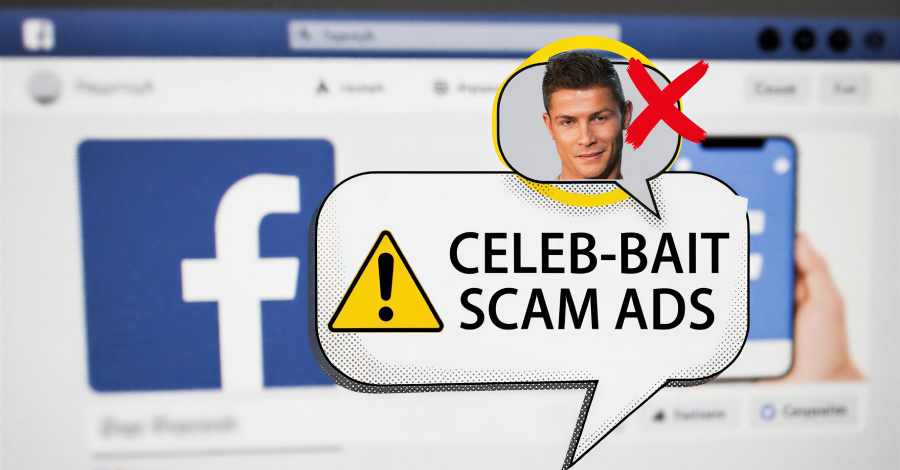
At least three advertisers, two from Brazil and one from China, were found to engage in celeb-bait scams, which often involve misusing the image of well-known figures to trick people into clicking on bogus ads that lead to scam sites. These websites are designed to harvest sensitive data or dupe unsuspecting users into sending money or investing in fake platforms.
The three advertisers against whom Meta has filed lawsuits are listed below –
- Brazil-based Vitor Lourenço de Souza and Milena Luciani Sanchez are being sued for using altered images and voices of celebrities to promote fraudulent healthcare products.
- Brazil-based B&B Suplementos e Cosméticos Ltda. (Brites Corp), Brites Academia de Treinamento Ltda., Daniel de Brites Macieira Cordeiro, and José Victor de Brites Chaves de Araújo for being part of a scam operation that leveraged synthetic imagery of a prominent physician to advertise healthcare products without regulatory approval and sold courses teaching the same tactics.
- China-based Shenzhen Yunzheng Technology Co., Ltd for using celeb-bait ads to target people in various countries, including the U.S. and Japan, as part of a fraud scheme designed to lure them into joining investment groups.
“To fight celeb-bait scams, we developed protections for celebrities whose images are repeatedly used in these schemes,” Meta said. “This program currently protects the images of more than 500,000 celebrities and public figures around the world.”
In addition, the company noted that it sued Vietnam-based advertiser Lý Văn Lâm for using cloaking techniques to get around its review process. Cloaking refers to an adversarial technique that aims to conceal the true nature of a website linked to an ad in an attempt to fool ad review systems by serving one version of its content during the review and showing an entirely different and malicious content to real users.
In this case, the advertiser is said to have used scam ads to offer discounted items from well-known brands in exchange for completing a survey. People who interacted with these ads were taken to phony websites where they were asked to enter credit card information to purchase items that were never delivered. Their credit…
Source link
Disclaimer
We strive to uphold the highest ethical standards in all of our reporting and coverage. We blogs.grocliq.com want to be transparent with our readers about any potential conflicts of interest that may arise in our work. It’s possible that some of the investors we feature may have connections to other businesses, including competitors or companies we write about. However, we want to assure our readers that this will not have any impact on the integrity or impartiality of our reporting. We are committed to delivering accurate, unbiased news and information to our audience, and we will continue to uphold our ethics and principles in all of our work. Thank you for your trust and support.
Website Upgradation is going on for any glitch kindly connect at [email protected]