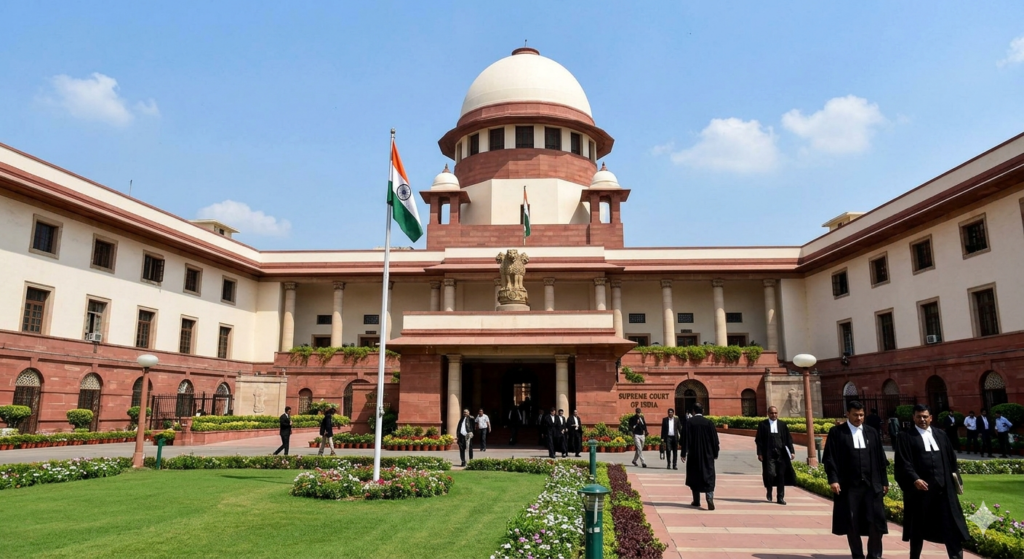

On March 10, the Supreme Court (SC) refused to stay the Bombay High Court order that struck down the Centre’s Fact-Check Unit (FCU) under the IT Amendment Rules, 2023, and referred the constitutional issues arising from the case to a three-judge bench to settle the legal questions involved. The FCU, which required platforms to remove government-flagged content or risk losing Section 79 safe harbour (legal protection from liability for user-generated content), remains struck down.
Additional Observations from the SC:
- Referred matter to a three-judge bench to “lay down the law”.
- Asked respondents to file counter-affidavits within four weeks.
- CJI flagged that the rules leave “misleading” undefined.
- CJI expressed concern over fake content targeting the Army on platforms.
- SG Mehta: amendment targets misinformation, not satire or criticism.
Petitioners: Kunal Kamra filed the original petition, arguing the FCU violated free speech. The Editors Guild, the Association of Indian Magazines (represented by Internet Freedom Foundation counsels Apar Gupta and Vrinda Bhandari), and the News Broadcasters and Digital Association also filed petitions. They argued that platforms fearing loss of safe harbour would over-comply and remove legitimate content, creating a chilling effect on free speech and press freedom.
What this means for platforms: Facebook, YouTube, Instagram, and X are not obligated to act on FCU flags. Section 79 safe harbour remains intact. If the three-judge bench reverses the HC order, platforms that fail to comply with FCU takedowns will lose safe harbour and face liability under both the IT Act and Bharatiya Nyaya Sanhita (BNS).
Implications for platforms: Facebook, YouTube, Instagram, and X are not required to act on FCU flags. The Section 79 safe harbour provision remains in effect. However, if the three-judge bench overturns the HC order, platforms that fail to comply with FCU takedown requests will lose safe harbour protection and face legal liability under both the IT Act and the Bharatiya Nyaya Sanhita (BNS), the new criminal code.
Implications for press freedom: The legal status of government-mandated fact-checking of media content remains unresolved. Petitioners stated this measure is inconsistent with the Shreya Singhal judgment (2015), which indicates that content removal requires a specific court or government order with defined safeguards.
The Bombay High Court’s Decision: The bench delivered a split verdict in 2024.
- Justice GS Patel (struck down): The government cannot be both subject and sole arbiter of what is fake about itself. Flagged a key anomaly: pornography and child abuse content requires a grievance process before takedown, but FCU-flagged content does not. Violated Articles 14, 19(1)(a), 19(1)(g) and natural justice
- Justice Neela Gokhale (upheld): The rule meets the proportionality test. Citizens need access to accurate information to participate…
Source link
Disclaimer
We strive to uphold the highest ethical standards in all of our reporting and coverage. We blogs.grocliq.com want to be transparent with our readers about any potential conflicts of interest that may arise in our work. It’s possible that some of the investors we feature may have connections to other businesses, including competitors or companies we write about. However, we want to assure our readers that this will not have any impact on the integrity or impartiality of our reporting. We are committed to delivering accurate, unbiased news and information to our audience, and we will continue to uphold our ethics and principles in all of our work. Thank you for your trust and support.
Website Upgradation is going on for any glitch kindly connect at [email protected]