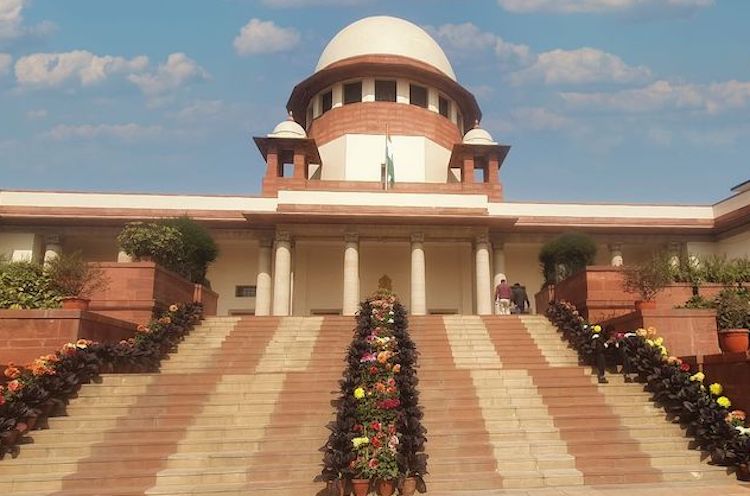

Determining what constitutes “public data” and “private data” is crucial to deciding the validity of the Digital Personal Data Protection (DPDP) Act, 2023, the Supreme Court said on March 12 as it issued notice to the Union of India on a PIL challenging the law. The court has asked the Centre to respond by March 23.
The petition was filed by journalist Geeta Seshu and the Software Freedom Law Centre (SFLC), represented by Senior Advocate Indira Jaising.
The Reporters’ Collective and journalist Nitin Sethi (represented by the Internet Freedom Foundation (IFF)), RTI activist Venkatesh Nayak, and the National Campaign for People’s Right to Information (NCPRI) have filed three related petitions separately, all challenging Section 36 of the DPDP Act read with Rule 23 of the DPDP Rules, 2025.
All petitions are being heard together. The court declined to stay the DPDP framework at the February 16 hearing.
Can journalists still access public interest data? RTI requests on public servants are already being blocked.
Investigative journalist Saurav Das told MediaNama that the Supreme Court Registry denied his application seeking details of action taken on 8,630 complaints against sitting judges received by the Chief Justice of India’s office, citing Section 8(1)(j) of the Right to Information (RTI) Act.
Public authorities widely misuse Section 8(1)(j) to block legitimate requests, often alongside a misreading of Section 11, which merely prescribes procedure and is not itself an exemption, Das said. Awareness of RTI as a journalism tool is already low, and the DPDP’s penal provisions will erode it further, he added.
“CBSE v. Aditya Bandhopadhyay have already made it considerably more difficult to access information relating to public servants, including elected representatives. The proposed amendments to the RTI Act will further privatise the State and push public-interest concerns even further out of the institutional imagination,” Das said.
The deletion of the “public interest” exception from both the RTI Act and the DPDP Act removes the remaining safeguard.
The Reporters’ Collective’s petition seeks repeal of the RTI amendment for all citizens, not just journalists. The Geeta Seshu petition seeks a specific exemption for journalistic, editorial, investigative, and public interest reporting, including protection of sources.
What the Supreme Court said
- Key question: “What is public data and what is private data” — the court said this determination is crucial to deciding the Act’s validity
- Can information about a person holding public office be termed private data? The court asked petitioners to suggest hypothetical situations where this issue could arise
- Neither the right to privacy nor the right to information should impede the other
- The court asked petitioners to suggest measures to protect individual privacy without compromising the right to information
- Data is…
Source link
Disclaimer
We strive to uphold the highest ethical standards in all of our reporting and coverage. We blogs.grocliq.com want to be transparent with our readers about any potential conflicts of interest that may arise in our work. It’s possible that some of the investors we feature may have connections to other businesses, including competitors or companies we write about. However, we want to assure our readers that this will not have any impact on the integrity or impartiality of our reporting. We are committed to delivering accurate, unbiased news and information to our audience, and we will continue to uphold our ethics and principles in all of our work. Thank you for your trust and support.
Website Upgradation is going on for any glitch kindly connect at [email protected]