
In a scene that might have come from a dystopian novel, books were being stamped with “Human Authored” logos at this week’s London Book Fair. The Society of Authors described its labelling scheme as “an important sticking plaster to protect and promote human creativity in lieu of AI labelled content in the marketplace”.
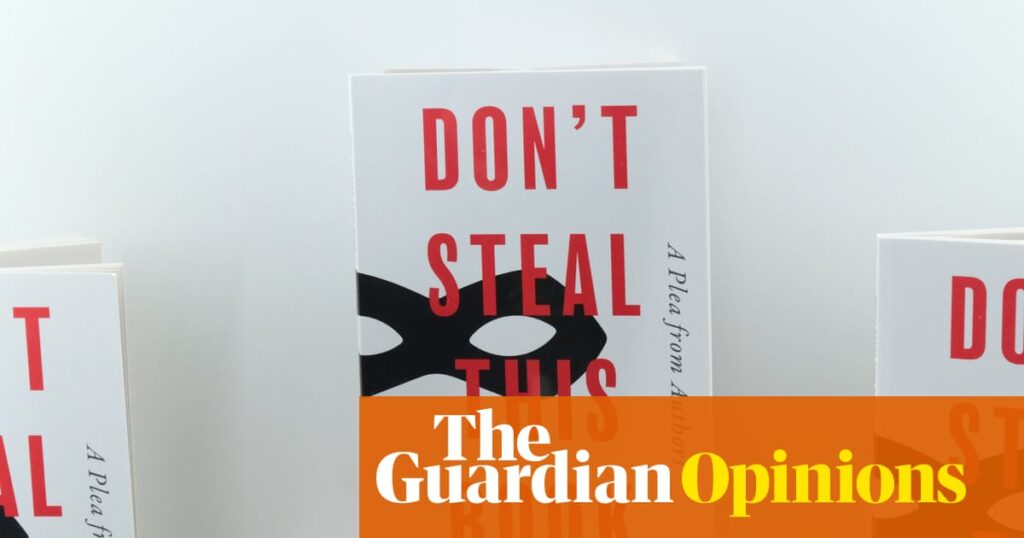
Visitors to the fair were also being given copies of Don’t Steal This Book, an anthology of about 10,000 writers including Nobel laureate Kazuo Ishiguro, Malorie Blackman, Jeanette Winterson and Richard Osman, in which the pages are completely blank. The back cover states: “The UK government must not legalise book theft to benefit AI companies.” The message is clear: writers have had enough.
The fair comes the week before the government is due to deliver its progress report on AI and copyright, after proposals for a relaxation of existing laws caused outrage last year. Philippa Gregory, the novelist, described the plans for an “opt-out” policy, which puts the onus on writers to refuse permission for their work to be trawled, as akin to putting a sign on your front door asking burglars to pass by.
According to a University of Cambridge study last autumn, almost 60% of published authors believe their work has been used to train large language models without consent or payment. And nearly 40% said their income had already fallen as result of generative AI or machine-made novels, a digital incarnation of Orwell’s Versificator in Nineteen Eighty-Four.
Factual books are clearly most vulnerable to ChatGPT. While sales in fiction are rising (thanks largely to the boom in romantasy novels), sales of nonfiction were down 6% last year compared with 2024, the lowest since 2014. But three nonfiction books, all by women, bucked the trend: Nobody’s Girl, Virginia Giuffre’s posthumous memoir of abuse by Jeffrey Epstein; A Hymn to Life, Gisèle Pelicot’s account of her ordeal at the hands of her ex-husband; and Careless People, Sarah Wynn-Williams’s exposé of working at Facebook. The success of these first-person testimonies show the powerful reach of nonfiction beyond the world of publishing. These are painfully human stories. And readers must be able to trust in the authenticity of their voices.
Last year, Sarah Hall requested that her publisher Faber, print a “Human Written” stamp on her latest novel, Helm. “AI might mimic the words more rapidly, but … it hasn’t bled on the page,” she said. “And it doesn’t have a family to support.”
Writers’ livelihoods must not be sacrificed to the promise of economic growth. The UK’s creative industries contributed £124bn to the UK economy in 2023, £11bn from publishing. The Society of Authors is requesting consent and fair payment for use of work, and transparency as to how a book was “written”. These are hardly radical propositions. But in an era of fake news and AI slop, they are sadly necessary. Writers need more than sticking plasters….
Source link
Disclaimer
We strive to uphold the highest ethical standards in all of our reporting and coverage. We blogs.grocliq.com want to be transparent with our readers about any potential conflicts of interest that may arise in our work. It’s possible that some of the investors we feature may have connections to other businesses, including competitors or companies we write about. However, we want to assure our readers that this will not have any impact on the integrity or impartiality of our reporting. We are committed to delivering accurate, unbiased news and information to our audience, and we will continue to uphold our ethics and principles in all of our work. Thank you for your trust and support.
Website Upgradation is going on for any glitch kindly connect at [email protected]