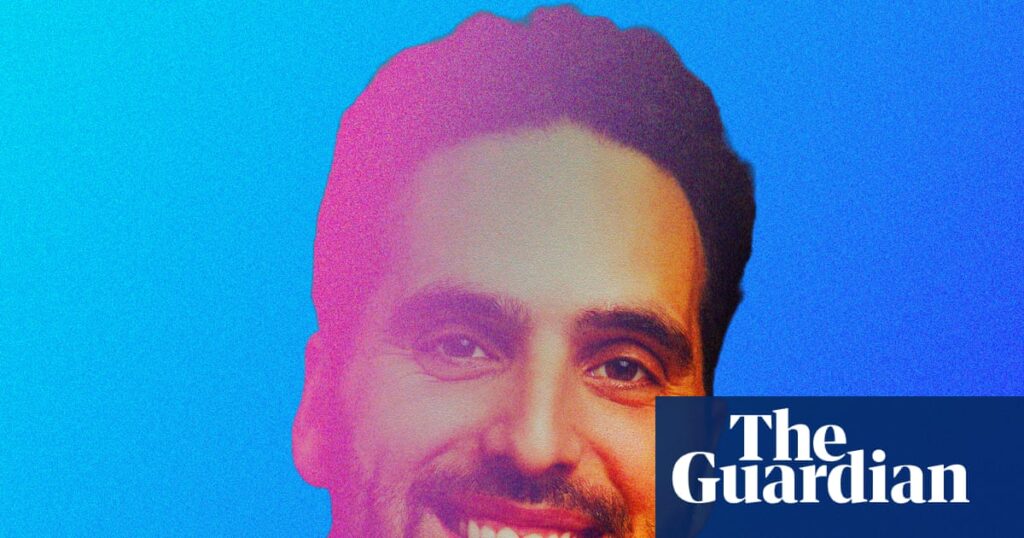

Simone Stolzoff describes himself as “naturally an uncertain person” inclined to rumination and self-doubt. This tendency benefits him in his work as a journalist, but can otherwise be a double-edged sword.
While working for a magazine in New York, Stolzoff was approached about a job at a design firm in San Francisco. Now, he laughs at how tortured he felt “having to decide between two attractive career paths”.
But, at the time, “it really sent me for an existential loop,” he says. “I could see these two diverging paths – Simone the journalist, Simone the designer – and, for the life of me, I could not make up my mind.”
Stolzoff talked his options through – with everybody. “My yoga teacher, my Uber driver, all my friends and family …” He grimaces. “I was insufferable.”
He wound up choosing the San Francisco job: a new home, an unfamiliar industry. The experience informed his new book, How to Not Know: The Value of Uncertainty in a World That Demands Answers.
Looking back, Stolzoff says over video-call from his home in the Bay Area, his mistake was aspiring to feel certain: “It was my intolerance of uncertainty that was causing so much of the angst.”
Trying to anticipate the future and make plans with confidence is unique to humans, and evolved to keep us safe. But, especially in these uncertain times, it can easily lead us astray, says Stolzoff: “We have these brains that are wired to get out of uncertainty as quickly as possible, in a world where there are triggers all around us.”
Because the future is unknowable, the real question is how we can learn to cope better with not knowing, Stolzoff says. Our conversation has been condensed and edited for clarity.
Why did you write this book?
My first book, The Good Enough Job, is about how work came to be so central to our identities. The most common question asked by readers was “How should I think about the future of my career, given AI and all these other changing forces?”
The honest answer was that I wasn’t sure. I wanted to throw my hands up and say “I was a poetry student, for God’s sake”. That is not a very gratifying response to receive, so I wanted to explore this question of uncertainty, and not just insofar as it relates to career.
The cliché is that you write the book you need to read – I went on this multi-year journey of exploring the science and psychology of uncertainty partly so that I could hopefully get better at dealing with it myself.
The modern world is often said to be acutely, even uniquely turbulent, but we also know more about it than ever. Why might we be struggling in this moment?
It is a precarious time. Stanford economist Nicholas Bloom has been studying global uncertainty since the early 1980s; the five highest measurements all occurred in the past five years.
Source link
Disclaimer
We strive to uphold the highest ethical standards in all of our reporting and coverage. We blogs.grocliq.com want to be transparent with our readers about any potential conflicts of interest that may arise in our work. It’s possible that some of the investors we feature may have connections to other businesses, including competitors or companies we write about. However, we want to assure our readers that this will not have any impact on the integrity or impartiality of our reporting. We are committed to delivering accurate, unbiased news and information to our audience, and we will continue to uphold our ethics and principles in all of our work. Thank you for your trust and support.
Website Upgradation is going on for any glitch kindly connect at [email protected]