

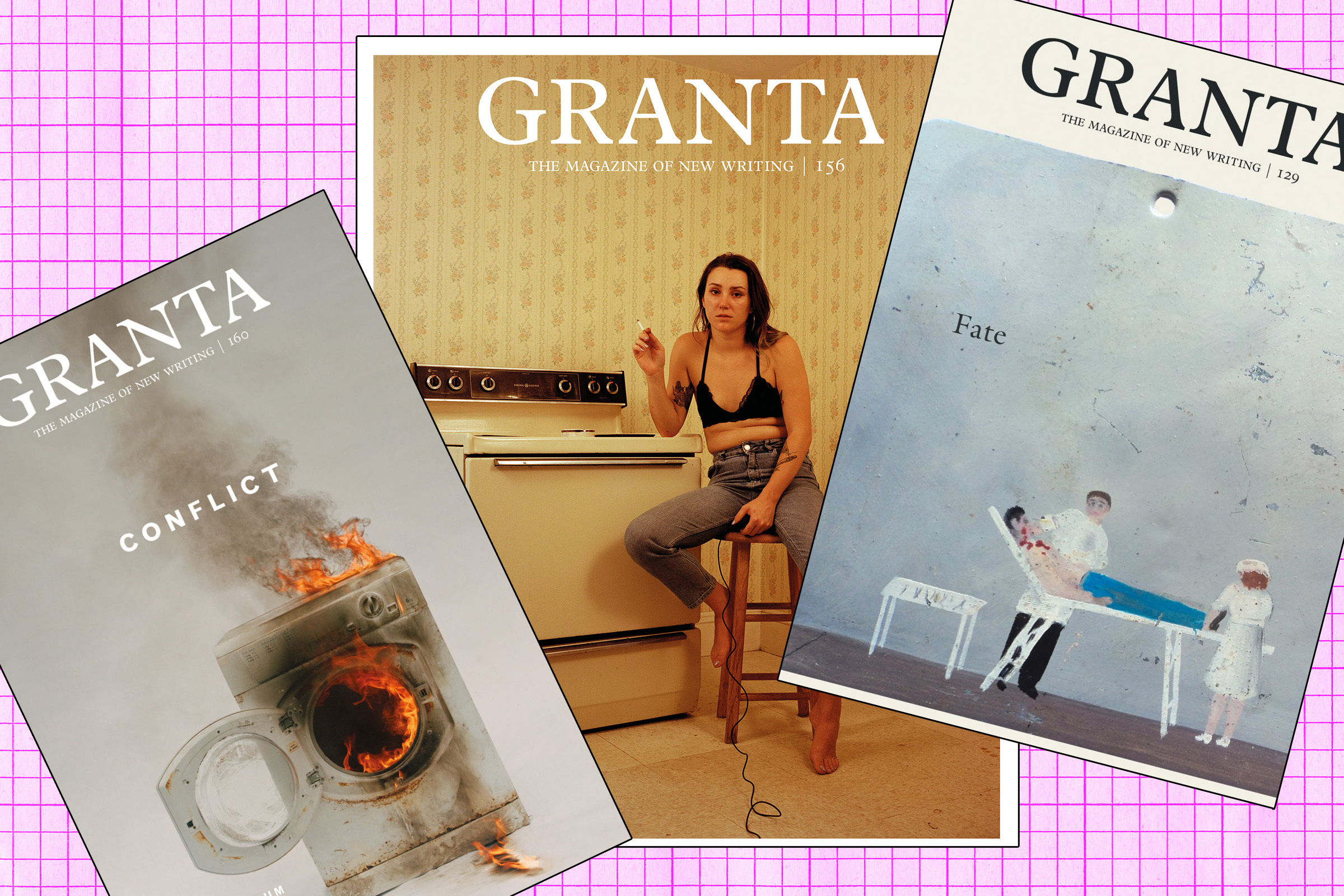
The literary world is being torn asunder after a prestigious magazine was accused of publishing an AI-generated short story.
Titled “The Serpent in the Grove,” the story was published Saturday by Granta on its website after being chosen as the winner of the Commonwealth Foundation Short Story Prize for the Caribbean region. Judges praised the story, attributed to a writer identified as Jamir Nazir, for its “precise yet richly evocative language.”
But readers immediately noticed suspicious things about its prose. Accusations rang out after Ethan Mollick, an associate professor at Wharton who researches AI’s impact on education, called out the story as machine-written in a social media post. The AI detector Pangram, he found, flagged it as 100 percent AI-generated. (While the capabilities of some AI detectors are dubious, Pangram claims it has 99 percent accuracy with a vanishingly small false positive rate.)
Of course, your eyeballs are probably sufficient for sussing out AI writing, and many on social media joined in to mock the story and decry the grim state of affairs its publication portends. All the AI hallmarks are there: negative parallelisms (“it’s not X, it’s Y”), lists of threes, turgid imagery, and nonsensical figurative language that seems a world apart from the precision the judges lauded it for.
Explain this passage, for example: “She had the kind of walking that made benches become men.” Or this: “Coins meant for rice or kerosene slid across the counter and came back white rum hot as apology.” Or: “Hard living lays itself on a man like wet sacking; it never asks permission.” And finally: “He saw all of it in a knife-second.”
None of these quite add up. There’s an approximation of a vague image in each of them, but they don’t come into focus. Because if the story is indeed heavily written by an AI, that’s literally what the tech does: provide a statistical approximation of human language. It doesn’t understand what it’s outputting; the puzzle piece may roughly fall into place, but the picture doesn’t cohere.
Strengthening the accusations is what sleuths dug up on the author, Nazir, whose bio describes him as a “Trinidadian writer of East Indian heritage.” Little else can be found about him online, but on a LinkedIn page that appears to be his, he regularly praises AI. His headshot provided on the Commonwealth Foundation website also appears to be AI-generated.
The controversy was not soothed by the response from the prize organizers and the publishers.
Sigrid Rausing, the publisher of Granta, released a statement explaining that her team showed the short story to Anthropic’s AI chatbot Claude and asked if it was AI-generated. The chatbot explained it was “almost certainly not produced unaided by a…
Source link
Disclaimer
We strive to uphold the highest ethical standards in all of our reporting and coverage. We blogs.grocliq.com want to be transparent with our readers about any potential conflicts of interest that may arise in our work. It’s possible that some of the investors we feature may have connections to other businesses, including competitors or companies we write about. However, we want to assure our readers that this will not have any impact on the integrity or impartiality of our reporting. We are committed to delivering accurate, unbiased news and information to our audience, and we will continue to uphold our ethics and principles in all of our work. Thank you for your trust and support.
Website Upgradation is going on for any glitch kindly connect at [email protected]