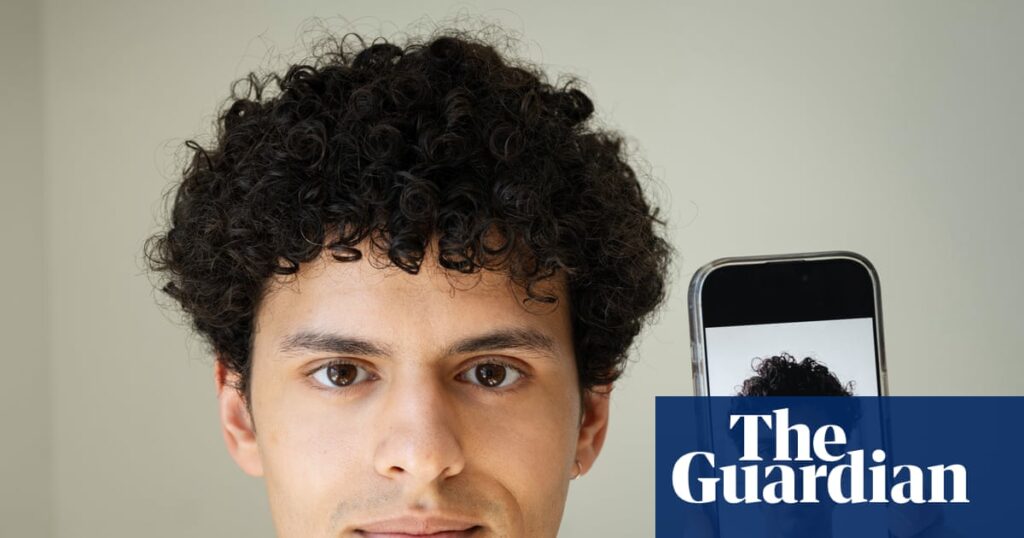

Plastic surgeons are increasingly concerned about the rise of “AI face”, as more and more clients arrive in their offices with unrealistic AI-generated visions of what they want to look like.
Dr Nora Nugent, a cosmetic surgeon from Tunbridge Wells, has seen this first hand. Clients have started coming to her office with photos of themselves beautified by AI and a false expectation that those results are achievable with surgery. She is also the president of the British Association of Aesthetic Plastic Surgeons, and says many colleagues are having similar experiences.
“I can only predict an increase, given the rate AI has been incorporated into every aspect of life,” she said.
People using AI chatbots to generate their ideal faces are increasingly arriving at surgeons’ offices with briefs demanding flawless skin, sharply sculpted cheekbones, refined noses and near-perfect symmetry – standards that are too time consuming, prohibitively expensive and, in many cases, physically unattainable.
While AI can control every single pixel, “surgery certainly doesn’t work on that microscopic detailed level”, according Dr Alex Karidis, a surgeon based in west London.
For many clients, however, those expectations are shaped long before they ever meet a surgeon. Karidis and Nugent describe how psychologically effective AI-generated images can be in defining – and reinforcing – clients’ aesthetic ideals.
Nugent said: “Once you see an image, it’s wired into you.”Karidis agreed, describing AI images as being “seared” into patients’ minds, and said colleagues had recently been inundated with them.
Surgeons are also keen to emphasise that cosmetic surgery outcomes are far from guaranteed.
“The patient has to understand that there is human variation in how they heal, how they age and what can be done” said Nugent. “I say to patients beforehand: it’s not limitless what I can do in surgery. Neither of us control everything.”
To better understand the phenomenon, I asked an AI agent to recommend cosmetic procedures and generate images for Karidis to review. As I requested increasingly dramatic alterations to my appearance, the agent eventually began warning me about the feasibility of the operations I was proposing.
But Karidis says that when clients do their deep-dive research into cosmetic procedures, they often fixate on the images and ignore “all the noise” around them.
“That’s the bottom line for everybody. The moment you show them something like that, that’s it,” he said.
Surgeons have also noticed consistencies in the aesthetics of “AI face”, particularly hyper-symmetry – something AI can generate effortlessly but which is often impossible to recreate in real life.
If one of your eyes is a few millimetres higher than the other, AI can alter that in…
Source link
Disclaimer
We strive to uphold the highest ethical standards in all of our reporting and coverage. We blogs.grocliq.com want to be transparent with our readers about any potential conflicts of interest that may arise in our work. It’s possible that some of the investors we feature may have connections to other businesses, including competitors or companies we write about. However, we want to assure our readers that this will not have any impact on the integrity or impartiality of our reporting. We are committed to delivering accurate, unbiased news and information to our audience, and we will continue to uphold our ethics and principles in all of our work. Thank you for your trust and support.
Website Upgradation is going on for any glitch kindly connect at [email protected]