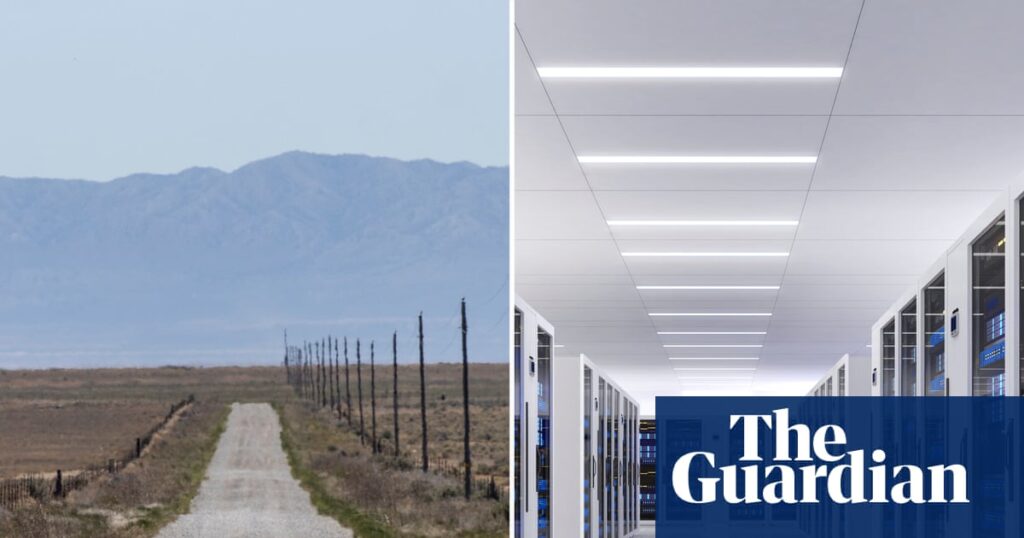

A record-shattering drought has racked much of the US. But the artificial intelligence industry is pushing ahead regardless, with the majority of planned datacenters set to be built in drought-ridden locations, a Guardian analysis has found.
About two-thirds of upcoming datacenters, which typically require a large amount of water to operate, are set to be built in places that have been among the driest in the country over the past year.
Of 809 planned datacenters, 517 are in locations that have been in drought conditions throughout the past year, according to data from Cleanview and the federal government, which grades drought across four levels of severity. A similar proportion of existing datacenters are already situated in drought-affected areas.
More than 60% of the contiguous US is currently at varying stages of drought, the largest expanse for spring in modern records, with a particularly severe lack of rain and snow in the south-east and west desiccating croplands and raising fears of a disastrous wildfire season.
Scientists have determined that the climate crisis, caused by the burning of fossil fuels, is worsening the duration and intensity of droughts in the US.
But a stampede of new datacenters are adding extra demands via their hefty energy and water requirements. Large datacenters, some the size of small towns, can require up to 5m gallons of water a day, equivalent to the water use of up to 50,000 people, in order to provide cooling to arrays of humming networked computers.
Overall, the multiplying datacenters across the US are set to demand as much as 73 billion gallons of water a year by 2028, up from about 17 billion gallons in 2023. Each 100-word AI prompt uses up roughly one 500ml bottle of water due to the cooling needs of datacenters, researchers have estimated.
“The AI industry is sprinting as fast as it can to gain market dominance, and the rest of us have to deal with a great increase in water demand in places already in drought,” said Christopher Dalbom, an expert in water resources law at Tulane University.
“Even if there wasn’t climate change, we’d be feeling the effects of droughts more acutely, because water demand is going up and up, to feed more people and water more lawns and crops. There isn’t enough water to go around. Now with this explosion of datacenters, I think a crunch point is inevitable.”
Companies such as Google, Meta, Microsoft and Amazon are pouring billions of dollars into new datacenters, with developers often drawn to dry, sparsely populated areas, due to the lower cost of land and generous tax breaks. Arid climates are also thought to cause the least amount of corrosion to equipment over time.
One of the world’s largest datacenters, a complex twice the size of Manhattan, was last month controversially approved in a Utah county that has been deep in drought since summer last year. Meanwhile, Walla Walla county in…
Source link
Disclaimer
We strive to uphold the highest ethical standards in all of our reporting and coverage. We blogs.grocliq.com want to be transparent with our readers about any potential conflicts of interest that may arise in our work. It’s possible that some of the investors we feature may have connections to other businesses, including competitors or companies we write about. However, we want to assure our readers that this will not have any impact on the integrity or impartiality of our reporting. We are committed to delivering accurate, unbiased news and information to our audience, and we will continue to uphold our ethics and principles in all of our work. Thank you for your trust and support.
Website Upgradation is going on for any glitch kindly connect at [email protected]