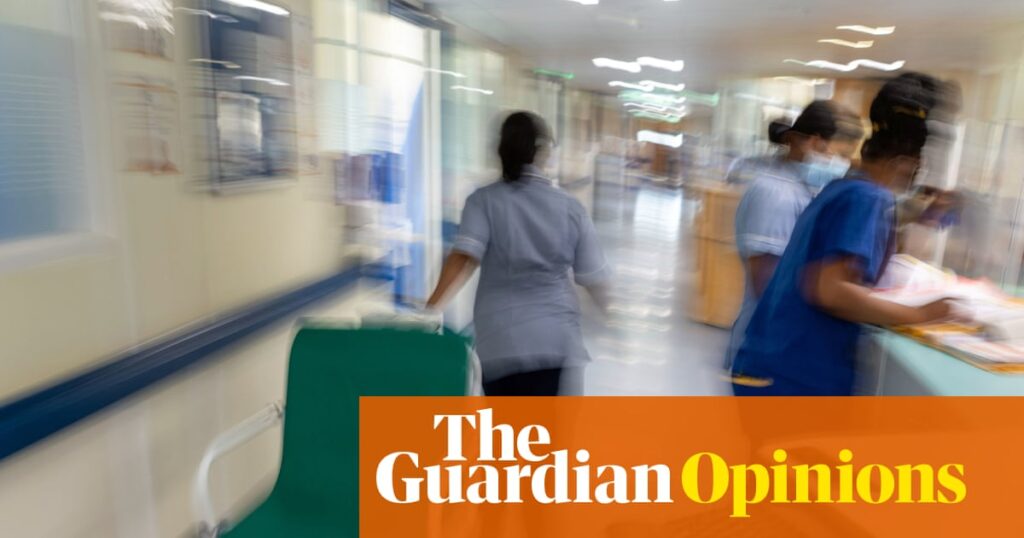

A calf cramp should not be a brush with death. Mine almost was.
For five days, I had what felt like a stubborn muscle spasm in my left calf. It was tender, swollen and getting worse. I assumed it was a muscle problem and went to my chiropractor, who treated it as a muscle issue.
But the pain kept worsening, and I turned to an AI health tool I had built for myself, based on my expertise training companies on how to adopt AI tools effectively, using my medical records, medications, lab work, and visit notes. It flagged deep vein thrombosis, or DVT, and pointed me to the diagnostic step that mattered: an ultrasound.
DVT is a blood clot in a deep vein, usually in the leg. The blood clot symptoms include pain, swelling, warmth and skin color changes, especially when they affect one leg. It also said suspected DVT should be assessed urgently and, when a doctor thinks DVT is possible, the patient should be referred for an ultrasound scan quickly.
So I called my primary care office, which advised me to schedule an appointment or go to urgent care. Ordinarily, that would have sounded sensible. But urgent care could not provide the scan. My doctor’s office could not provide it either. If I followed the slow path, I might lose days before being sent to the emergency room anyway.
That question mattered because deep vein thrombosis can become deadly when part of a clot breaks off and travels to the lungs, causing a pulmonary embolism. The CDC describes DVT and pulmonary embolism as serious conditions that are often under-diagnosed. The National Heart, Lung, and Blood Institute warns that a pulmonary embolism can cause death when a clot is large or when there are multiple clots.
So I talked to my AI tool and went to the ER, despite knowing I would spend many hours there instead of a few minutes before being seen at urgent care. The ultrasound found four clots in my left leg.
Afterward, the danger stopped being theoretical. I learned that my wife’s grandfather had died from a pulmonary embolism. So had the mother of one of her close friends. What had felt like a nagging cramp suddenly looked like the edge of a cliff.
This is not an argument for replacing doctors with machines. The emergency room doctors did the indispensable work. They ordered imaging, interpreted results, weighed whether to admit me, spoke with specialists and sent me home on blood thinners when it was safe to do so. The AI did not cure me. It just helped me ask the right question in time.
The science is catching up with these stories. A new study on medical AI in Science, led by researchers affiliated with Harvard Medical School and Beth Israel Deaconess Medical Center, tested a large language model on clinical reasoning tasks, including real emergency department cases. Science News reported that the model was more likely than physicians to include the correct diagnosis among possible answers.
That does not mean patients should trust random chatbots over clinicians. It means doctors and AI may…
Source link
Disclaimer
We strive to uphold the highest ethical standards in all of our reporting and coverage. We blogs.grocliq.com want to be transparent with our readers about any potential conflicts of interest that may arise in our work. It’s possible that some of the investors we feature may have connections to other businesses, including competitors or companies we write about. However, we want to assure our readers that this will not have any impact on the integrity or impartiality of our reporting. We are committed to delivering accurate, unbiased news and information to our audience, and we will continue to uphold our ethics and principles in all of our work. Thank you for your trust and support.
Website Upgradation is going on for any glitch kindly connect at [email protected]