
Hello, and welcome to TechScape. I’m Blake Montgomery, US tech editor at the Guardian, writing to you after fending off sunburns at the beach. Today, we’re discussing a rocky week for the AI industry’s finances and how California’s proposed billionaire’s tax is changing the political posture of the state’s governor.
AI is facing a financial stress test, but the bubble hasn’t popped
After the share prices of Alphabet, Samsung, and SK Hynix dropped, a global stock selloff caused markets worldwide to slump.
The downturn is evidence of just how much the tech sector determines the globe’s economic fate.
Warnings of a cataclysmic AI-induced crash haven’t come true yet, though.
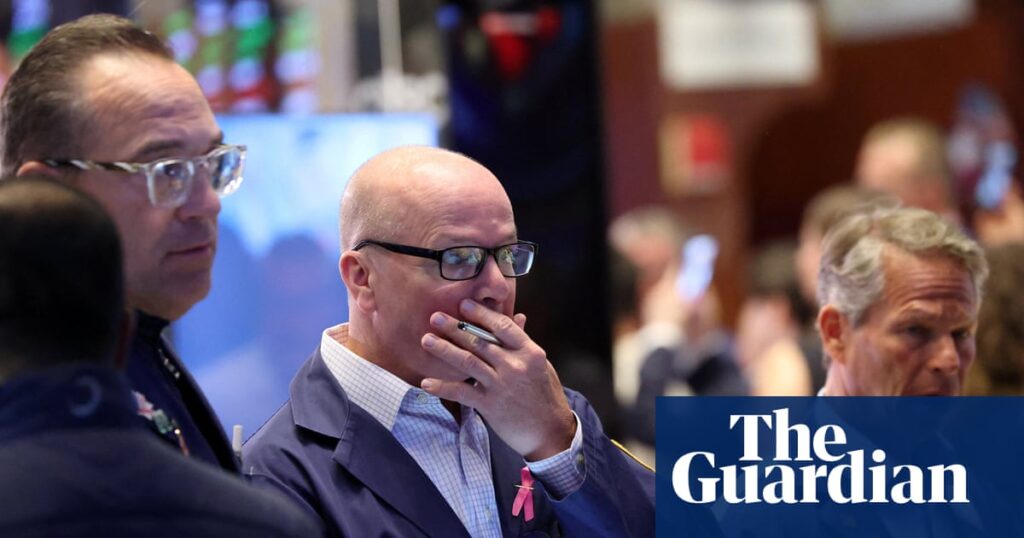
Last week, the stock market started souring on artificial intelligence. With AI touching just about every major stock, global markets soon suffered a downturn, and that slump has extended into this week.
Is this the beginning of the end for AI, the bubble popping? I don’t think so.
The drop started on 22 June with Alphabet, which saw its worst day on the market in over a year after a slew of high-profile leaders announced departures from Deepmind, Google’s elite AI research unit.
A day later in South Korea, shares of chipmakers Samsung and SK Hynix dropped by double digits. Investors worried about two factors: both companies’ $500bn spending plans and signs of weakening demand for their high-bandwidth memory products from other players in the AI sector.
The two companies make up half of the value of South Korea’s Kospi (Korea Composite Stock Price) Index, much like how seven companies make up 30% of the S&P 500 index in the US – meaning that they can tilt the country’s entire stock market and economy. Their precipitous drops last week triggered a halt on trading.
In the US, the downturn may seem to spell doom, but it represents only a minor decline in comparison with the chip sector’s gains this year. The share price of some chip companies has tripled, or more, since January, driving entire stock markets sharply higher in Asia.
Should the selloff of chip stocks continue, it may pop the ballooning global investment in AI. However, that will require a panic far more severe than what we’ve seen so far. As my colleague Graeme Wearden reports, the Kospi index is up 125% this year, its strongest first half since at least 1990. Though they’ve stumbled of late, Samsung and SK Hynix are the main drivers of that increase. The former’s share price has jumped 183% so far this year, the latter’s 310%. Google is also in a good position, with its stock up 20% year-to-date.
The recent dip has dented but not erased those gains.
Other companies are hurting worse from the selloff despite not being involved in its inception. SpaceX, which owns Elon Musk’s xAI, suffered major losses as a result of the panic, though it doesn’t make chips.
A double-digit dip in SpaceX’s stock price punctured the hype surrounding the company less than two weeks after its stock…
Source link
Disclaimer
We strive to uphold the highest ethical standards in all of our reporting and coverage. We blogs.grocliq.com want to be transparent with our readers about any potential conflicts of interest that may arise in our work. It’s possible that some of the investors we feature may have connections to other businesses, including competitors or companies we write about. However, we want to assure our readers that this will not have any impact on the integrity or impartiality of our reporting. We are committed to delivering accurate, unbiased news and information to our audience, and we will continue to uphold our ethics and principles in all of our work. Thank you for your trust and support.
Website Upgradation is going on for any glitch kindly connect at [email protected]