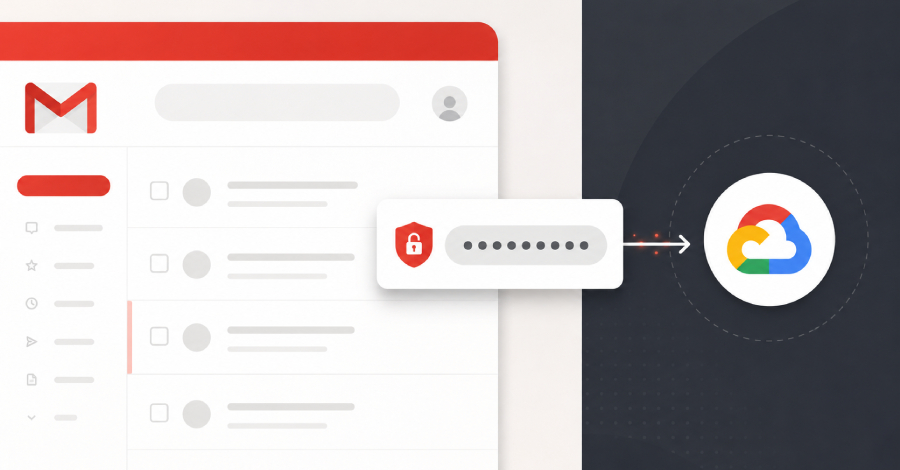


The threat actor known as ToddyCat has been attributed to a new malware called Umbrij that’s designed to gain surreptitious access to a victim’s email correspondence via the Google API.
“In this campaign, the attackers focused their attention on corporate email communications hosted on Gmail, targeting access compromise via APIs,” Kaspersky said in a detailed report published this week. “Because the Google API relies on the OAuth 2.0 protocol for authorization, applications can use an OAuth token to access requested email resources.”
The adversary is said to have developed Umbrij to acquire this token and use it to connect to the browser’s management console in headless mode via a remote debugging port.
Subsequently, a series of requests was issued to obtain an OAuth authorization code, which was then exchanged for an access token to reach the target resources via the API. The technique has been codenamed Shadow Token via Remote Debug (STRD) by the Russian cybersecurity vendor.
What’s notable about the attack is that it’s viable on Chromium-based browsers and exploits an active Gmail session. In other words, the idea is to launch the browser in headless mode, connect via the remote debugging port to seize control, and leverage an already logged-in Gmail session to obtain access to the Google account resources.
Three different versions of Umbrij have been uncovered, including versions that feature helper functions for debugging and for searching and selecting user accounts within the browser.
ToddyCat is the name assigned to an advanced persistent threat (APT) that has a history of targeting various organizations in Europe and Asia since at least 2020. In November 2025, Kaspersky detailed the hacking group’s use of a custom tool dubbed TCSectorCopy to lay their hands on Microsoft Outlook email data belonging to targeted companies.
The cybersecurity company said it discovered Umbrij during what it described as a “threat hunting operation,” as part of which a scheduled task impersonating its software (“KasperskyEndpointSecurityEDRAvp”) was used to launch a digitally signed file. The signed file then employed DLL side-loading to launch Umbrij.
To accomplish this task, three legitimate binaries susceptible to DLL side-loading were abused –
- BDSubWiz.exe, a component of the Submission Wizard in Bitdefender ConnectAgent
- VSTestVideoRecorder.exe, a component of the video-recording tool used for testing with Microsoft Visual Studio
- GoogleDesktop.exe, a discontinued Google Desktop Search application used for indexing files and performing quick searches on a local Windows computer
Regardless of the executable used, the end result is the same: launching the rogue Umbrij DLL written in .NET and obfuscated with ConfuserEx, an open-source obfuscator. The tool can also be invoked along with command-line parameters that specify which browsers to target (Google Chrome or Microsoft…
Source link
Disclaimer
We strive to uphold the highest ethical standards in all of our reporting and coverage. We blogs.grocliq.com want to be transparent with our readers about any potential conflicts of interest that may arise in our work. It’s possible that some of the investors we feature may have connections to other businesses, including competitors or companies we write about. However, we want to assure our readers that this will not have any impact on the integrity or impartiality of our reporting. We are committed to delivering accurate, unbiased news and information to our audience, and we will continue to uphold our ethics and principles in all of our work. Thank you for your trust and support.
Website Upgradation is going on for any glitch kindly connect at [email protected]