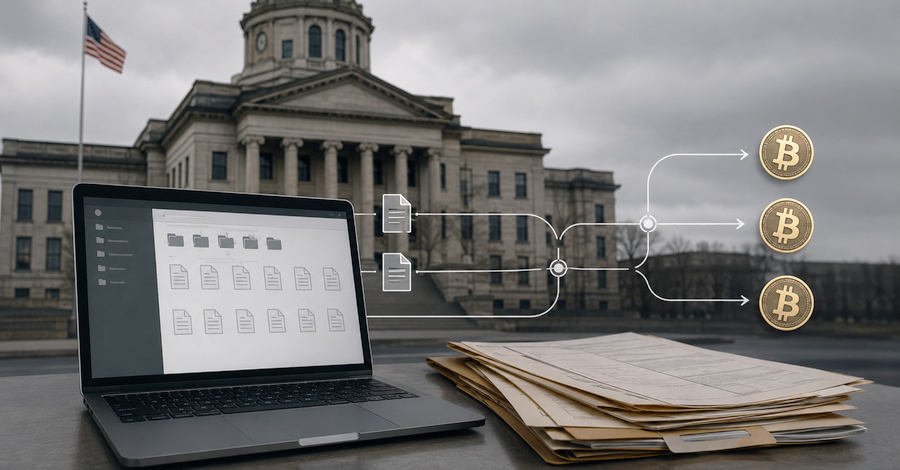


A U.S. government entity paid about $1 million to keep stolen files from being leaked, according to a new case study by Rakesh Krishnan for Ransom-ISAC, built on a leaked negotiation chat and the blockchain trail the payment left.
The odd part: the group that took the money calls itself Kairos, but it may not be a ransomware gang at all. Krishnan found no sign that it ever locked a single machine: no encryptor, no locker, no demand for a decryption key. The threat was simpler. Steal the files, then charge the victim not to publish them.
Krishnan does not name the victim, but the chat points to Union County, Ohio. The proof-of-theft files carry names like Union.xlsx, 1 union co psi template.doc, and a final archive called union.rar. The victim calls itself a small county with limited resources. The attacker leans on one folder in particular, marked “prosecutors office,” warning that leaking it would help criminals dodge charges.
The clues fit a real case. In May 2025, Union County, Ohio, said it detected ransomware on its network and later notified 45,487 residents and staff that their data had been taken, affecting most of the county of roughly 70,000. The stolen records ran from Social Security and financial details to fingerprints and passport numbers.
Neither the county nor Kairos has confirmed the connection. But if it holds, a county government paid about $1 million it never publicly disclosed. The Hacker News has contacted the Union County Commissioners’ Office for comment. This story will be updated with any response.
The negotiation ran for about a month. Kairos opened at $3 million and claimed it was holding more than 2 terabytes of data, some 1.6 million files. The county started at $100,000, crept up to $255,000, then $430,000. Kairos dropped to $2 million, then set a hard final number: $1 million, pay by Friday, or the files go public.
 |
| The payment on-chain: about 9.44 BTC lands in the Kairos-linked wallet. |
It used the usual levers: a countdown timer, tight deadlines, and threats to dump the most sensitive folders first. The county paid on June 13, 2025, ten times its first offer.
The payment was roughly 9.44 bitcoin, worth about $1 million at the time. Krishnan traced the money from there. Within hours, it was split in two and pushed through a chain of wallets toward deposit addresses tied to the crypto exchanges Bybit, OKX, and a Russian service called BELQI.
That kind of tracing hands investigators leads, not names. And the money bought nothing solid. Kairos sent over a “proof of deletion” file, but a list of file names shows only that the attacker once had the files, not that the originals were wiped. Paying to make stolen data disappear is an act of faith, and the receipt is written by the thief.

Union County called what happened to it ransomware, the word everyone reaches for, but in the Kairos case, nothing was locked. That is the real shift: much of what still gets called ransomware now skips encryption and…
Source link
Disclaimer
We strive to uphold the highest ethical standards in all of our reporting and coverage. We blogs.grocliq.com want to be transparent with our readers about any potential conflicts of interest that may arise in our work. It’s possible that some of the investors we feature may have connections to other businesses, including competitors or companies we write about. However, we want to assure our readers that this will not have any impact on the integrity or impartiality of our reporting. We are committed to delivering accurate, unbiased news and information to our audience, and we will continue to uphold our ethics and principles in all of our work. Thank you for your trust and support.
Website Upgradation is going on for any glitch kindly connect at [email protected]