
It’s never been easy to land and keep a decent job. But it feels like it’s getting harder. In June, the number of job vacancies in the UK fell to a five-year low; headlines warn of a looming AI-employment shock. What might the future of work look like – and who or what will shape its terms? In her new book, Sarah O’Connor goes looking for answers in the modern collision of artificial intelligence, automation, and human labour.
This clash between human and machine – and the fight to secure decent working conditions even as the pressure to maximise production mounts – is nothing new. Neither are concerns about the health risks of repetitive factory work or the loss of creative craftsmanship and independent judgment in the wake of mechanisation. O’Connor has been a reporter at the Financial Times for nearly two decades, and although We Are Not Machines looks to the future, many of the threats AI poses to workers’ dignity and safety look a lot like reconfigurations of old battles. The book takes its title from the signs striking Swedish miners carried in 1969 as they protested their employers’ new methods of monitoring their output. “Vi är ej maskiner”, their signs read: “We are not machines.”
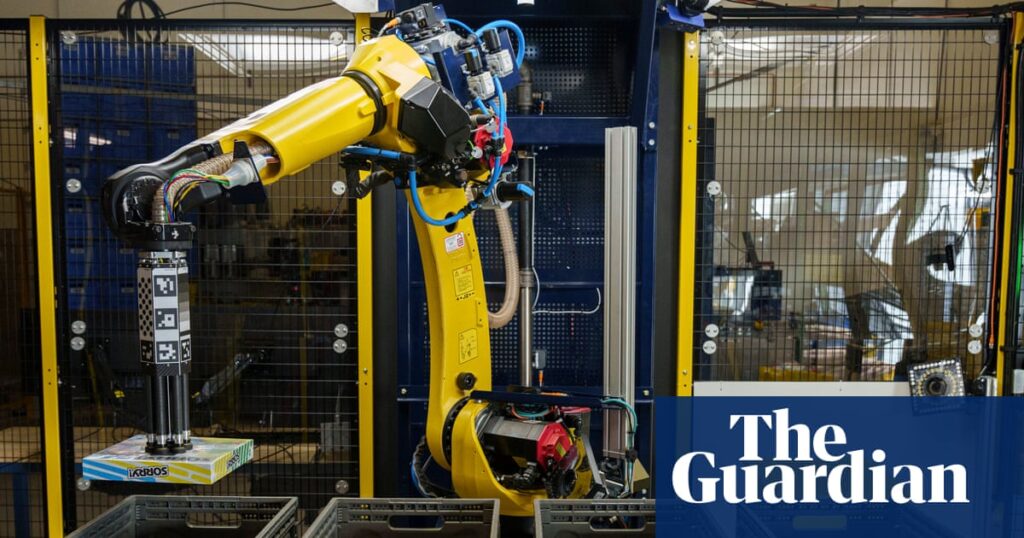
That may be true, but we increasingly share our work with machines. O’Connor visits the EMA4 Amazon Warehouse in Sutton Coldfield where robots and humans labour side by side, “picking” and “stowing” items. Warehouses like EMA4 are supported by remote workers in Costa Rica and India, whose jobs are to monitor video feeds of Amazon shelves, auditing the accuracy of the AI camera systems that track where items are placed. They work nine-hour shifts, screening up to 8,000 videos a week: an entirely new online production line has been created. Is this really progress?
Frederick Winslow Taylor, the father of management consulting and patron saint of maximising productivity, figures prominently in this book. Though Taylor died more than a century ago, some form of “Taylorism” – the idea that production workflows can be broken into discrete components, subdividing any process into a series of measurable systems – lives on in most workplaces today. The real issue, as O’Connor sees it, isn’t necessarily new technology but the assumptions that accompany it – the way “seemingly neutral technological tools can smuggle powerful ideas into a marketplace by the back door”. In the age of automation and AI, some of those ideas have to do with the interchangeability of human and machine contributions: “If you see human labour as one element to be optimised within a complex system that is planned and controlled from above,” O’Connor writes, “then you are likely to see the possibilities afforded by new technology in the same light.”
Still other assumptions have to do with the very purpose of work. As O’Connor…
Source link
Disclaimer
We strive to uphold the highest ethical standards in all of our reporting and coverage. We blogs.grocliq.com want to be transparent with our readers about any potential conflicts of interest that may arise in our work. It’s possible that some of the investors we feature may have connections to other businesses, including competitors or companies we write about. However, we want to assure our readers that this will not have any impact on the integrity or impartiality of our reporting. We are committed to delivering accurate, unbiased news and information to our audience, and we will continue to uphold our ethics and principles in all of our work. Thank you for your trust and support.
Website Upgradation is going on for any glitch kindly connect at [email protected]