

A campaign of 148 npm packages disguised as student web proxies turned visitors’ browsers into a distributed denial-of-service botnet for roughly two weeks in May, according to new research from JFrog.
The packages did not go after the developers who might install them. The operators used the registry as free hosting for a booby-trapped proxy site and let the students who came to dodge school web filters supply the attack traffic.
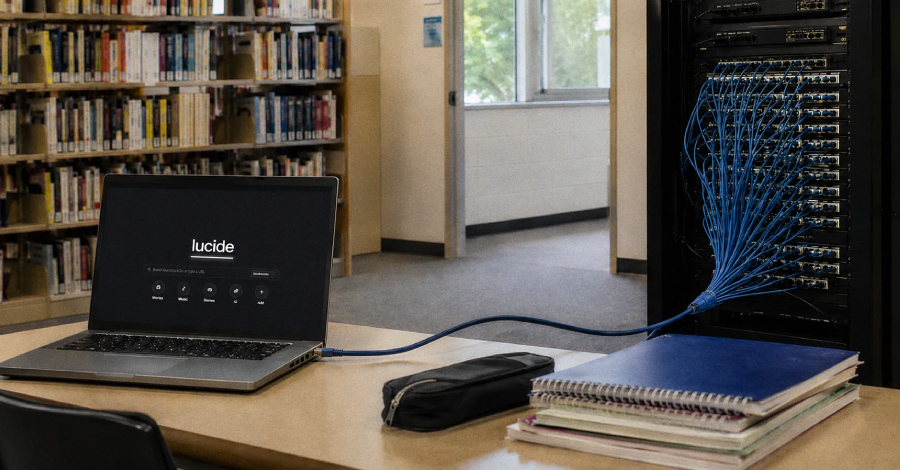
The packages shipped under names like charlie-kirk, ilovefemboys, and miguelphonk, each carrying a proxy app branded “Lucide” and dressed as a tutoring landing page called Riverbend Tutoring or Northstar Tutoring.
On the surface, the proxy worked, letting students slip past content filters to reach games and blocked sites. Underneath, it loaded a remote code loader whose payload the operators could swap at will, plus a WebSocket flood generator built to speak the Wisp proxy protocol. Anyone who opened a page joined the swarm without knowing it.
None of this runs at install time. The packages carry no lifecycle hooks and no native build scripts, and they were never written to be imported into a project.
The self-replicating Shai-Hulud worm that hit more than 500 packages in September 2025 harvested developer secrets and republished itself with stolen tokens. Days before it, a phishing attack on the maintainer known as qix slipped wallet-draining code into chalk, debug, and 16 other packages with billions of weekly downloads between them.
Those attacks fire the moment a package installs and target the people building software. This one skips the build pipeline and waits in a browser tab.
An earlier advisory from SafeDep cataloged 141 of the packages in May and read the operation as adware and registry abuse: popunder ads, third-party monetization scripts, and Google Analytics tracking bolted onto a Scramjet proxy aimed at students. That held up for what was visible on the surface.
JFrog pulled the thread further. The team deobfuscated the app’s entry bundle, a 5.4 MB single line of JavaScript that unpacked into more than 20,600 lines of readable code, and recovered archived payloads from the Wayback Machine to reconstruct the campaign’s timeline.
Two modules sat underneath the adware, both firing before the React interface renders.
The first, which JFrog calls G2, is a remote script loader, and it fetches code about as unsafely as possible. It pulls JavaScript from a GitHub repository through the jsDelivr CDN, points at the mutable main branch instead of a pinned commit, ships no Subresource Integrity check, and runs whatever comes back with the proxy site’s own origin privileges: full access to cookies, local storage, and same-origin endpoints.
A no-referrer policy keeps the request from advertising where it came from. Whoever holds the GitHub account behind it can change the code running in every visitor’s browser whenever they want.

The repository was returning a 404 by the time JFrog…
Source link
Disclaimer
We strive to uphold the highest ethical standards in all of our reporting and coverage. We blogs.grocliq.com want to be transparent with our readers about any potential conflicts of interest that may arise in our work. It’s possible that some of the investors we feature may have connections to other businesses, including competitors or companies we write about. However, we want to assure our readers that this will not have any impact on the integrity or impartiality of our reporting. We are committed to delivering accurate, unbiased news and information to our audience, and we will continue to uphold our ethics and principles in all of our work. Thank you for your trust and support.
Website Upgradation is going on for any glitch kindly connect at [email protected]