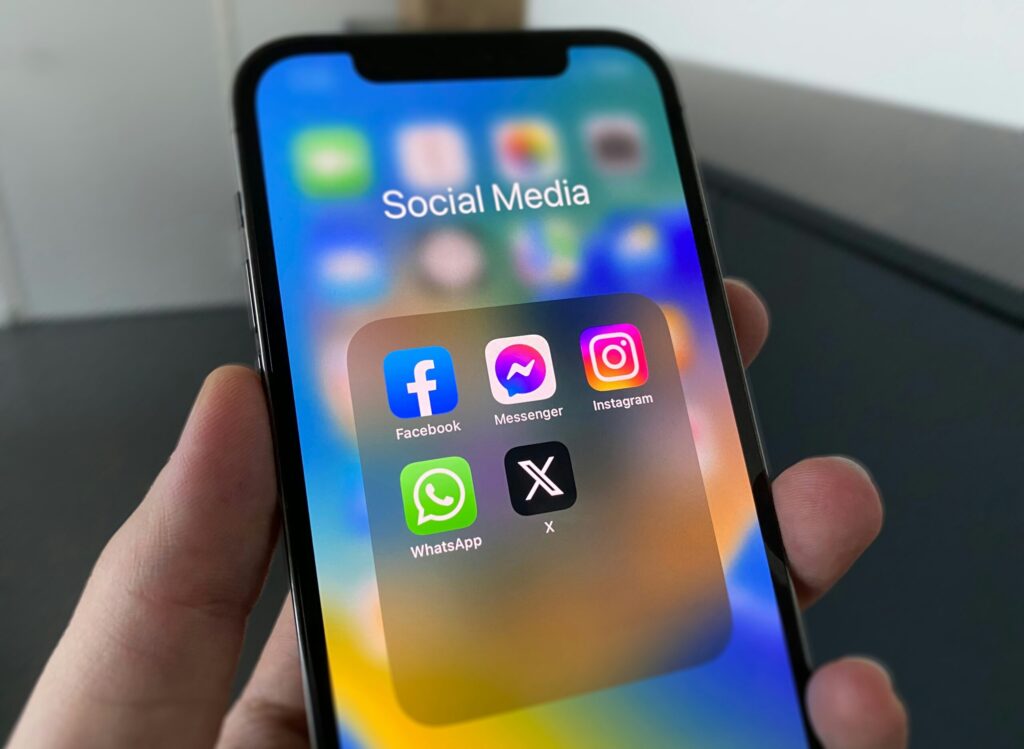

The UK government will switch on default overnight social media curfews from midnight to 6am for 16 and 17-year-olds, and switch off autoplay and infinite scroll for the same age group by default, the Department for Science, Innovation and Technology (DSIT) announced on Tuesday. Teenagers can turn both settings off themselves.
DSIT pointed to a pilot of more than 300 teenagers and parents, saying families reported the curfews improved sleep and concentration. DSIT published that pilot yesterday. Savanta conducted it, and it tested a 9pm to 7am curfew on 13 to 17-year-olds.
What did the pilot test?
- Savanta tested three restrictions against a control group. DSIT commissioned the London-based research and polling firm, formerly Savanta ComRes, to test a 15-minute per-app daily limit, a 9pm to 7am curfew, and complete app removal. Savanta interviewed 309 households in the first wave and 307 in the second, before and after a one-month trial in May 2026.
- The trial restricted Snapchat, TikTok, Instagram, Facebook, X, and Reddit. It did not restrict WhatsApp, YouTube, iMessage, Google Classroom, or Teams.
- The sample skewed younger than the policy. 200 participants were aged 13 to 15, while 109 were aged 16 to 17.
- Nobody tested the announced measures. The pilot examined a curfew three hours earlier than the one DSIT announced and did not test restrictions on autoplay or infinite scroll.
What did the pilot find?
- The curfew proved easiest to enforce, and it shifted use rather than reducing it. It delivered the most consistent sleep benefits of the three interventions, and families were most likely to continue it voluntarily. But it restricted access only overnight, so daytime and evening use continued largely unchanged. Participants front-loaded their use before the cut-off and caught up in the morning. “I’m just not using it at night, that’s it really,” said a 13-year-old in the group.
- Participants wanted a later cut-off. They suggested 10pm or 10.30pm. Older teenagers more often found a 9pm rule infantilising, particularly at weekends and during holidays.
- Other devices undermined the restriction. Participants switched to tablets, laptops, and spare phones. The report identifies multi-device access as one of three patterns cutting across all three interventions.
- Cutting social media did not reduce overall screen time. “I expected that removing those apps would mean less time on her phone, and it didn’t. It just transferred to other places,” said a parent in the app-removal group.
- Every group expected circumvention, including the control group. Participants anticipated that VPNs, false age declarations, and secondary devices would defeat any restriction lacking system-level backing. “There’s no point in banning it because we’re going to find a way to bypass it anyway,” said a 14-year-old in the curfew group.
- Parents wanted the state to take enforcement off their shoulders. “It is…
Source link
Disclaimer
We strive to uphold the highest ethical standards in all of our reporting and coverage. We blogs.grocliq.com want to be transparent with our readers about any potential conflicts of interest that may arise in our work. It’s possible that some of the investors we feature may have connections to other businesses, including competitors or companies we write about. However, we want to assure our readers that this will not have any impact on the integrity or impartiality of our reporting. We are committed to delivering accurate, unbiased news and information to our audience, and we will continue to uphold our ethics and principles in all of our work. Thank you for your trust and support.
Website Upgradation is going on for any glitch kindly connect at [email protected]