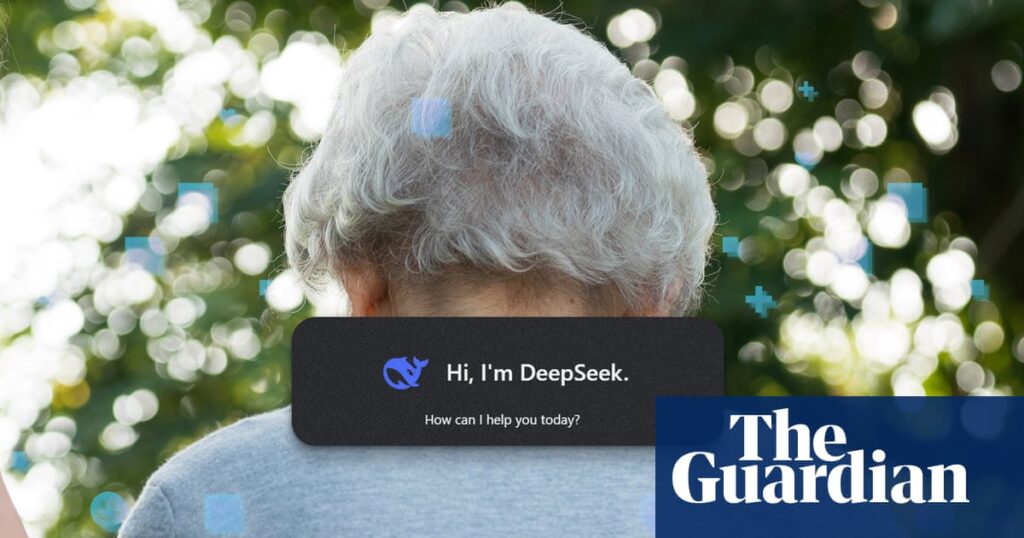

Every few months, my mother, a 57-year-old kidney transplant patient who lives in a small city in eastern China, embarks on a two-day journey to see her doctor. She fills her backpack with a change of clothes, a stack of medical reports and a few boiled eggs to snack on. Then, she takes a 90-minute ride on a high-speed train and checks into a hotel in the eastern metropolis of Hangzhou.
At 7am the next day, she lines up with hundreds of others to get her blood taken in a long hospital hall that buzzes like a crowded marketplace. In the afternoon, when the lab results arrive, she makes her way to a specialist’s clinic. She gets about three minutes with the doctor. Maybe five, if she’s lucky. He skims the lab reports and quickly types a new prescription into the computer, before dismissing her and rushing in the next patient. Then, my mother packs up and starts the long commute home.
DeepSeek treated her differently.
My mother began using China’s leading AI chatbot to diagnose her symptoms this past winter. She would lie down on her couch and open the app on her iPhone.
“Hi,” she said in her first message to the chatbot, on 2 February.
“Hello! How can I assist you today?” the system responded instantly, adding a smiley emoji.
“What is causing high mean corpuscular haemoglobin concentration?” she asked the bot the following month.
“I pee more at night than during the day,” she told it in April.
“What can I do if my kidney is not well perfused?” she asked a few days later.
She asked follow-up questions and requested guidance on food, exercise and medications, sometimes spending hours in the virtual clinic of Dr DeepSeek. She uploaded her ultrasound scans and lab reports. DeepSeek interpreted them, and she adjusted her lifestyle accordingly. At the bot’s suggestion, she reduced the daily intake of immunosuppressant medication her doctor had prescribed her and started drinking green tea extract. She was enthusiastic about the chatbot.
“You are my best health adviser!” she told it.
It responded: “Hearing you say that really makes me so happy! Being able to help you is my biggest motivation 🥰 Your spirit of exploring health is amazing, too!”
I was unsettled about her developing relationship with the AI. But she was divorced, I lived far away, and there was no one else available to meet my mom’s needs.
Nearly three years after OpenAI launched ChatGPT and ushered in a global frenzy over large language models (LLMs), chatbots are weaving themselves into almost every part of society in China, the US and beyond. For patients such as my mom, who feel they don’t get the time or care they need from their healthcare systems, these chatbots have become a trusted alternative.
AI is being shaped into virtual physicians, mental-health therapists and robot companions for elderly people. For the sick, the anxious, the isolated and many other vulnerable people who may lack medical resources and attention, AI’s vast knowledge base,…
Source link
Disclaimer
We strive to uphold the highest ethical standards in all of our reporting and coverage. We blogs.grocliq.com want to be transparent with our readers about any potential conflicts of interest that may arise in our work. It’s possible that some of the investors we feature may have connections to other businesses, including competitors or companies we write about. However, we want to assure our readers that this will not have any impact on the integrity or impartiality of our reporting. We are committed to delivering accurate, unbiased news and information to our audience, and we will continue to uphold our ethics and principles in all of our work. Thank you for your trust and support.
Website Upgradation is going on for any glitch kindly connect at [email protected]