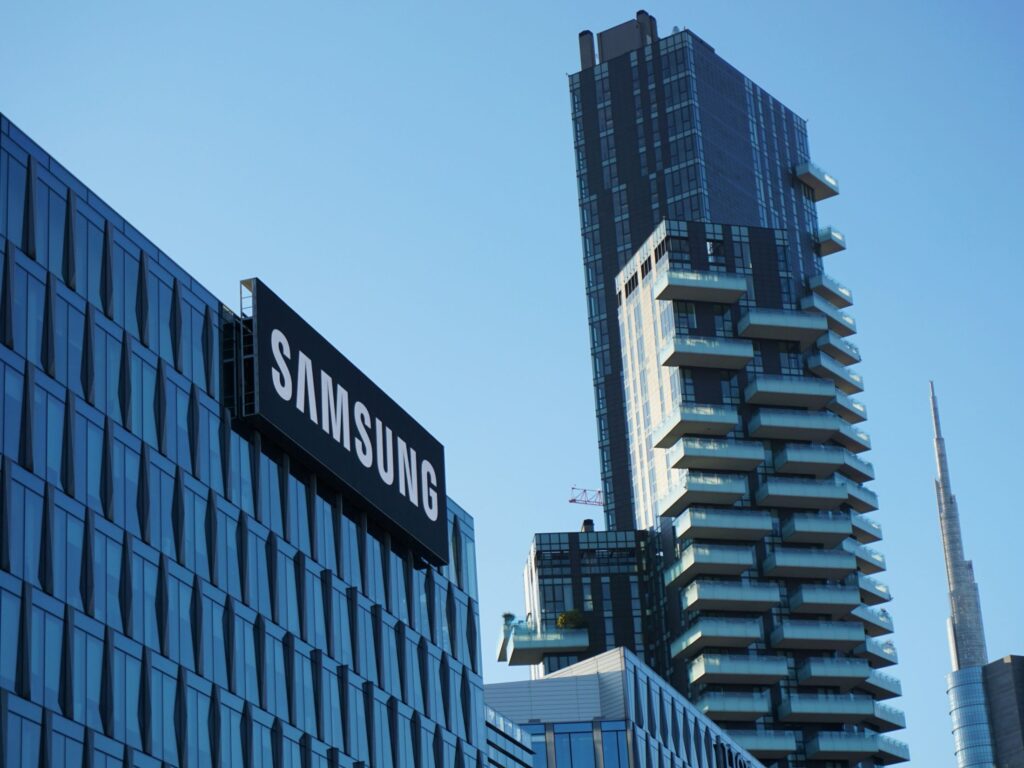

Samsung’s semiconductor recovery has materialised during the third quarter of 2025, with the South Korean tech giant posting an operating profit of KRW 12.2 trillion (US$8.6 billion) – more than double the previous quarter and ending a streak of four consecutive quarterly declines in its chip division.
The turnaround centred on Samsung’s Device Solutions division, which reported KRW 33.1 trillion in revenue and KRW 7.0 trillion in operating profit, an over tenfold increase from the June quarter.
The Memory Business achieved what Samsung described as “record-high quarterly revenue,” driven by expanded sales of high-bandwidth memory (HBM3E) chips and server solid-state drives – both important components for artificial intelligence infrastructure.
But this wasn’t simply a story of rising tides lifting all boats. Samsung’s semiconductor recovery reflects calculated strategic pivots made during its downturn, market dynamics that finally shifted in its favour, and intense competitive pressures that forced the company to accelerate its AI chip roadmap.
The road back from the slump
Samsung’s journey to this quarter’s performance began in a different place. Throughout 2024 and into early 2025, the company faced multiple headwinds: a brutal memory chip glut that collapsed prices, delayed qualification of its HBM products with key customers, and the company seeing rival SK Hynix capture early leadership in AI memory chips.
The low point came in the second quarter of 2025, when Samsung’s chip division reported operating profit that had analysts questioning whether the company had lost its technological edge. SK Hynix had seized the top spot in the memory market for the first time, fueled by its early success supplying HBM chips to Nvidia’s AI accelerators.
MS Hwang, research director at Counterpoint Research, contextualised Samsung’s third-quarter performance as “a clear result of a broader memory market boom and rising prices for general-purpose memory.”
But Hwang’s firm also noted that Samsung had reclaimed the top spot in the memory market from SK Hynix during Q3, suggesting the semiconductor recovery involved more than just favourable market conditions.
HBM: From laggard to mass production
Samsung’s ability to reverse its HBM fortunes proved central to the turnaround. The company confirmed that HBM3E is now “in mass production and being sold to all related customers,” while HBM4 samples are “simultaneously being shipped to key clients.”
Reports emerged in late September that Samsung had passed Nvidia’s qualification tests for advanced high-bandwidth memory chips – a important milestone that had eluded the company for months. While Samsung hasn’t confirmed the Nvidia qualification publicly, the timing aligns with the acceleration in HBM sales reflected in Q3 results.
During the company’s earnings call, a Samsung executive outlined the demand environment: “We expect data centre companies to continuously expand…
Source link
Disclaimer
We strive to uphold the highest ethical standards in all of our reporting and coverage. We blogs.grocliq.com want to be transparent with our readers about any potential conflicts of interest that may arise in our work. It’s possible that some of the investors we feature may have connections to other businesses, including competitors or companies we write about. However, we want to assure our readers that this will not have any impact on the integrity or impartiality of our reporting. We are committed to delivering accurate, unbiased news and information to our audience, and we will continue to uphold our ethics and principles in all of our work. Thank you for your trust and support.
Website Upgradation is going on for any glitch kindly connect at [email protected]