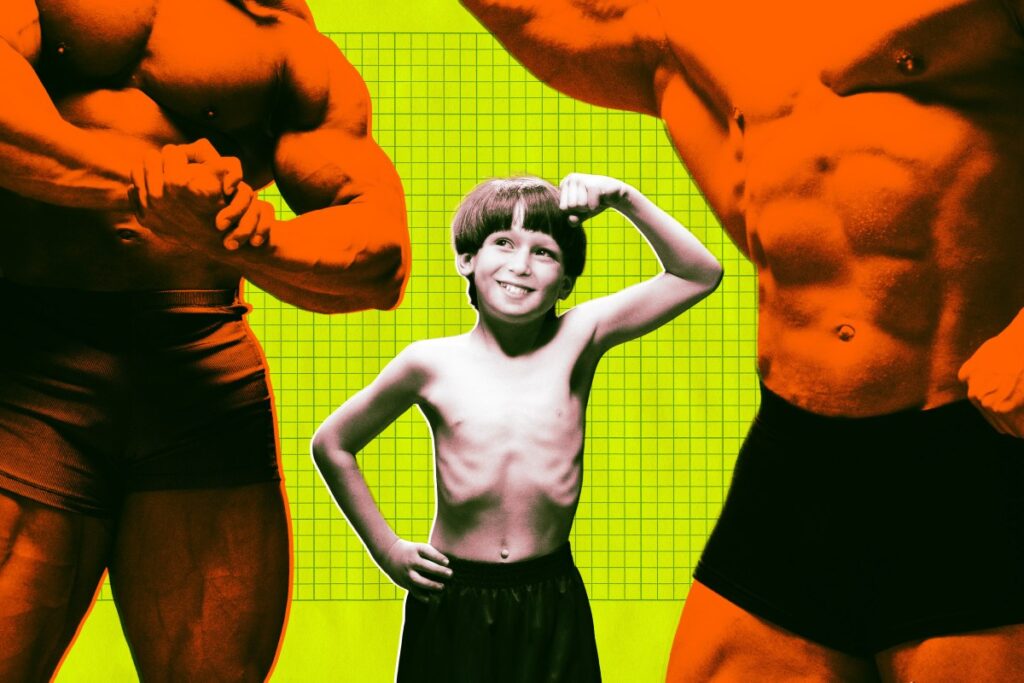


People who are the worst at doing something also tend to severely overestimate how good they are at doing it, while those who are actually skilled tend to not realize their true talent.
This galling cognitive bias is called the Dunning-Kruger effect, as you’re probably familiar — and would you believe it if we told you that AI appears to make it even worse?
Case in point, a new study published in the journal Computers in Human Behavior — and titled, memorably, “AI Makes You smarter But None the Wiser”) — showed that everyone was bad at estimating their own performance after being asked to complete a series of tasks using ChatGPT. And strikingly, it was the participants who were “AI literate” who were the worst offenders.
“When it comes to AI, the [Dunning-Kruger effect] vanishes,” study senior author Robin Welsch, a professor at Aalto University, said in a statement about the work. “In fact, what’s really surprising is that higher AI literacy brings more overconfidence.”
“We would expect people who are AI literate to not only be a bit better at interacting with AI systems, but also at judging their performance with those systems,” Welsch added, “but this was not the case.”
It’s an interesting detail that helps build on our still burgeoning understanding of all the ways that our AI habits are probably bad for our brains, from being linked with memory loss to atrophying our critical thinking skills. Perhaps it’s also a testament to the ego of the AI power user.
Notably, the findings comes amid heated debate around the dangerous “sycophancy” of AI models. Chatbots designed to both be helpful and engaging constantly ply users with flattery and go along with their demands. It’s an addictive combination that makes you feel smart or vindicated. And this sycophancy is thought to be one of the main driving factors behind widespread cases of what psychiatrists are calling “AI psychosis,” in which users suffer breaks with reality and spirals into delusional thinking after becoming obsessed with talking with a chatbot.
In the study, the researchers asked half of 500 participants to use ChatGPT to help solve 20 logical reasoning problems from the Law School Admission Test, and the other half to solve them without AI. Afterwards, each participant was asked to evaluate their own performance, with the promise of extra compensation if they did so accurately. They were also administered a questionnaire designed to gauge their AI literacy.
The researchers found that the group that used ChatGPT substantially improved their scores compared to the group that didn’t. But they also vastly overestimated their performance — and the effect was especially pronounced among the AI savvy, “suggesting that those with more technical knowledge of AI were more confident but less precise in…
Source link
Disclaimer
We strive to uphold the highest ethical standards in all of our reporting and coverage. We blogs.grocliq.com want to be transparent with our readers about any potential conflicts of interest that may arise in our work. It’s possible that some of the investors we feature may have connections to other businesses, including competitors or companies we write about. However, we want to assure our readers that this will not have any impact on the integrity or impartiality of our reporting. We are committed to delivering accurate, unbiased news and information to our audience, and we will continue to uphold our ethics and principles in all of our work. Thank you for your trust and support.
Website Upgradation is going on for any glitch kindly connect at [email protected]