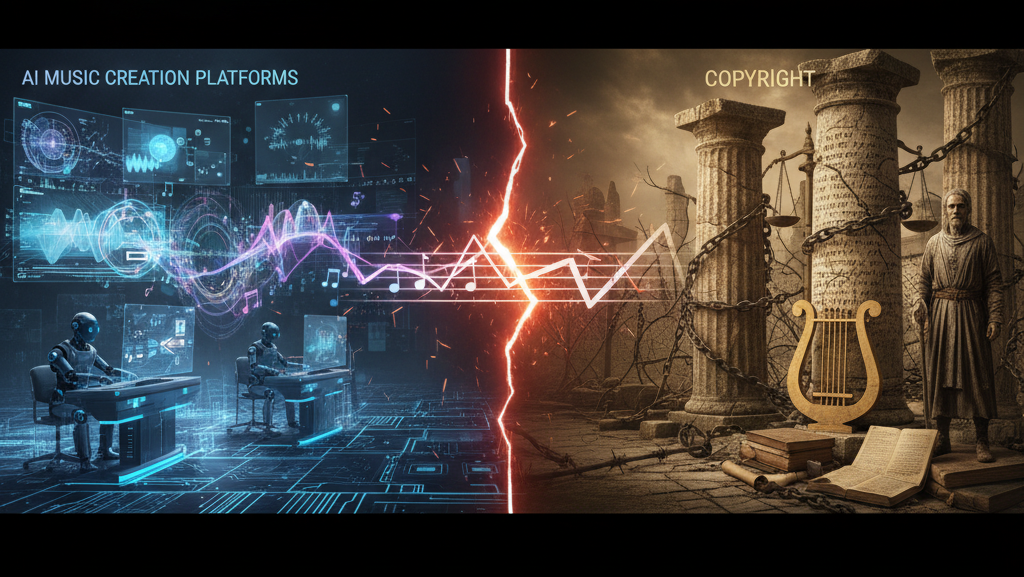

On October 29, Universal Music Group (UMG) and Udio announced that they had reached a settlement of their copyright-infringement litigation and entered into “industry-first strategic agreements” to collaborate on a new licensed AI music-creation platform.
Notably, the forthcoming service, slated for launch in 2026, will allow users to customise, stream, and share music created via generative AI trained on authorised and licensed recordings from UMG’s catalogue.
The settlement comes after UMG (alongside other major labels) sued Udio in 2024, alleging the company had trained its AI systems using copyrighted sound recordings without permission. The litigation claimed that Udio’s models had generated songs that closely resembled well-known recordings, including songs by Taylor Swift, BTS, and Ariana Grande, by copying from their catalogues on an “almost unimaginable scale”.
UMG and its partners filed their case, arguing that such AI-generated works could “directly compete with, cheapen, and ultimately drown out” human-created recordings.
How will the new AI platform work?
Under the deal, UGM’s artists and songwriters will receive further revenue opportunities through the licence agreements covering both recorded music and publishing rights.
Meanwhile, Udio emphasises that artists will retain control and will be able to set permissions; specifically, artists will determine “what and how you can create” using their voice or style.
In practice, the platform will enable fans and creators to generate new music using an artist’s distinct style, remix or reimagine favoured tracks in different genres, or combine multiple styles through mash-ups.
Furthermore, the service will operate within a “walled-garden” environment where controls such as fingerprinting and filtering are applied to ensure responsible creation and sharing. UMG described the arrangement as a step toward a healthy commercial AI ecosystem where artists, songwriters, labels, and tech firms can all flourish together.
Notably, during the transition period ahead of the full launch, Udio’s existing product will remain available to users, albeit with certain changes: downloads will be paused, the system will progressively shift to the new model, and additional user credits will be provided to existing subscribers.
AI-Generated Music And Copyright
In India, the debate over copyright and AI-generated music has intensified amid the growing adoption of generative AI tools by creators and platforms. The Indian Music Industry (IMI), representing major record labels, recently urged the government to introduce transparency requirements for AI systems that use copyrighted works for training.
Furthermore, Hollywood and Bollywood groups have argued that India’s Copyright Act, last amended in 2012, does not explicitly address non-human authorship, leaving artists’ rights vulnerable when AI models replicate their vocals…
Source link
Disclaimer
We strive to uphold the highest ethical standards in all of our reporting and coverage. We blogs.grocliq.com want to be transparent with our readers about any potential conflicts of interest that may arise in our work. It’s possible that some of the investors we feature may have connections to other businesses, including competitors or companies we write about. However, we want to assure our readers that this will not have any impact on the integrity or impartiality of our reporting. We are committed to delivering accurate, unbiased news and information to our audience, and we will continue to uphold our ethics and principles in all of our work. Thank you for your trust and support.
Website Upgradation is going on for any glitch kindly connect at [email protected]