
How many times a day do you reach for your phone? Do you jump at a notification, spend journeys locked in on your tiny black mirror? What about during meals, or when you wake up? Does it make you feel enriched, alive? I am just as guilty as the next person: swiping, liking, scrolling. But in a world built to distract us, how can we take five or 10 minutes away from that, and instead add something enriching to our lives?
I like to look at artists for the answers. They get us to slow down and think about different ways of looking; to notice nature and beauty; time changing in front of us. They remind us of the joys of making, and in a world where AI is attempting to outsource our creativity to machines – the delight of discovering something for ourselves. Artists see the potential in something: like a word that can be joined up into a sentence that can grow into a paragraph, or book; or a tube of paint that can be used to create an image. Not only can these get us to see something from a different perspective, or teach us something about their world, but hold our attention, and invite stillness, too.
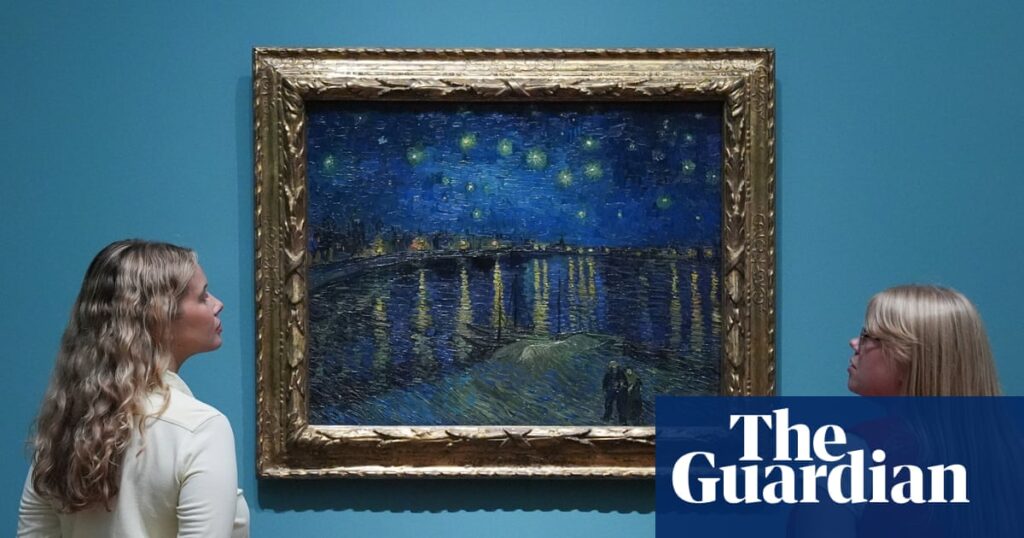
It is scientifically proven: a 2024 study commissioned by the UK government found a high volume of evidence that consuming art can improve your mental and physical health – as well as, as Sarah Karlsberg writes, “reduce healthcare costs and increase the country’s productivity”. Last month, King’s College London found that when 50 people aged 18–40 witnessed paintings in person, their stress hormones dropped by 22%. (Half the group were tested to look at copies: their levels only went down by 8%.)
Whatever our situation, art and artists can guide us all. As someone who has always kept the words of creative people close to me – whether for inspiration or reflection, to help me in relationships or structuring my day – I’ve compiled 366 short passages of wisdom for every day of the year in a new book, How to Live an Artful Life.
From words by artists including Tracey Emin and Marina Abramović to writers such as Ali Smith and Iris Murdoch, each entry includes reflections, rituals, encouragements, and creative exercises. Guided by the seasons (January’s theme is beginnings; February is love; August is beauty; November is memory), I respond to each passage, bringing the artists’ words to life, so anyone can partake in their creative act.
I wrote this book at a time when I was feeling uninspired and distracted. It was reading these artists’ words that lifted me out of a darker place: whether it was learning of the routines of writer Patricia Highsmith who made working life “as pleasurable as possible” by sitting on her bed “surrounded by cigarettes, a mug of coffee, a doughnut …” or, doing as art critic Jerry Saltz advises, when in a museum, to ask the person next to us: “What are you thinking about that?” Conversation can be…
Source link
Disclaimer
We strive to uphold the highest ethical standards in all of our reporting and coverage. We blogs.grocliq.com want to be transparent with our readers about any potential conflicts of interest that may arise in our work. It’s possible that some of the investors we feature may have connections to other businesses, including competitors or companies we write about. However, we want to assure our readers that this will not have any impact on the integrity or impartiality of our reporting. We are committed to delivering accurate, unbiased news and information to our audience, and we will continue to uphold our ethics and principles in all of our work. Thank you for your trust and support.
Website Upgradation is going on for any glitch kindly connect at [email protected]