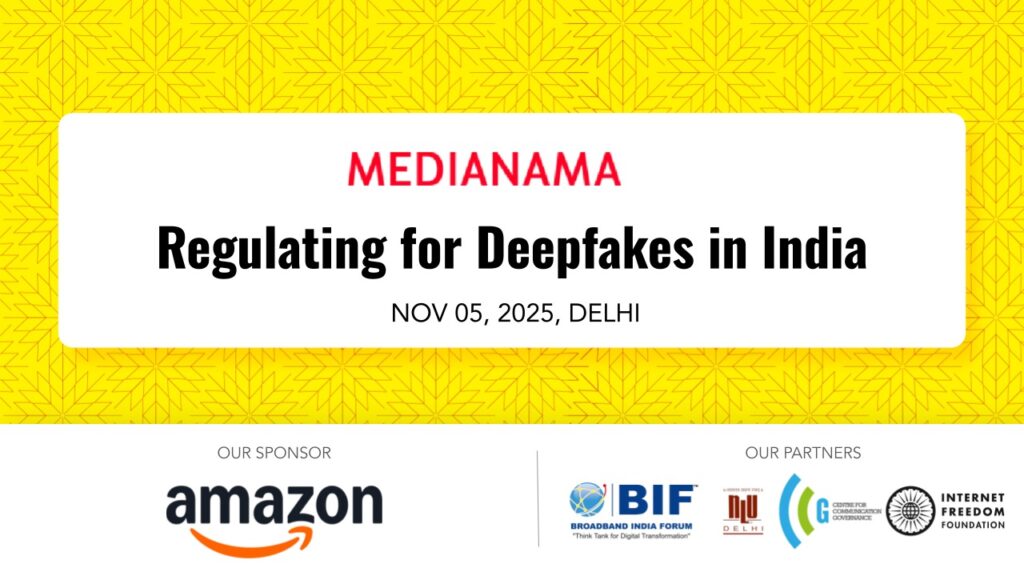

MediaNama organised a discussion on the draft amendment to the Information Technology (Intermediary Guidelines and Digital Media Ethics Code) Rules, 2021, on November 5 in Delhi. The amendment aims to legally define synthetically generated information, including deepfakes, mandate labelling, watermarking, and metadata embedding for such content, require user declarations and automated verification by Significant Social Media Intermediaries (SSMIs), and extend due diligence obligations for intermediaries that facilitate or host synthetic content. The discussion focused on the impact of the proposed regulation on creators, platforms, and AI developers, particularly in areas of safe harbor, privacy, and freedom of expression.
Our objective was to identify:
- What information regulators need to have about AI usage to avoid overregulation and ensure positive use cases
- How different businesses are using synthetic media
- What constitutes synthetic media, especially in contexts where real media is mixed with synthetically generated information
- Whether the binary between synthetic and human-made content is even feasible
- How to address deepfakes without adversely impacting startup operations
- How disruptive the 10% visual display/audio recording time requirement could be for business operations
- How businesses can apply labels to live content
- The impact of synthetic media labels on advertising reach and its effectiveness
- Who takes responsibility for hallucinations?
MediaNama organised the majority of this discussion under the Chatham House Rule, to allow participants to freely express themselves. Only participants that waived the rule have been directly attributed in our coverage.
Download the report here
Executive Summary
On October 22, the Ministry of Electronics and Information Technology (MeitY) released a draft amendment to the Information Technology (Intermediary Guidelines and Digital Media Ethics Code) Rules, 2021, introducing a new legal framework for synthetically generated information, commonly referred to as deepfakes. The rules aim to legally define synthetic, or AI-generated information, and mandate labelling, watermarking, and metadata embedding for such content. They also require user declarations and automated verification by Significant Social Media Intermediaries (SSMIs) and extend due diligence obligations for intermediaries that facilitate or host synthetic content.
During MediaNama’s discussion on the amendment to the rules, participants unanimously agreed that the definition of ‘synthetically generated information’ under the rules was overbroad. They suggested that, given the broad definition, almost everything from light touch-ups on pictures to augmented reality (AR) filters, smart glasses like the Meta Ray-Bans and even images from a phone camera could end up getting qualified as synthetic information under the rules. Even for content that would conventionally fall…
Source link
Disclaimer
We strive to uphold the highest ethical standards in all of our reporting and coverage. We blogs.grocliq.com want to be transparent with our readers about any potential conflicts of interest that may arise in our work. It’s possible that some of the investors we feature may have connections to other businesses, including competitors or companies we write about. However, we want to assure our readers that this will not have any impact on the integrity or impartiality of our reporting. We are committed to delivering accurate, unbiased news and information to our audience, and we will continue to uphold our ethics and principles in all of our work. Thank you for your trust and support.
Website Upgradation is going on for any glitch kindly connect at [email protected]