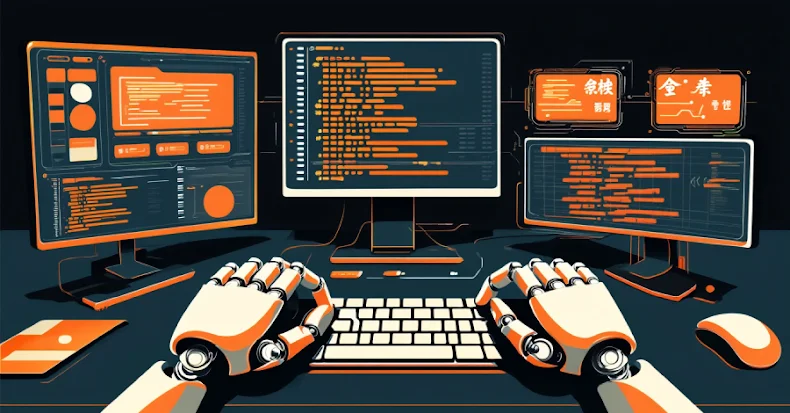


State-sponsored threat actors from China used artificial intelligence (AI) technology developed by Anthropic to orchestrate automated cyber attacks as part of a “highly sophisticated espionage campaign” in mid-September 2025.
“The attackers used AI’s ‘agentic’ capabilities to an unprecedented degree – using AI not just as an advisor, but to execute the cyber attacks themselves,” the AI upstart said.
The activity is assessed to have manipulated Claude Code, Anthropic’s AI coding tool, to attempt to break into about 30 global targets spanning large tech companies, financial institutions, chemical manufacturing companies, and government agencies. A subset of these intrusions succeeded. Anthropic has since banned the relevant accounts and enforced defensive mechanisms to flag such attacks.
The campaign, GTG-1002, marks the first time a threat actor has leveraged AI to conduct a “large-scale cyber attack” without major human intervention and for intelligence collection by striking high-value targets, indicating continued evolution in adversarial use of the technology.

Describing the operation as well-resourced and professionally coordinated, Anthropic said the threat actor turned Claude into an “autonomous cyber attack agent” to support various stages of the attack lifecycle, including reconnaissance, vulnerability discovery, exploitation, lateral movement, credential harvesting, data analysis, and exfiltration.
Specifically, it involved the use of Claude Code and Model Context Protocol (MCP) tools, with the former acting as the central nervous system to process the human operators’ instructions and break down the multi-stage attack into small technical tasks that can be offloaded to sub-agents.
“The human operator tasked instances of Claude Code to operate in groups as autonomous penetration testing orchestrators and agents, with the threat actor able to leverage AI to execute 80-90% of tactical operations independently at physically impossible request rates,” the company added. “Human responsibilities centered on campaign initialization and authorization decisions at critical escalation points.”
Human involvement also occurred at strategic junctures, such as authorizing progression from reconnaissance to active exploitation, approving use of harvested credentials for lateral movement, and making final decisions about data exfiltration scope and retention.

The system is part of an attack framework that accepts as input a target of interest from a human operator and then leverages the power of MCP to conduct reconnaissance and attack surface mapping. In the next phases of the attack, the Claude-based framework facilitates vulnerability discovery and validates discovered flaws by generating tailored attack payloads.
Upon obtaining approval from human operators, the system proceeds to deploy the exploit and obtain a foothold, and initiate a series of post-exploitation activities involving credential harvesting, lateral movement, data…
Source link
Disclaimer
We strive to uphold the highest ethical standards in all of our reporting and coverage. We blogs.grocliq.com want to be transparent with our readers about any potential conflicts of interest that may arise in our work. It’s possible that some of the investors we feature may have connections to other businesses, including competitors or companies we write about. However, we want to assure our readers that this will not have any impact on the integrity or impartiality of our reporting. We are committed to delivering accurate, unbiased news and information to our audience, and we will continue to uphold our ethics and principles in all of our work. Thank you for your trust and support.
Website Upgradation is going on for any glitch kindly connect at [email protected]