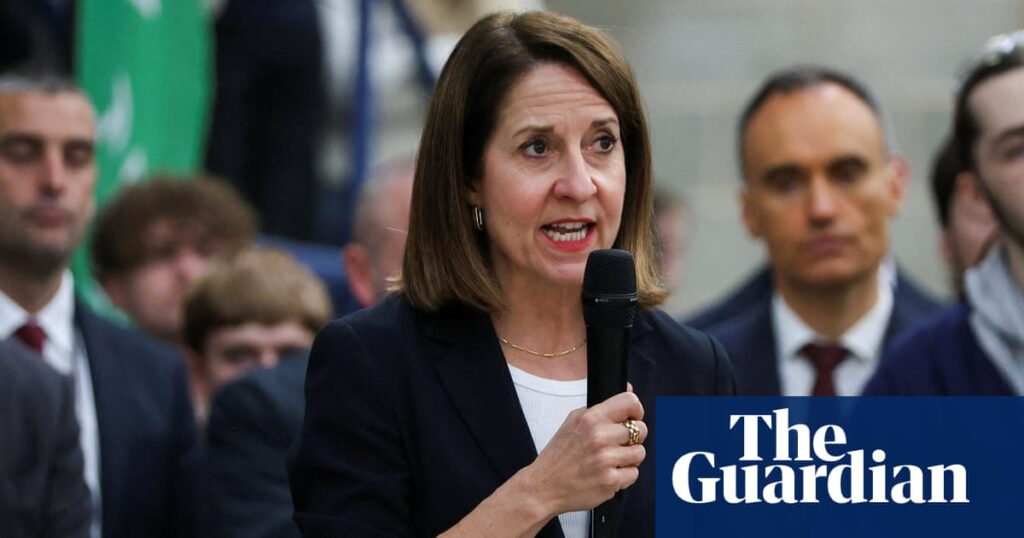

The UK’s internet regulator, Ofcom, is at risk of losing public trust if it fails to use its powers to tackle online harms, the technology secretary, Liz Kendall, has said.
Kendall last week told Ofcom’s chief executive, Melanie Dawes, she was deeply disappointed at the pace of the regulator’s enforcement of parts of the Online Safety Act, which is intended to protect the public from harms caused by a wide range of online platforms, from social media to pornography websites.
Ofcom has insisted the delays were beyond its control and that “change is happening”. But Kendall told the Guardian: “They know that if they don’t implement [and] use the powers that they’ve got in the act, they will lose the trust of the public.”
Last week, the father of Molly Russell, who took her own life at 14 after viewing harmful online content, said he had lost trust in the watchdog’s leadership.
Kendall did not give her backing when asked about her own trust in the regulator’s leadership on Thursday.
The tech secretary was speaking amid concerns that parts of the online safety regime are not expected to come into effect until the middle of 2027 – nearly four years since the Online Safety Act became law – and that, in the meantime, the speed at which the technological frontier is advancing risks outpacing government guardrails.
Kendall said she was now “really worried about AI chatbots” and “the impact they’re having on children and young people”.
The dangers have been highlighted by US lawsuits involving teenagers who took their own lives after becoming highly engaged with ChatGPT and Character.AI chatbots, which they treated as confidants and advisers.
“If chatbots aren’t included or properly covered by the legislation, and we’re really working through that now, then they will have to be,” Kendall said. “People have got to feel their kids are safe.”
Ofcom’s chair, Michael Grade, is due to step down in April, prompting a search for a new leader. Dawes, a career civil servant, has been in post as chief executive for nearly six years. Ofcom declined to comment.
On Thursday, the watchdog fined a “nudify” app £50,000 for failing to protect children from accessing pornography. Nudify apps typically use AI to “undress” uploaded photos.
Kendall said Ofcom was “rightly pressing forward”. It was the second fine issued by the regulator under the act since it became law more than two years ago.
Kendall was speaking in Cardiff at the launch of a new AI “growth zone”, which the government hopes will attract £10bn in investment and create 5,000 jobs on various sites stretching from the Ford Bridgend engine plant to Newport.
The government said Microsoft was one of the companies “joining forces with the government”, but Microsoft said it was not making any new investment commitments.
Ministers are also hoping to use £100m to back…
Source link
Disclaimer
We strive to uphold the highest ethical standards in all of our reporting and coverage. We blogs.grocliq.com want to be transparent with our readers about any potential conflicts of interest that may arise in our work. It’s possible that some of the investors we feature may have connections to other businesses, including competitors or companies we write about. However, we want to assure our readers that this will not have any impact on the integrity or impartiality of our reporting. We are committed to delivering accurate, unbiased news and information to our audience, and we will continue to uphold our ethics and principles in all of our work. Thank you for your trust and support.
Website Upgradation is going on for any glitch kindly connect at [email protected]