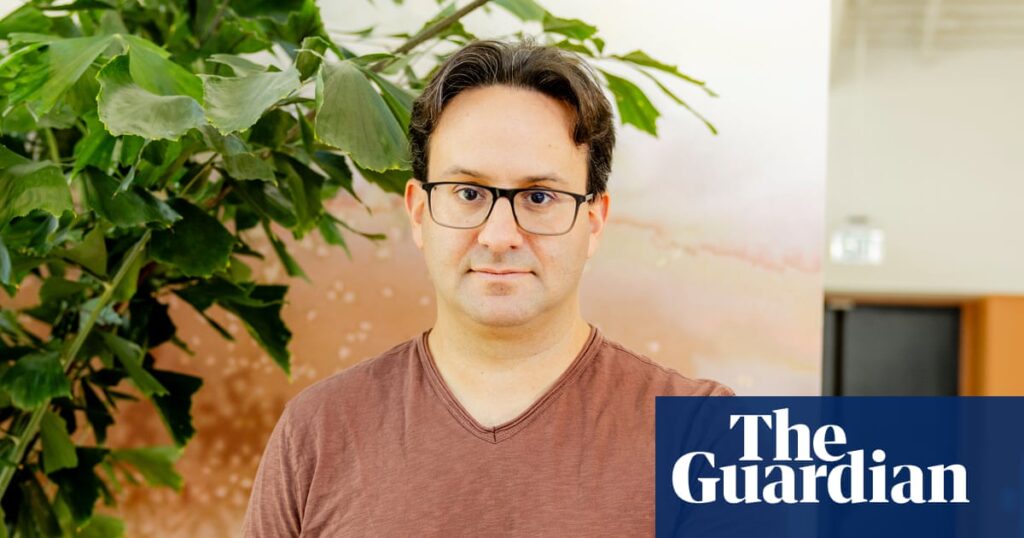

Humanity will have to decide by 2030 whether to take the “ultimate risk” of letting artificial intelligence systems train themselves to become more powerful, one of the world’s leading AI scientists has said.
Jared Kaplan, the chief scientist and co-owner of the $180bn (£135bn) US startup Anthropic, said a choice was looming about how much autonomy the systems should be given to evolve.
The move could trigger a beneficial “intelligence explosion” – or be the moment humans end up losing control.
In an interview about the intensely competitive race to reach artificial general intelligence (AGI) – sometimes called superintelligence – Kaplan urged international governments and society to engage in what he called “the biggest decision”.
Anthropic is part of a pack of frontier AI companies including OpenAI, Google DeepMind, xAI, Meta and Chinese rivals led by DeepSeek, racing for AI dominance. Its widely used AI assistant, Claude, has become particularly popular among business customers.
Kaplan said that while efforts to align the rapidly advancing technology to human interests had to date been successful, freeing it to recursively self-improve “is in some ways the ultimate risk, because it’s kind of like letting AI kind of go”. The decision could come between 2027 and 2030, he said.
“If you imagine you create this process where you have an AI that is smarter than you, or about as smart as you, it’s [then] making an AI that’s much smarter.”
“It sounds like a kind of scary process. You don’t know where you end up.”
Kaplan has gone from being a theoretical physicist scientist to an AI billionaire in seven years working in the field. In a wide-ranging interview, he also said:
-
AI systems will be capable of doing “most white-collar work” in two to three years.
-
That his six-year-old son will never be better than an AI at academic work such as writing an essay or doing a maths exam.
-
That it was right to worry about humans losing control of the technology if AIs start to improve themselves.
-
The stakes in the race to AGI feel “daunting”.
-
The best-case scenario could enable AI to accelerate biomedical research, improve health and cybersecurity, boost productivity, give people more free time and help humans flourish.
Kaplan met the Guardian at Anthropic’s headquarters in San Francisco, where the interior of knitted rugs and upbeat jazz music belies the existential concerns about the technology being developed.
Kaplan is a Stanford-and Harvard-educated professor of physics who researched at Johns Hopkins University and at Cern in Switzerland before joining OpenAI in…
Source link
Disclaimer
We strive to uphold the highest ethical standards in all of our reporting and coverage. We blogs.grocliq.com want to be transparent with our readers about any potential conflicts of interest that may arise in our work. It’s possible that some of the investors we feature may have connections to other businesses, including competitors or companies we write about. However, we want to assure our readers that this will not have any impact on the integrity or impartiality of our reporting. We are committed to delivering accurate, unbiased news and information to our audience, and we will continue to uphold our ethics and principles in all of our work. Thank you for your trust and support.
Website Upgradation is going on for any glitch kindly connect at [email protected]