
In the basement of a Boise, Idaho, dental office in 1978, four engineers founded what would become one of America’s semiconductor giants. Ward Parkinson, Joe Parkinson, Dennis Wilson, and Doug Pitman started Micron Technology as a modest design consultancy, backed by local investors including potato magnate J.R. Simplot.
By 1983, they had achieved a technological breakthrough—producing chips roughly half the size of Japan’s leading products. Nearly five decades later, that same company has made a decision that crystallises artificial intelligence’s profound impact on hardware economics: AI memory hunger is forcing manufacturers to abandon entire market segments.
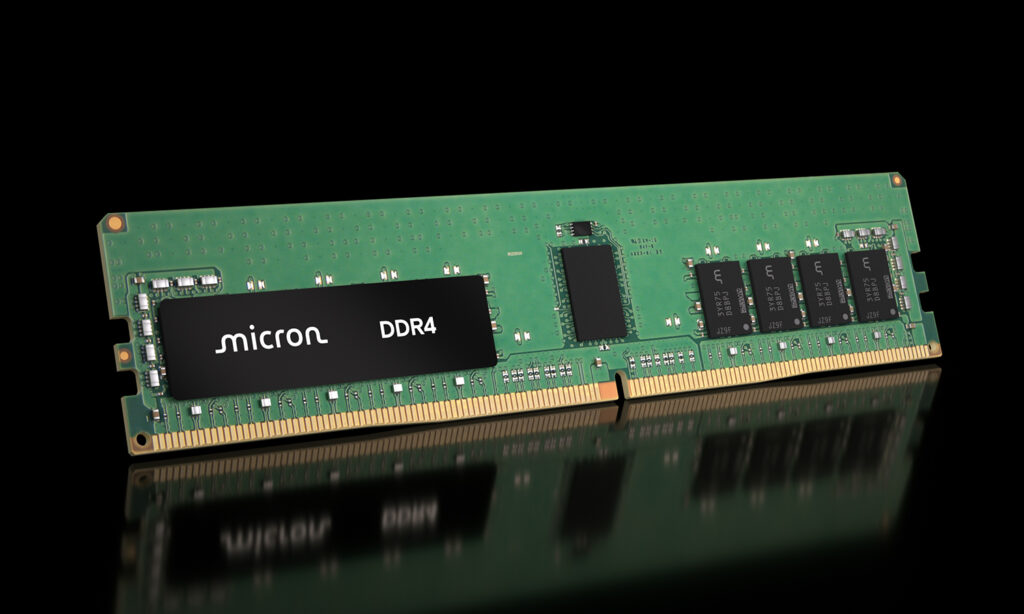
On December 3, 2025, Micron announced it would completely exit the consumer memory market, discontinuing its 29-year-old Crucial brand by February 2026. “The AI-driven growth in the data centre has led to a surge in demand for memory and storage,” said Sumit Sadana, Micron’s Executive Vice President and Chief Business Officer.
“Micron has made the difficult decision to exit the Crucial consumer business to improve supply and support for our larger, strategic customers in faster-growing segments.”
Translation: data centres running AI workloads will pay substantially more for memory than individual consumers ever could, and Micron’s fabrication capacity cannot serve both markets simultaneously.
The announcement represents more than a business decision—it’s a watershed moment revealing how AI memory hunger demands are fundamentally restructuring global semiconductor supply chains and forcing manufacturers to make stark choices about which customers deserve access to finite production capacity.
The economics driving AI memory hunger
Micron’s withdrawal reflects brutal economic realities. As the world’s third-largest DRAM producer with approximately 20%global market share, the company sits between South Korean giants Samsung Electronics (43%) and SK Hynix (35%). Together, these three manufacturers control roughly 95% of worldwide DRAM production—an oligopoly now facing unprecedented demand from AI infrastructure builders.
The margin differentials tell the story. Consumer RAM modules compete in volatile retail markets with razor-thin profitability. Enterprise contracts for high-bandwidth memory (HBM) used in AI accelerators and DDR5 modules for data centre servers deliver substantially higher average selling prices, multi-year commitments, and predictable demand.
For memory manufacturers, each fabrication wafer committed to consumer products represents foregone revenue from higher-value enterprise contracts—an opportunity cost that has become economically indefensible as AI demand accelerates.
The numbers illustrate the magnitude of the shift. Micron reported record fiscal 2025 revenue of US$37.38 billion, representing nearly 50% year-over-year growth driven primarily by data centre and AI applications, which accounted for 56% of total revenue. SK Hynix has…
Source link
Disclaimer
We strive to uphold the highest ethical standards in all of our reporting and coverage. We blogs.grocliq.com want to be transparent with our readers about any potential conflicts of interest that may arise in our work. It’s possible that some of the investors we feature may have connections to other businesses, including competitors or companies we write about. However, we want to assure our readers that this will not have any impact on the integrity or impartiality of our reporting. We are committed to delivering accurate, unbiased news and information to our audience, and we will continue to uphold our ethics and principles in all of our work. Thank you for your trust and support.
Website Upgradation is going on for any glitch kindly connect at [email protected]