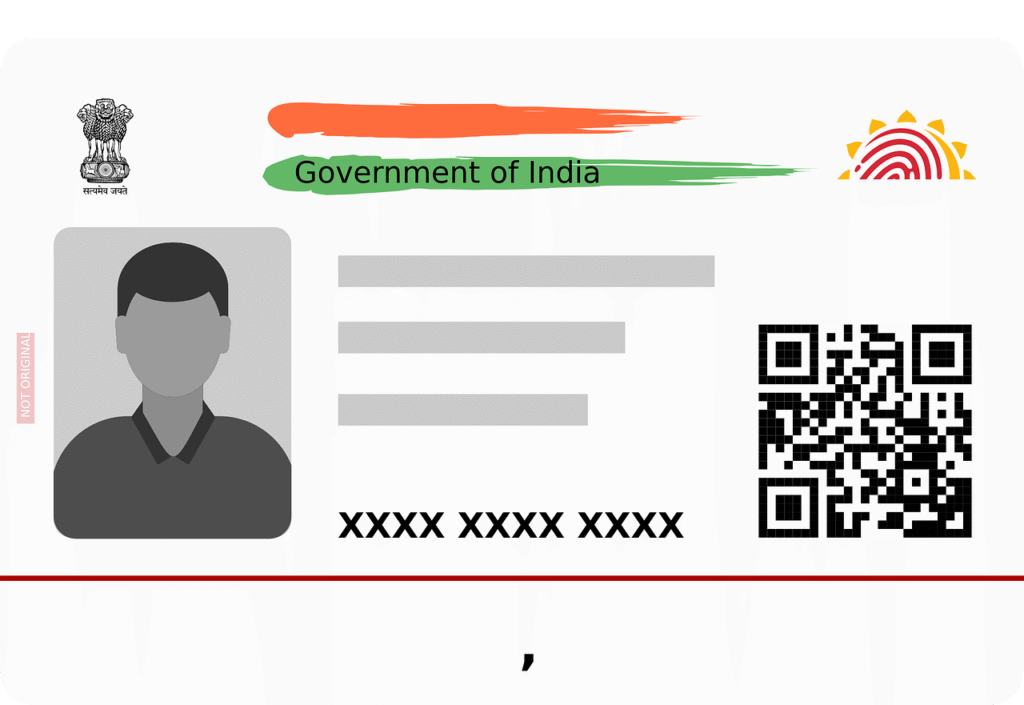

The Unique Identification Authority of India (UIDAI) will soon require hotels, event organisers and other private entities to register before using Aadhaar for identity verification, according to a PTI report.
UIDAI plans to notify this rule shortly, and aims to curb the widespread practice of collecting photocopies of Aadhaar cards at entry points.
The authority has maintained that storing photocopies violates the Aadhaar Act and increases the risk of misuse when these copies sit in files, phones or unsecured digital folders without any deletion timeline.
Once registered, entities must use UIDAI-approved verification methods such as offline QR checks, Application Programming Interface (API)-based authentication or the upcoming Aadhaar app. UIDAI Chief Executive Officer (CEO) Bhuvnesh Kumar told PTI that the goal is to phase out photocopy-based verification and replace it with app and QR-based authentication that shares only the minimum required information, and does not require storing Aadhaar copies.
Notably, the shift reflects UIDAI’s attempt to build a controlled, auditable and privacy-preserving verification ecosystem rather than allowing informal ID collection to continue.
How the New System Will Work?
Today, Aadhaar based verification across private spaces is fragmented and informal. Hotels and housing societies routinely request photocopies of Aadhaar or take pictures via WhatsApp, which then circulate through vendors, security guards and front desk staff with no structured policy for deletion. The upcoming registration system formalises this process. Once onboarded, private players will become Offline Verification Seeking Entities (OVSEs) and must integrate UIDAI approved verification flows instead of collecting physical or digital ID copies.
UIDAI’s new app will play a central role in this transition, as it will allow selective disclosure, meaning residents can choose what information is shared. For context, a hotel may only require one’s name and age bracket, a telecom operator may only need one’s address, and a delivery hub may only need one’s photo and name.
The app will also allow residents to store Aadhaar details for family members, lock or unlock biometrics instantly, and update demographic information directly rather than through paper-based forms.
This change shifts control to the resident. Instead of service providers collecting and storing Aadhaar photocopies indefinitely, residents will decide when verification happens and what information they share. The new app design means entities only receive the specific fields required for a service rather than holding a full copy of an identity document.
UIDAI’s Ecosystem Building Approach
Before rolling out the requirement, UIDAI conducted a November webinar with over 250 companies including hotels, logistics firms, real estate management companies and event organisers.
During the session, officials demonstrated selective…
Source link
Disclaimer
We strive to uphold the highest ethical standards in all of our reporting and coverage. We blogs.grocliq.com want to be transparent with our readers about any potential conflicts of interest that may arise in our work. It’s possible that some of the investors we feature may have connections to other businesses, including competitors or companies we write about. However, we want to assure our readers that this will not have any impact on the integrity or impartiality of our reporting. We are committed to delivering accurate, unbiased news and information to our audience, and we will continue to uphold our ethics and principles in all of our work. Thank you for your trust and support.
Website Upgradation is going on for any glitch kindly connect at [email protected]