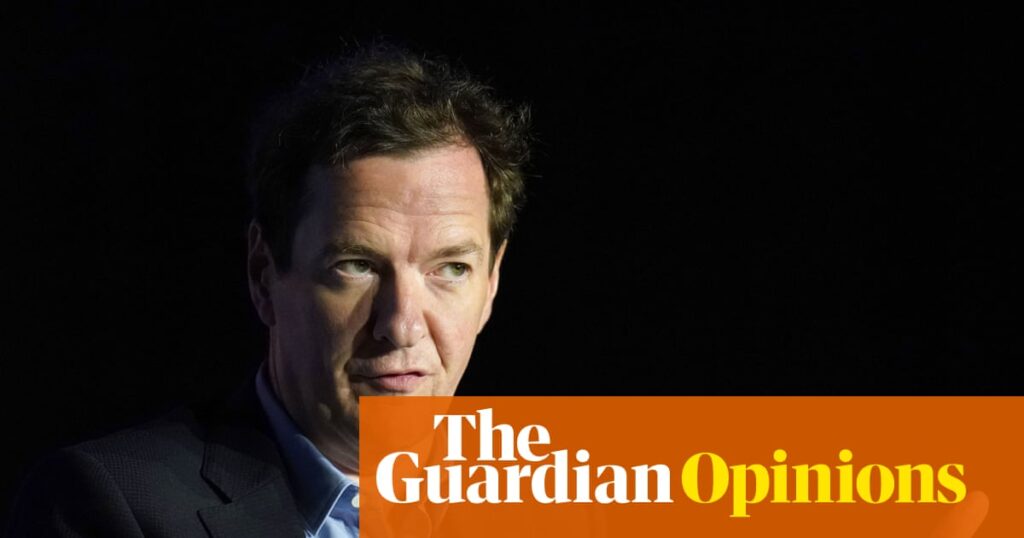

George Osborne getting a new job isn’t exactly news. Since leaving frontline politics, the former chancellor has served as the chair of the Northern Powerhouse Partnership, edited (not entirely successfully) the Evening Standard, advised asset manager BlackRock, joined boutique advisory firm Robey Warshaw, been appointed as the chair of the British Museum and taken on roles including advising crypto firm Coinbase. Oh, and like any white man of a particular age, he co-hosts a political podcast.
But Osborne’s latest job is the most eye-opening – and is an alarming augur of what is to come. OpenAI, the maker of ChatGPT, has become the latest organisation to employ Osborne. He will run OpenAI for Countries, a unit tasked with working directly with governments while expanding the company’s Stargate datacentre programme beyond the US. At least it was announced with a tweet, rather than a LinkedIn post.
The tweet prompted jokes, as did Osborne’s single-handed attempt to boost laggard employment figures brought about by his policies as the chancellor of austerity. But it’s a serious moment, because it’s another sign that the biggest AI firms are starting to behave less like normal companies and more like quasi-governments. They’re negotiating “national” partnerships, pitching a values-led vision of “democratic AI” and hiring former senior politicians as their diplomatic corps. It’s a similar path we have seen from other industries, including oil, pharma and defence, in previous decades – which is why it’s important to try to recognise the risks and head them off before AI companies can repeat the same trick.
The initiative Osborne is heading up, OpenAI for Countries, does what it says on the tin. It’s designed to embed OpenAI’s models and infrastructure inside the machinery of states, becoming an invaluable, indefatigable part of the running of our lives. OpenAI is in talks with about 50 countries to provide them with critical national infrastructure. Whether you welcome Osborne being put in that role rather than a tech executive is a little like Hobson’s choice: who do you distrust the least? But it’s an indication of how tech companies see their position in society that they are hiring such high-powered people for these roles.
Osborne is not the first to don the branded hoodie and Silicon Valley lifestyle. His fellow coalition government bod Nick Clegg blazed the trail as head of global affairs for Meta. At the time of his initial hiring as a vice-president at Facebook in 2018, his appointment was treated as a PR move – a big name to help the company navigate scandal and scrutiny. But it hinted that platforms had become political actors, whether they liked it or not. The industry’s outsized spending on lobbyists (€151m in Europe alone at the last count) to support the political beasts is an indication of what is at stake. The numbers involved also hint at the scale of the prize that tech companies see: the 10…
Source link
Disclaimer
We strive to uphold the highest ethical standards in all of our reporting and coverage. We blogs.grocliq.com want to be transparent with our readers about any potential conflicts of interest that may arise in our work. It’s possible that some of the investors we feature may have connections to other businesses, including competitors or companies we write about. However, we want to assure our readers that this will not have any impact on the integrity or impartiality of our reporting. We are committed to delivering accurate, unbiased news and information to our audience, and we will continue to uphold our ethics and principles in all of our work. Thank you for your trust and support.
Website Upgradation is going on for any glitch kindly connect at [email protected]