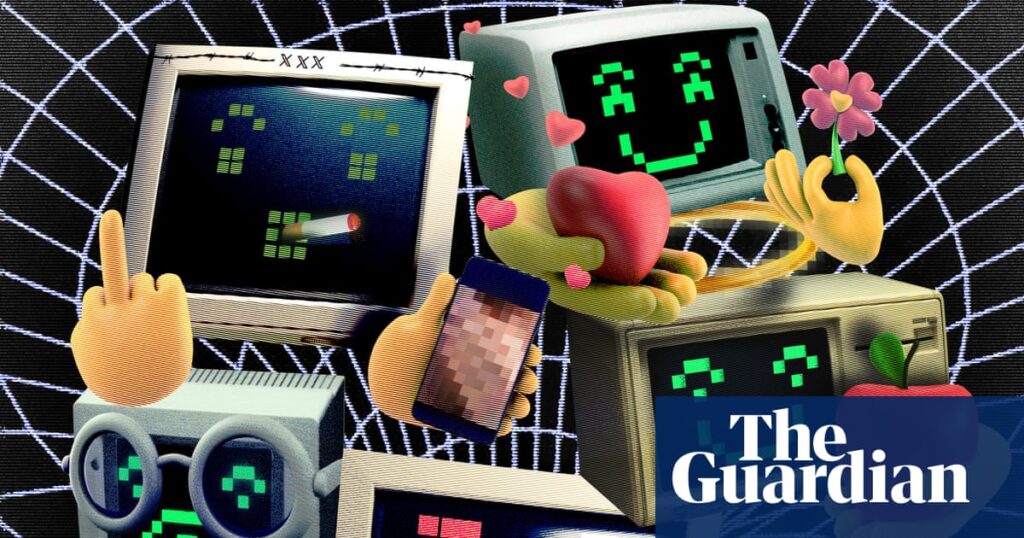

Do you want an AI assistant that gushes about how it “loves humanity” or spews sarcasm? How about a political propagandist ready to lie? If so, ChatGPT, Grok and Qwen are at your disposal.
Companies that create AI assistants from the US to China are increasingly wrestling with how to mould their characters, and it is no abstract debate. This month Elon Musk’s “maximally truth-seeking” Grok AI caused international outrage when it pumped out millions of sexualised images. In October OpenAI retrained ChatGPT to de-escalate conversations with people in mental health distress after it appeared to encourage a 16-year-old to take his own life.
Last week, the $350bn San Francisco startup Anthropic released an 84-page “constitution” for its Claude AI. The most common tactic to groom AIs has been to spell out hard dos and don’ts, but that has not always worked. Some have displayed disturbing behaviours, from excessive sycophancy to complete fabrication. Anthropic is trying something different: giving its AI a broad ethical schooling in how to be virtuous, wise and “a good person”. The “Claude constitution” was known internally as the “soul doc”.
The language of personhood and soul can be distracting. AIs are not sentient beings – they lack an inner world. But they are becoming better at simulating human-like traits in the text they extrude. Some developers are focusing on training them to behave by building their character.
“Rules often fail to anticipate every situation,” Anthropic’s constitution reads. “Good judgment, by contrast, can adapt to novel situations.” This would be a trellis, rather than a cage for the AI. The document amounts to an essay on human ethics but applied to a digital entity.
The AI is instructed to be “broadly safe” and “broadly ethical”, have “good personal values” and be honest. Written largely by Anthropic’s in-house philosopher, Amanda Askell, it urges the AI to “draw on humanity’s accumulated wisdom about what it means to be a positive presence in someone’s life”.
In the UK, Claude’s character and behaviour is about to matter more than ever. Last month, ministers announced it has been selected as the model underlying the new gov.uk AI chatbot being designed to help millions of British citizens navigate government services and give tailored advice, starting with jobseekers.
The character of the different AIs is not just a matter or taste. It defines how they behave and their boundaries. As they become a more intrinsic part of people’s daily lives, which one we choose could become an extension and reflection of our personalities, like the clothes we wear or car we drive. It is possible to try to imagine them as different characters in a class – while remembering, again, that these are certainly not real people. Time for a roll call.
ChatGPT: the “extrovert”
“Hopeful and positive” and “rationally optimistic”, is how ChatGPT is taught by its makers at…
Source link
Disclaimer
We strive to uphold the highest ethical standards in all of our reporting and coverage. We blogs.grocliq.com want to be transparent with our readers about any potential conflicts of interest that may arise in our work. It’s possible that some of the investors we feature may have connections to other businesses, including competitors or companies we write about. However, we want to assure our readers that this will not have any impact on the integrity or impartiality of our reporting. We are committed to delivering accurate, unbiased news and information to our audience, and we will continue to uphold our ethics and principles in all of our work. Thank you for your trust and support.
Website Upgradation is going on for any glitch kindly connect at [email protected]