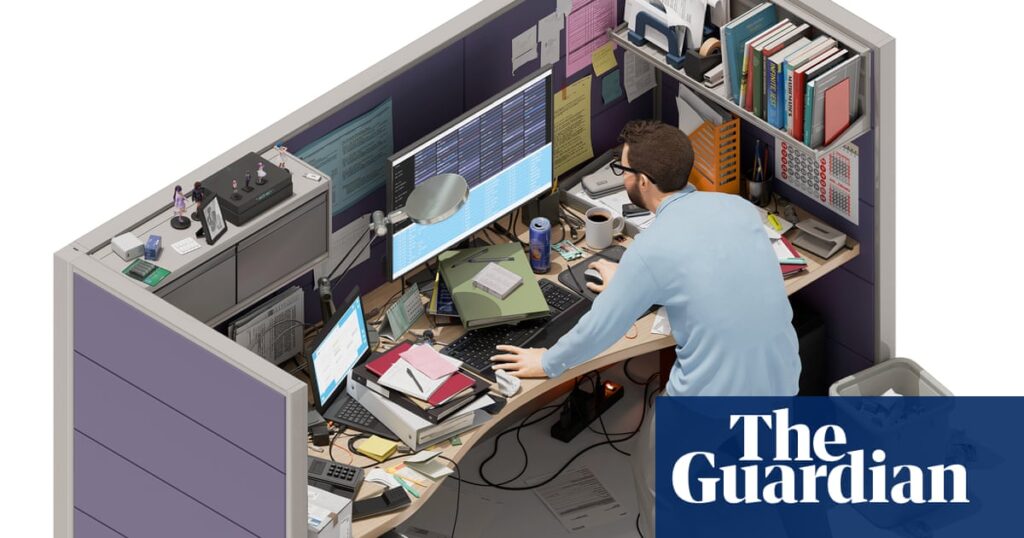

Not long after the terms “996” and “grindcore” entered the popular lexicon, people started telling me stories about what was happening at startups in San Francisco, ground zero for the artificial intelligence economy. There was the one about the founder who hadn’t taken a weekend off in more than six months. The woman who joked that she’d given up her social life to work at a prestigious AI company. Or the employees who had started taking their shoes off in the office because, well, if you were going to be there for at least 12 hours a day, six days a week, wouldn’t you rather be wearing slippers?
“If you go to a cafe on a Sunday, everyone is working,” says Sanju Lokuhitige, the co-founder of Mythril, a pre-seed-stage AI startup, who moved to San Francisco in November to be closer to the action. Lokuhitige says he works seven days a week, 12 hours a day, minus a few carefully selected social events each week where he can network with other people at startups. “Sometimes I’m coding the whole day,” he says. “I do not have work-life balance.”
Another startup employee, who came to San Francisco to work for an early-stage AI company, showed me dismal photos from his office: a two-bedroom apartment in the Dogpatch, a neighborhood popular with tech workers. His startup’s founders live and work in this apartment – from 9am until as late as 3am, breaking only to DoorDash meals or to sleep, and leaving the building only to take cigarette breaks. The employee (who asked not to use his name, since he still works for this company) described the situation as “horrendous”. “I’d heard about 996, but these guys don’t even do 996,” he says. “They’re working 16-hour days.”
Startups have never been particularly glamorous. When I started reporting on the industry a decade ago, people were cashing in on the new mobile app economy, and coders were chugging Soylent to stay at their desks longer. Startups then, too, were defined by hustle culture, high-octane energy and the pursuit of growth at all costs – ideas that, to some extent, have remained in the bloodstream of the industry.
But in the last year, as the magic dust of artificial intelligence has settled in San Francisco, the vibe among tech workers does seem different. The excitement about a new epoch in tech – and all the money that comes with it – is now tempered with anxieties about the industry, and the economy. Some workers are going all in on AI while also questioning whether all that AI is good for the world. Others are effectively training machines to do their jobs better than they can. And many of the same workers who are racing to build the future are now wondering if the future they’re building has a place for them in it.
The rest of us may be ambiently aware of these anxieties, but they are already tangible and keenly felt inside the tech industry. Even the biggest tech companies, once known for coddling employees with on-site massages and barber…
Source link
Disclaimer
We strive to uphold the highest ethical standards in all of our reporting and coverage. We blogs.grocliq.com want to be transparent with our readers about any potential conflicts of interest that may arise in our work. It’s possible that some of the investors we feature may have connections to other businesses, including competitors or companies we write about. However, we want to assure our readers that this will not have any impact on the integrity or impartiality of our reporting. We are committed to delivering accurate, unbiased news and information to our audience, and we will continue to uphold our ethics and principles in all of our work. Thank you for your trust and support.
Website Upgradation is going on for any glitch kindly connect at [email protected]