
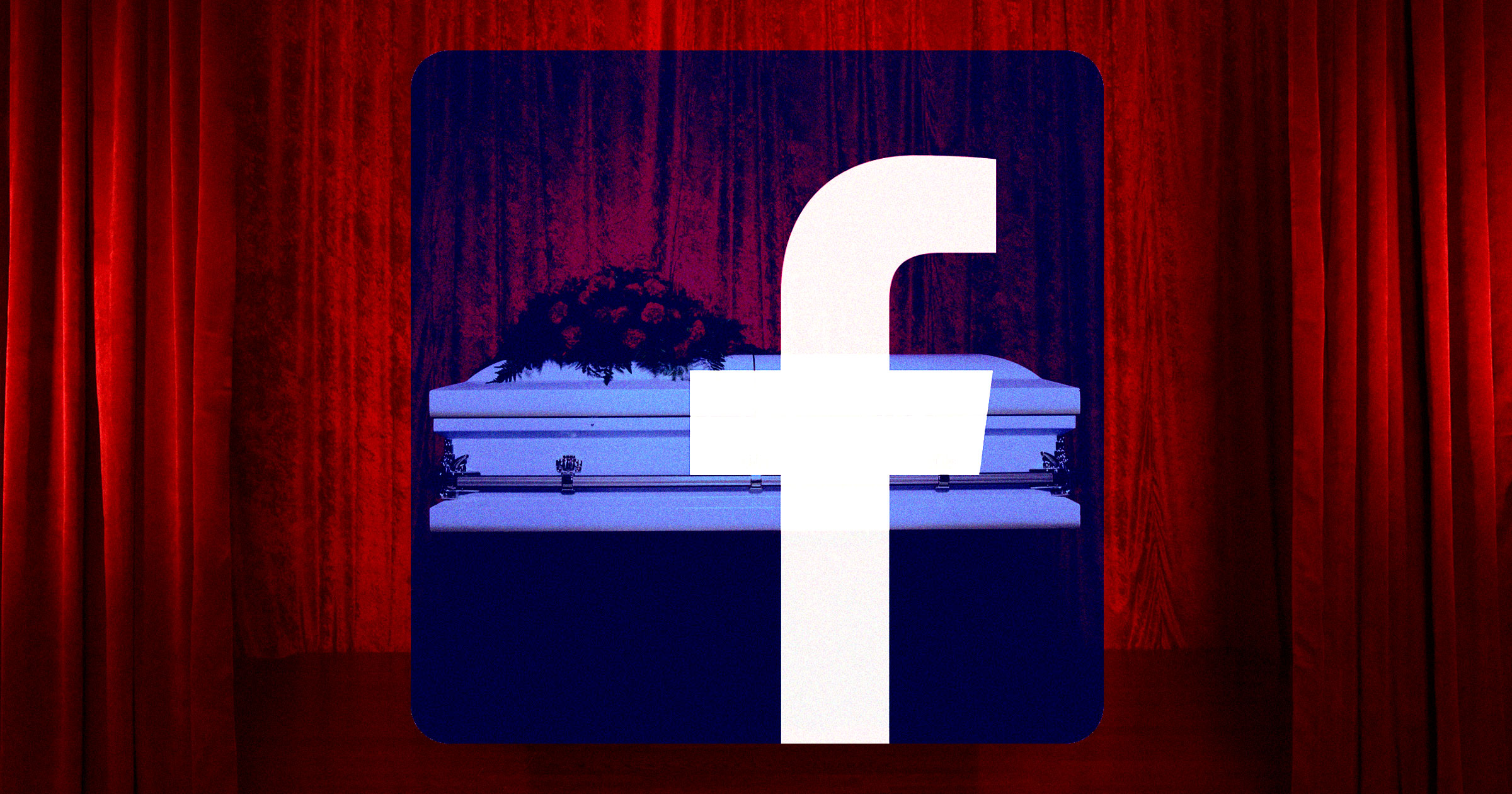
What happens to social media accounts belonging to those who shuffle off this mortal coil has been a subject of debate ever since the tech went mainstream. Should dormant accounts be left alone, or should their surviving loved ones be given backdoor access to maintain them as digital memorials?
To Meta, there could be a morbid alternative: training an AI model on a deceased user’s posts, keeping post-mortem accounts active by uploading new content in their voice long after they passed away.
As Business Insider reports, Meta was granted a patent in 2023 for the idea, outlining how a large language model (LLM) can “simulate” a user’s social media activity.
“The language model may be used for simulating the user when the user is absent from the social networking system, for example, when the user takes a long break or if the user is deceased,” reads the goosebump-raising patent, which lists the company’s CTO Andrew Bosworth as the primary author.
However, the conversation appears to have dramatically shifted over the last three years, especially now that AI slop has infiltrated and practically assumed control over platforms like Facebook and Instagram: Meta now says it’s given up on the sepulchral concept.
“We have no plans to move forward with this example,” a spokesperson told BI.
We’ve already come across countless examples of using AI to emulate dead people, from a grandmother who was resurrected as an AI model for her funeral to “grief tech” startups aiming to let grieving loved ones train AI models on images, recordings, and footage of the deceased.
“The impact on the users is much more severe and permanent if that user is deceased and can never return to the social networking platform,” read the Meta patent.
A digital clone of the deceased person would have been able to interact with people through likes and comments — and even DMs — according to the patent.
While the company has since distanced itself from the grisly idea, the mere existence of the patent highlights how companies were — and in many ways, still are — throwing everything at the wall to discover new use cases for LLMs, and how far they’re willing to go.
Last year, for instance, Meta CEO Mark Zuckerberg even suggested that lonely users could make friends with the company’s bots instead of with living humans. In a 2023 interview with podcaster Lex Fridman, he seemed to echo the ideas in the patent by saying virtual avatars could take over the accounts of deceased people.
“If someone has lost a loved one and is grieving, there may be ways in which being able to interact or relive certain memories could be helpful,” he told Fridman at the time.
“But then there’s also probably an extent to which it could become unhealthy,” he admitted. “And I mean, I’m not an expert in that, so I think we’d have to study that and understand it in more detail.”
“We have, you know, a fair…
Source link
Disclaimer
We strive to uphold the highest ethical standards in all of our reporting and coverage. We blogs.grocliq.com want to be transparent with our readers about any potential conflicts of interest that may arise in our work. It’s possible that some of the investors we feature may have connections to other businesses, including competitors or companies we write about. However, we want to assure our readers that this will not have any impact on the integrity or impartiality of our reporting. We are committed to delivering accurate, unbiased news and information to our audience, and we will continue to uphold our ethics and principles in all of our work. Thank you for your trust and support.
Website Upgradation is going on for any glitch kindly connect at [email protected]