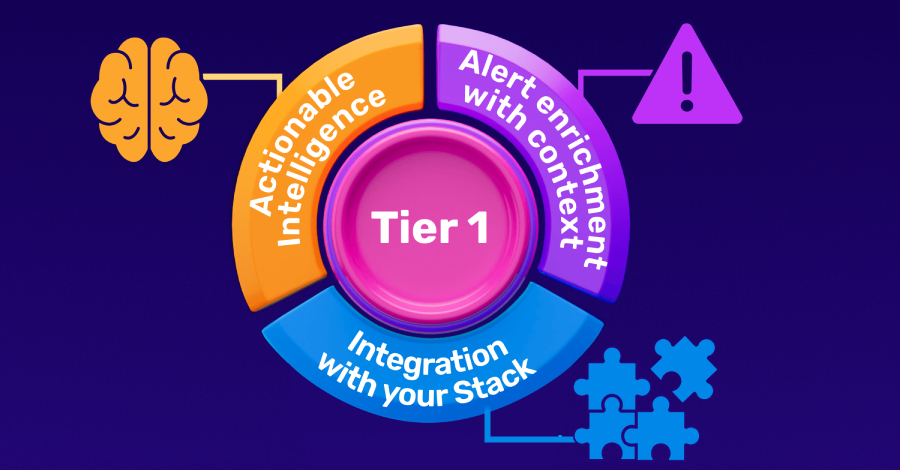


Every CISO knows the uncomfortable truth about their Security Operations Center: the people most responsible for catching threats in real time are the people with the least experience. Tier 1 analysts sit at the front line of detection, and yet they are also the most vulnerable to the cognitive and organizational pressures that quietly erode SOC performance over time.
The Paradox at the Gate: Why Tier 1 Carries the Weight but Lacks the Armor
Tier 1 is the layer that processes the highest volume of alerts, performs initial triage, and determines what gets escalated. But it is built on a foundation that is structurally fragile. Entry-level analysts, high turnover rates, and relentless alert queues create conditions where even well-designed detection rules fail to translate into timely, accurate responses.
The paradox is here:
- Tier 1 performance defines SOC performance;
- But Tier 1 is often the least supported, least empowered, and most cognitively overloaded layer
Tier 1 analysts face a daily avalanche of alerts. Over time, this leads to:
- Alert fatigue: constant exposure to high volumes reduces sensitivity to real danger.
- Decision fatigue: repeated micro-decisions degrade judgment quality.
- Cognitive overload: too many dashboards, too little context.
- False-positive conditioning: when 90% of alerts are benign, skepticism becomes automatic.
- Burnout and turnover: institutional memory evaporates
For CISOs, these are not HR problems. It’s a business risk. When Tier 1 hesitates, misses, or delays escalation:
- Dwell time increases,
- Incident costs rise,
- Detection quality degrades,
- Executive confidence in security drops.
If Tier 1 is weak, the entire SOC becomes reactive rather than predictive.
The Core Engine Room: Monitoring and Triage as Business-Critical Workflows
Tier 1 owns two foundational SOC processes: monitoring and alert triage. Monitoring is the continuous process of ingesting signals from across the environment — endpoints, networks, cloud infrastructure, identity systems — and applying detection logic to surface events of potential concern.
Triage is what happens next: the structured, human-driven process of evaluating those events, assigning severity, ruling out false positives, and determining whether escalation is warranted.
Basically, these are routine tasks. Watch telemetry. Sort alerts into true positive/false positive/needs escalation. But these also are revenue protection mechanisms since they determine MTTR, MTTD, and resource allocation efficiency. When these workflows are inefficient:
- Tier 2 and Tier 3 drown in noise,
- Incident response begins late,
- Business disruption expands,
- Operational costs increase,
- Regulatory exposure grows.
Intelligence as Oxygen: The Foundation of Tier 1 Effectiveness
Tier 1 cannot operate effectively in a vacuum, and raw alerts without context are just digital shadows. Actionable threat intelligence turns data into decisions. For a Tier 1 analyst asking, “Is this connected to an active…
Source link
Disclaimer
We strive to uphold the highest ethical standards in all of our reporting and coverage. We blogs.grocliq.com want to be transparent with our readers about any potential conflicts of interest that may arise in our work. It’s possible that some of the investors we feature may have connections to other businesses, including competitors or companies we write about. However, we want to assure our readers that this will not have any impact on the integrity or impartiality of our reporting. We are committed to delivering accurate, unbiased news and information to our audience, and we will continue to uphold our ethics and principles in all of our work. Thank you for your trust and support.
Website Upgradation is going on for any glitch kindly connect at [email protected]