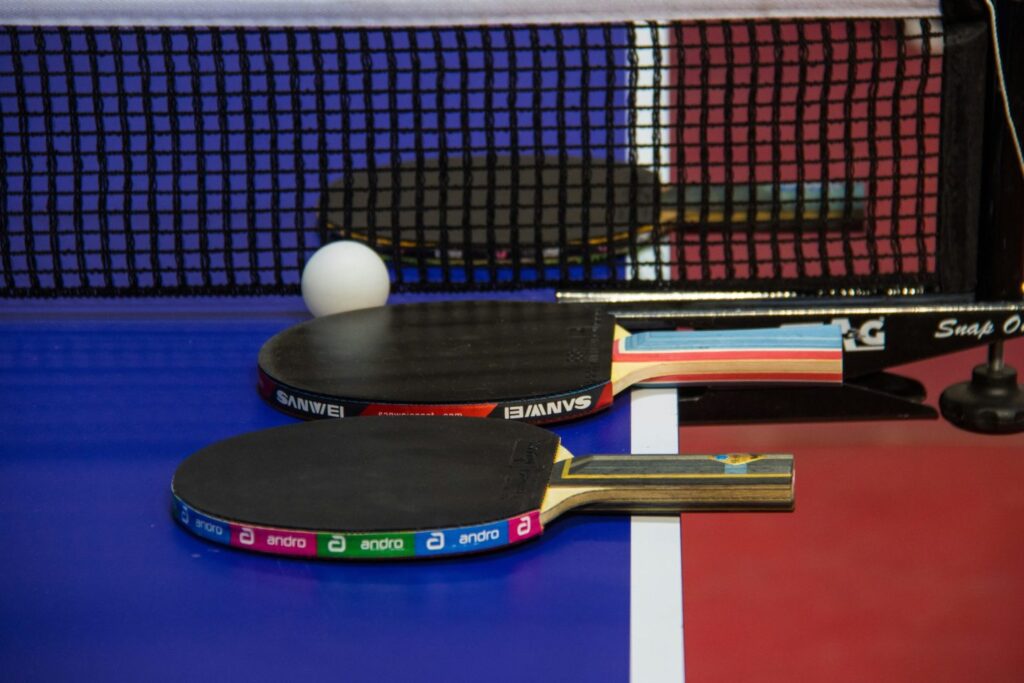

An autonomous table tennis robot developed by Sony AI has competed against and defeated high-level human players in regulated matches, according to Reuters. The system is part of a broader category often referred to as “physical AI,” where artificial intelligence is applied to machines operating in real-world environments.
The robot, named Ace, was designed to operate in a competitive sport environment that requires rapid decision-making and precise motor control. According to the project team, it combines high-speed perception systems with AI-driven control to execute shots under match conditions.
Ace competed in matches conducted under International Table Tennis Federation rules and officiated by licensed umpires. In trials documented in April 2025, the system won three out of five matches against elite players and lost two against professional-level opponents. Sony AI reported that subsequent matches in December 2025 and early 2026 included wins against professional players.
Previous table tennis robots have existed since the 1980s, but they were not able to match the performance of advanced human players. “Unlike computer games, where prior AI systems surpass human experts, physical and real-time sports like table tennis remain a major open challenge,” said Peter Dürr, director at Sony AI Zurich and lead of the project.
AI systems have achieved strong results in digital environments like chess and video games, where conditions are fully simulated, Dürr said.
Dürr said the system was developed to study how robots can respond with speed and accuracy in dynamic environments. The work was detailed in a study published in the journal Nature.
The sport presents technical challenges due to the speed and variability of the ball, including complex spin and changing trajectories, which require rapid sensing and coordinated movement in tight time constraints, Dürr said. Ace’s architecture includes nine synchronised cameras and three vision systems, which track the ball’s movement and spin. The system processes visual data at a speed sufficient to capture motion that is difficult for the human eye to resolve. “This is fast enough to capture motion that would be a blur to the human eye,” Dürr said.
The robotic platform uses eight joints to control the racket. Three control positioning, two control orientation, and three manage shot force and speed. The configuration was designed to meet the minimum mechanical requirements for competitive play.
Unlike many AI systems trained through human demonstration, Ace was trained in simulation. The approach allowed it to develop its own strategies, resulting in play patterns that differ from human opponents. Dürr said the system “learns to play not from watching humans” but through self-training in simulated environments.
Professional player Mayuka Taira, who lost a match to the system, said the robot was difficult to predict because it shows no visible cues during play. Rui Takenaka, an elite…
Source link
Disclaimer
We strive to uphold the highest ethical standards in all of our reporting and coverage. We blogs.grocliq.com want to be transparent with our readers about any potential conflicts of interest that may arise in our work. It’s possible that some of the investors we feature may have connections to other businesses, including competitors or companies we write about. However, we want to assure our readers that this will not have any impact on the integrity or impartiality of our reporting. We are committed to delivering accurate, unbiased news and information to our audience, and we will continue to uphold our ethics and principles in all of our work. Thank you for your trust and support.
Website Upgradation is going on for any glitch kindly connect at [email protected]