

Anthropic’s Claude Mythos Preview has dominated security discussions since its April 7 announcement. Early reporting describes a powerful cybersecurity-focused AI system capable of identifying vulnerabilities at scale and raising serious questions about how quickly organizations can validate, prioritize, and remediate what it finds.
The debate that followed has mostly focused on the right questions: Is this a step-change or an incremental advance? Does restricting access to Microsoft, Apple, AWS, and JPMorgan actually reduce risk, or does it just concentrate defensive advantage among the already-well-defended? What happens when adversaries—state actors, criminal enterprises—build equivalent capability?
These are important. But there’s a quieter operational problem that’s getting less airtime, and it’s the one that will actually determine whether most organizations survive this shift.
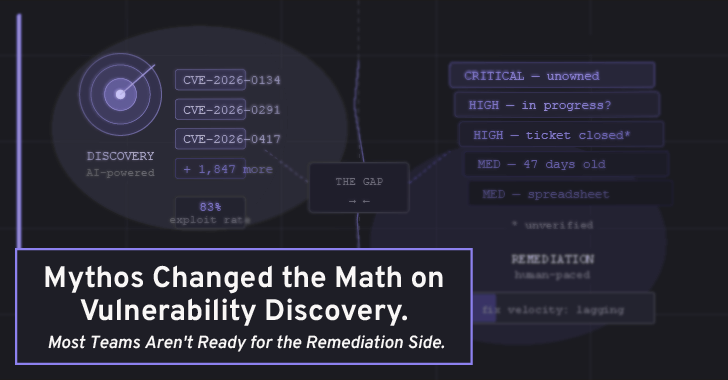
The Discovery-to-Remediation Gap
The Mythos announcement, and the broader AI security conversation it kicked off, is largely about finding vulnerabilities faster. That’s valuable. But finding a vulnerability and fixing it are two entirely different workflows, and the gap between them is where most security programs quietly bleed out. That’s exactly the gap PlexTrac was built to close.
Consider what typically happens after a penetration test or a vulnerability scan surfaces a critical finding: it goes into a spreadsheet, or a ticket, or a PDF report that lands in someone’s inbox. The security team knows about it. The engineering team may or may not know about it. Remediation ownership is ambiguous. There’s no clean way to track whether the patch actually shipped, or whether it was deprioritized, or whether a re-test was ever scheduled. Meanwhile, the findings are.
AI models like Mythos will accelerate the input side of this pipeline dramatically. They can discover vulnerabilities at a pace and depth that human red teams simply can’t match. But if the organizational infrastructure for triaging, prioritizing, communicating, and verifying fixes hasn’t kept pace, faster discovery just means a faster-growing backlog of unresolved critical issues.
This is the problem that a model like Mythos actually makes more acute. If your current pentest process takes three weeks to surface ten high-severity findings, and remediation is already struggling to keep up, what happens when that same surface area is scanned continuously and generates findings at ten times the rate?
Schneier’s False Positive Problem Is Real
Bruce Schneier raised a sharp point in his writeup: we don’t know Mythos’s false positive rate on unfiltered output. Anthropic reports 89% severity agreement with human contractors on the findings they showcased—but that’s a curated sample, not a full-run distribution. AI systems that detect nearly every real bug also tend to generate plausible-sounding vulnerabilities in patched or corrected…
Source link
Disclaimer
We strive to uphold the highest ethical standards in all of our reporting and coverage. We blogs.grocliq.com want to be transparent with our readers about any potential conflicts of interest that may arise in our work. It’s possible that some of the investors we feature may have connections to other businesses, including competitors or companies we write about. However, we want to assure our readers that this will not have any impact on the integrity or impartiality of our reporting. We are committed to delivering accurate, unbiased news and information to our audience, and we will continue to uphold our ethics and principles in all of our work. Thank you for your trust and support.
Website Upgradation is going on for any glitch kindly connect at [email protected]